#230 The Future of Health Optimization: Diagnostics, Stem Cells & Scaling Longevity for Everyone With Jim Donnelly
The Longevity & Lifestyle podcast
The Longevity & Lifestyle podcast
The Longevity & Lifestyle podcast

Episode 230
Sign up for
The Longevity & Lifestyle Insider
Join Claudia's Longevity & Lifestyle Insider newsletter to get top tips, insights and strategies on optimizing your life, health and business!
By signing up, you agree to join the Longevity & Lifestyle newsletter and to receive emails. We respect your privacy and abide by strict privacy policies.

“You’re not buying a handbag. This is your health. It is the single most important thing that you can spend money and time on.” - Jim Donnelly
In this inspiring episode, Jim Donnelly, founder and CEO of Humanaut Health (and former founder of Restore Hyper Wellness), shares how he’s building the most comprehensive, prevention-driven longevity model to date. From advanced diagnostics and regenerative medicine to behavior change and coaching, Jim reveals what it truly takes to add 10–20 healthy, vibrant years to life.
He opens up about the loss of his father, surviving a near-fatal car accident, and how stem cell therapy transformed his recovery — all of which shaped his mission to scale health optimization with integrity, accessibility, and world-class medical excellence.
We explore:
- Why foundational habits (sleep, movement, nutrition, stress) drive 90% of results
- How Humanaut uses 150+ diagnostics to find root causes
- Why regenerative medicine works best on a healthy foundation
- How to democratize longevity without sacrificing quality
- What it takes to reverse metabolic dysfunction — 86% success in under 6 months
This conversation is a powerful reminder that the future of medicine is preventive, personalized, and incredibly hopeful.
Tune in and discover what’s possible when we invest in health — not after we’re sick, but while we’re thriving.
ABOUT THE EPISODE & OUR GUEST
Get $300 off the Juvent Micro-Impact Platform at juvent.com/CLAUDIA
and check out with code CLAUDIA.
Get 20% off your first membership order at pendulumlife.com/CLAUDIA20, your discount applies automatically.
Get $300 off from Oct 17 – Dec 26, 2025, with code CLAUDIA, and enjoy an ongoing $100 off afterward.
Visit carolbike.com/claudia and use code CLAUDIA at checkout.
Get 10% off your MOVE+ Pro at kineon.io/claudia
Get 10% off at calocurb.com/longevityandlifestyle with code CLAUDIA10 at checkout.
SPONSORS
Unlock peak energy, mental clarity, and long-term health.
If you’re an entrepreneur, leader, or high achiever who refuses to settle for burnout, fatigue, or suboptimal health - this is for you.
I help top performers optimize their energy, longevity, and success using science-backed strategies, biohacking, and personalized health protocols.
Book a Complimentary Peak Performance & Longevity Coaching Call
This free exploratory session will help you:
• Identify what’s holding you back from your highest potential
• Gain clarity on your energy, focus, and longevity goals
• Discover a proven framework for sustainable high performance
Spots are limited - apply now to reserve your session.
🔗 APPLY HERE
Peak Performance & Longevity Coaching Call
Show Notes
00:00 Entrepreneurial Origins: Alligators and Golf Balls
07:51 Transition to Longevity and Wellness
13:12 The Complexity of Health Optimization
18:54 Democratizing Health and Longevity
26:40 Scaling Health Optimization Across Diverse Markets
34:03 Building a Strong Foundation for Health Businesses
43:45 Creating a High-Performance Culture
45:36 The Future of Regenerative Medicine and Health Optimization
53:25 Optimizing Health for Longevity
PEOPLE mentioned
Products Mentioned
MORE GREAT QUOTES
“It isn't the crazy stuff that's getting great results. If we lean into a fundamental foundational approach that hits all of the key things — movement, nutrition, sleep, stress, cognitive health — we can create amazing health outcomes.” - Jim Donnelly
Legal Disclaimer: Please note, to avoid any unnecessary headaches, Longevity & Lifestyle LLC owns the copyright in and to all content in and transcripts of The Longevity & Lifestyle Podcast, with all rights reserved, as well as the right of publicity. You are welcome to share parts of the transcript (up to 500 words) in other media (such as press articles, blogs, social media accounts, etc.) for non-commercial use which must also include attribution to “The Longevity & Lifestyle Podcast” with a link back to the longevity-and-lifestyle.com/podcast URL. It is prohibited to use any portion of the podcast content, names or images for any commercial purposes in digital or non-digital outlets to promote you or another’s products or services.
PODCAST EPISODE TRANSCRIPT
Claudia von Boeselager: Welcome to another episode of the Longevity and Lifestyle Podcast. I'm your host, Claudia von Boeselager. I'm here to uncover the groundbreaking strategies, tools, and practices from the world's pioneering experts to help you live your best and reach your fullest potential. Don't forget to subscribe to the podcast to always catch the latest episodes.
Legal Disclaimer: Please note, to avoid any unnecessary headaches, Longevity & Lifestyle LLC owns the copyright in and to all content in and transcripts of The Longevity & Lifestyle Podcast, with all rights reserved, as well as the right of publicity. You are welcome to share parts of the transcript (up to 500 words) in other media (such as press articles, blogs, social media accounts, etc.) for non-commercial use which must also include attribution to “The Longevity & Lifestyle Podcast” with a link back to the longevity-and-lifestyle.com/podcast URL. It is prohibited to use any portion of the podcast content, names or images for any commercial purposes in digital or non-digital outlets to promote you or another’s products or services.
PODCAST EPISODE TRANSCRIPT
Claudia von Boeselager (04:35)
Welcome to the Longevity and Lifestyle podcast, It's such an honor and pleasure to have you with us today.
Jim (04:40)
It's my pleasure. can't wait and I've been looking forward to this for weeks.
Claudia von Boeselager (04:44)
So Jim, I love that your first company involved diving for golf balls among alligators and snakes. That's probably the boldest entrepreneurial origin story I've heard yet. And from...
Jim (04:52)
and
Yeah, you know, when you're in a
town, know, you have a slightly different perspective on what's possible. you know, back in, you know, this is the early 90s, 1990s. know, you did stuff that was a little less tech and interesting. And anyway, I saw this guy coming out of a golf ball water hazard.
Claudia von Boeselager (05:11)
You
Jim (05:18)
and he had a bunch of golf balls and this kind of weird bag around his neck. And he was just sort of this sort of like really goofy redneck dude. And I was like, man, I think we could turn this into a business. And we did. I did a business plan competition while I was at business school. We went up against the Harvards and Stanford kids and we kept beating them again and again. And my business school professor put some money in.
Claudia von Boeselager (05:30)
You
Jim (05:44)
I had another guy put some money in and ⁓ next thing you know, I'm up to my neck in water and golf ball water hazards all over Florida and South Georgia. And the problem is that if you're in that temperature range, there's always going to be snakes and alligators. so we would take our divers that we trained to the Jekyll Island, which is a wildlife preserve. It's a great beach and golf course place, but it's a wildlife preserve.
couldn't remove the alligators. And the reason we took people there is because we wanted to take them to the scariest place to train. And the idea was if I would do it as the founder of the company, then it must be okay. And so I'd train these guys and we'd go to a water hazard to be 20 alligators on the bank and I'd get in and alligators would get in. And it's really crazy what you can get used to if you do it enough.
Claudia von Boeselager (06:19)
Mm-hmm.
Jim (06:38)
And they don't bother you. stay away from the water hazards during mating season, so certain times of the year. If there's a really big one, you kind of go up a little harder, obviously. But no, never was really bothered by an alligator. I had a couple of divers that had different ways of approaching. One would always go try to find them and run at them to prove he was the boss. I never really thought that was a funny or a particularly smart approach. you you do
Claudia von Boeselager (06:40)
No?
You
Jim (07:05)
When you're an entrepreneur, there are snakes and alligators in every business. These were literal snakes and alligators, but every business has these things that are scary, these things that if you don't think about them the right way, can intimidate you. I thought that was a good metaphor for an entrepreneur at a young age.
Claudia von Boeselager (07:22)
Mm-hmm.
Yeah, 100%. And I wanted to ask you, what did you learn from that early hustle that shaped how you went on to build companies today?
Jim (07:34)
Well, I think you do have to roll up your sleeves and do the dirty work sometimes. People have to know that you're willing and able to jump in and do hard stuff and do, like I said, the dirty work, just like you're asking them to do. I think that's a big thing. Obviously, leading by example is sort of a corollary to that. And also, I think it's having a deep understanding of the basic functions of a company.
business is recovering golf balls, you better have a pretty good knowledge of how to do that. I think putting yourself in that position obviously makes you a better leader, but also it helps you find a better way. And so what we started doing rather than diving is we created these sort of big roller devices that would work off the power takeoff of a tractor and they'd roll across the bottom of the water hazards and the balls would get.
Claudia von Boeselager (08:22)
Mm-hmm.
Jim (08:24)
caught between the disks that were about five feet high and they were the perfect tensile strength. And you'd pull the disks up on the bank and you'd pick the balls out of the thing. you know, being in the water, you have time to think about a better way to do things. And so I think when entrepreneurs put themselves in the middle of the key processes, they're better able to find a better way.
Claudia von Boeselager (08:42)
Mm-hmm.
Yeah. And thinking outside the box as well. Yeah. And Jim, you've launched and scaled multiple ventures across travel, hospitality and health. What first drew you to the longevity and wellness space?
Jim (08:50)
Yeah. Yeah.
Yeah, I mean, my philosophy in life has always been to do businesses that I was passionate about. I mean, I certainly wasn't passionate about being in water with snakes and alligators, but I did love playing golf and it was something I did with my dad growing up. And so, you know, I got to be on some of the best golf courses in the world because of that business. And then as I got older, you know, your interests changed. You know, I did I go, you go as a former military Brad who lived all over the world, who was born in Germany.
Claudia von Boeselager (09:09)
Hehehehehe
Jim (09:29)
Travel was sort of an essential part of my identity. And so that made a lot of sense. And I woke up about 10 years ago and that's why I did restore. I was in my 40s at the time and I was starting to feel my age. I was starting to have some different kinds of pains, my joints, and it just made sense to wanna feel better and perform better. And that's why I did restore.
bring all these things under one roof, like cryotherapy and red light and hyperbaric and IVs. And then you get a little older and things happen. And for me, a couple of really big things happen. Number one, restore got really big, know, 250 locations around the country. So you're helping people at scale. You're helping millions of people. You're seeing great results.
And you realize that if you do something right and you create scale you can help a whole bunch of people. But you also, know, at that time, you know, a couple of other things happened. Number one, my dad died of cancer and, you know, Restore went a certain amount of the way, but it didn't go all the way. It was kind of like the, I always say it was kind of like the elementary school level. Everyone should be doing some of these things like heat and light and pressure, et cetera, et cetera. But it's not.
Claudia von Boeselager (10:26)
to say.
Jim (10:40)
the true medical part of longevity and health optimization. So I just had this nagging feeling that I needed to take things to the next level. And then when my dad died of cancer and there's nothing I could do about it and nothing I could have done to prevent it, you know, it kind of validated that. And the idea was humanaut wouldn't have cured his cancer, but we would have caught it sooner. We would have caught it at stage one instead of later stages.
Claudia von Boeselager (11:03)
Mm-hmm.
Jim (11:07)
For his particular type of cancer, you have to catch it early. And so, know, Humanoid as its first priority is do really deep diagnostics and make sure people aren't in a really bad spot around the four kind of apocalyptic things, neurodegenerative issues, heart issues, metabolic issues, and obviously cancer. And then I got run over by a drunk driver. So there was a drunk driver 65 miles per hour through a red light. I was 65 through a green light.
And I was lucky to live, number one, I'm in Texas, I had a big truck that saved me. But I was pretty damaged, my neck was destroyed, my chest, my shoulders, my upper body was kind of a mess. And for almost a year, it was hard to sleep, it was hard to work out, it was hard to get comfortable. And I had access to everything. I had access to top medical experts, top physical therapists, top orthopedic folks.
and no one could really fix it until I found a particular stem cell doctor. Stem cells completely transformed my dynamic. I did stem cells in my neck and other parts of my body and lo and behold, I was not only back, I in some ways was better. My knees felt like my 30 year old knees, my Achilles tendon had been sore for 25 years and no longer sore. My neck, I haven't felt a twinge in my neck now for going on four years.
And so that inspired me. knew how to scale a business. There was no, what I would call, longevity business or health optimization business at scale. And so I said, listen, I'm gonna take this on. And if we can do this right, imagine the societal impact. So it's not just that we help people, but when you're helping people add 20 good years of living, i.e. 20 years of health span to their life,
you're helping them at a time when they're at their height of power. They have their most influence, they have the most wisdom, they have their most financial resources. So you add 20 years to folks at the end of their life, you are gonna have exponentially more impact than if you help people when they're younger. And that was just a really cool mission that I thought was worth taking on.
Claudia von Boeselager (13:14)
Well, thank you for doing what you're doing because the world needs it. And not many would focus on scaling a longevity clinic because of the complexity. We were just talking before offline about that as well, that many people don't even know what they don't know when they're trying to do it. Can you elaborate a bit on the complexity of what you're trying to do in terms of really getting to root cause and having people understand their health to be able to add those 10, 20 years on to health span onto their lives?
Jim (13:42)
Yeah,
yeah, you know, there's a big problem in the health space, health category, and it's that because of the complexity, people tend to specialize in one piece of it. And when you specialize in one piece of it, things get very disaggregated. They're not coordinated and you don't get the benefit of doing all the right things together in a coordinated fashion. And that's when the real magic happens. And so when I started humanaut.
I went out and raised money and my investors first question was always, are you sure you're not trying to do too much? This seems very complex. And my response to them was always the same. Well, riddle me what you would take out. Would you remove nutrition? Would you remove movement? Would you remove sleep? Would you pull out hormones, stem cells? I mean, you pick what you would pull out because once you start pulling pieces out, you eliminate the magic of having it all coordinated together.
And so I had very strong conviction that it needed to be complex. It needed to include all of the foundational parts of making people healthy. It needed to include this very rich toolkit that included some stuff that included peptides, hormones, stem cells, medications. It included regenerative medicine. All of these things done in a coordinated fashion, driven by data and a ⁓ large number of diagnostics.
felt like the only way to do it. And I think we've kind of seen that we were right. Number one, we've tackled the complexity and have a really lovely offering. We've built a tech stack that enables a lot of the things that needs to happen from both a clinician perspective and a consumer perspective. We've built some things that I think are more engaging and fun when it comes to being a client of Humanaut versus a client of other folks.
And we're to the point now where we're about to start guaranteeing success. We're literally starting in the new year, we will guarantee our clients that you will get the health outcomes that you want. Now, we don't say that without there being some conditions to that. So if you want those guarantees, number one, you gotta sign the Humanaut Pledge. You gotta pledge to live like a humanaut. And there's five different principles around that.
Claudia von Boeselager (15:36)
Wow.
I'm sure exactly.
Jim (15:56)
but it's things like you have to be very open to proactive preventative approaches. You have to be willing to adjust and make changes when you're not getting the results you want. You've got to understand that that health care is not a solo journey. You know, there's there's things like that. It's so nothing particularly controversial. It's all things that everyone that's that's sort of in a smart.
intellectual person can say, of course, I'm a human. And we make it sound really good. Yeah. And, and then probably just as importantly, or maybe more as you have to sign our accountability protocol. So the accountability protocol very clearly lays out the things that you have to do on your part in order for us to give you a quote unquote guarantee and your money back and things like that. And so what are some of those things? You have to wear a wearable device. Well, of course.
Claudia von Boeselager (16:23)
You have to take ownership as well. Yeah.
Jim (16:48)
because our tech stack has a very sophisticated coaching platform. We're gonna push you on movement and nutrition and sleep and those sort of things. And people lie. People downright lie. You say, hey, how did you move today? Oh, great. And you're like, no, you didn't. They're delusional. Yeah, yeah, yeah, yeah, yeah, yeah. It doesn't matter. We're wearable agnostic. We want you to wear the wearable that you're gonna like and wear and it.
Claudia von Boeselager (17:01)
Or they're delusional, Jim. found this as well. People are convinced that they're super active and they've been sitting for 10 hours in the day. You're like, how is that? What wearables do you make them wear without brand names, but just... Okay. Yeah.
Jim (17:16)
fits your fashion sense and all that. wear an aura ring, but
Claudia von Boeselager (17:17)
Mm-hmm. Yeah.
Jim (17:20)
there are many lovely wearables. Things like ⁓ you have to check in least, yeah, of course, CGMs, because once again, you're looking at nutrition, you're looking at movement, you're looking at sleep, you're looking at stress levels and stress management, you're looking at neurodegenerative and cognitive health, and so those things have to be tracked.
Claudia von Boeselager (17:22)
Yeah. A CGM, do you have to do that? Yeah. Yeah.
Jim (17:42)
And so the way it works is that you come in and you get all these diagnostics, 150 plus blood panels, up to 75 other bespoke diagnostics. We know everything about you, gut health, brain health, movement analysis, DEXA scans, MRIs. And then we take all that data, we run it through our sort of technology engine and our AI platform.
⁓ We get results. We then have a very experienced clinical team that goes through those things and makes sure that it's right and there are no mistakes and it's perfect for you as an individual. And then we set up a care plan in place. We have what we call a focus three. So we're focused on the top three issues that are gonna make the biggest impact. And then every quarter we adjust it and make sure we're making progress and
Sometimes things fall out. Sometimes new things get added. know, health is a constant journey. But, you know, once again, you've signed up to do certain things. You've signed up for us to track you and do that. You sign up to things like eight. You have to hit 80 % of your goals. And so 80 % of the time, you've got to sleep according to what we agreed to. 80 % of the time, you've got to move according to how we come up with a plan. 80 % of the time, you've got to eat right. And we don't leave it to chance. We check it. We work.
By the way, we're not trying to catch you. We're not trying to beat you down. It's just that it's the opposite. We're lifting you up, we're encouraging you, it's very positive. We give you a lot of agency, we give you a lot of information so that you're... An example would be people come to us sometimes and they will say, listen, I wanna have great results, but I don't wanna use pharmaceuticals. And so use all the other stuff. It's like, great.
Claudia von Boeselager (19:04)
It's the opposite. You're trying to help to lift them up, right? Yeah.
Jim (19:24)
You know, other people come to us and say, I don't care. I just want good results. Everything's on the table. Those both, we can work with both of those. They're different approaches. but we want people to have some agency and to be a part of the decision. cause in, in, healthcare, traditionally people are not given enough information. There is no sort of back and forth. It's, it's, it's very one directional and, it's just not a great way to do it. It's no fun too.
⁓ And so we do try to make this fun. And there's other things in the accountability protocol, but when you do that, we get amazing results and we cite some results. So 86 % of our clients that come to us with metabolic dysfunction, they're either pre-diabetic or worse. Within six months, less than six months, 86 % of them show no signs of metabolic dysfunction. And so if you look at the traditional metrics, it's
Claudia von Boeselager (19:51)
Yeah.
Jim (20:17)
45 % of people in two years can achieve that. And so what we say is we're twice as effective and four times faster. so people, four times faster, like a year and a half faster is massive in terms of impact it has on a human being.
Claudia von Boeselager (20:27)
Amazing.
Yeah, and not degrading and suffering and all the extra expense and cost as well. for someone listening, Jim, that might be thinking this sounds too good to be true, or this is only for the elite or peak performers. What would you tell them?
Jim (20:38)
Yeah.
Yeah.
Well, I mean, I read a book about a lot of the stuff we did at Restore and it was the power of right away wellness. And the publisher, I think in a way made a mistake. He made us call the book Restore the Power of Right Away Wellness. And the thing that I didn't like about that is it almost felt like it was going to be a propaganda book for all the money you had to spend at Restore. one of the premises of that book was actually a lot of the stuff that you do is actually free.
You know, like moving can be free, sleeping well can be free. And so we absolutely lead with, let's do as much as we can without spending money. Then let's figure out where you are in terms of budget. Budget is more than money, but budget is money. Budget is time. Budget is cognitive bandwidth that you're willing to commit. And so, all right, we'll figure out your budget. And then at Humanaut,
I very much have a mission of democratizing health optimization. And we have to use the word longevity for, and I'll talk about that in a second, but we really think of ourselves as health optimization. so depending on where you're at, we'll slot you into different membership levels. Those membership levels are very affordable on the lower end and obviously more elite on the high end. ⁓ But.
Claudia von Boeselager (22:01)
Can you share just
so people get a feeling of what price is?
Jim (22:04)
Yeah, so on the
lower end, it's $225 a month. You get absolutely more diagnostics than you would get in virtually any other thing out there. You get incredible guidance, and we do all kinds of things to help you change your behavior so that you're effective. At the highest end, it's Concierge Medicine. It's a five-person care team. That's $40,000 a year. By the way, sounds incredibly expensive.
but that same program has traditionally been over $100,000 a year. And so even at that level, yeah, I've seen it as much as $250,000 a year. Yeah, Peter and Tia was just on 60 Minutes talking about a $250,000 a year program. Now, listen, you're paying for a name there. You're not paying for a better program. That same $250,000 program actually does less than our $40,000 program.
Claudia von Boeselager (22:38)
Plus 250 exactly in New York.
Mm.
Jim (22:55)
But it's
because we've set out to scale it. We've created different things that support it. We have this larger ecosystem of support and help. We've scaled things before. And so no offense to, you know, Peter Attia and what he's doing. We've actually scaled a business nationally and we know what it takes. And so we very much want to have a program that's the best in the world. And I will say the thing that's a little different about us,
is that we do all of the traditional medicine stuff. We have doctors that have lived and grown and learned in that world, but we also are very comfortable with the functional medicine approach, which is get to the root cause. And so I will say some of those other programs out there, they're kind of wed to the traditional side only. And so they're not gonna go as deep into some of the other things like gut health, et cetera, et cetera, that we do. I...
I will say those programs are north stars for us. We look at them, we believe many of the same things, but I do think we go further and have more tools in the toolkit because we are open to both the traditional and the functional medicine approaches to things. And so, and by the way, there's different levels in between those two levels. Those are two, both sides of the spectrum, there are things between that that I think are quite lovely. Yeah.
Claudia von Boeselager (24:06)
Mm-hmm. Yeah, I agree. There's not...
250 and 40,000. Yeah. Assumably. Exactly. Yeah.
Jim (24:17)
Yeah.
Claudia von Boeselager (24:17)
Now that's important to mention too. Go ahead.
Jim (24:20)
No, that's it. I definitely don't want to be perceived as knocking any other program or knocking, certainly knocking a guy like Peter Attia. Obviously he's the things he's done to bring awareness to this, this whole dynamic and the proactive approach. I'm a huge fan, but I also am, am very cognizant of what it takes to build a real business, scale a real business. And at some point I want to bring this to the masses. I,
Claudia von Boeselager (24:25)
No.
Yeah.
Jim (24:46)
I our clients, I love them at all levels, but I will not be happy until a school teacher can do regenerative medicine and afford it. A fireman can really lean into health optimization. And by the way, a rich developer and all these other, everybody. And I think we have very much said to people that I think we are uniquely qualified to do the full spectrum of people because once again, we've done it.
Claudia von Boeselager (25:02)
Yeah.
Jim (25:14)
When we would launch a restore, we were just as happy to launch one in Wichita, Kansas as Manhattan and New York, and they did really well. And I think that's actually harder than people think. And you've seen it in the longevity business. There's so many people that have this elitist, like coastal sort of approach to things. And you have a lovely European accent, and so you're gonna get a lot of those sorts of things.
And it's like sometimes, you you don't have to go be so fancy for the person in New York City and for the person in Wichita, you know, it's there's certain things. Everybody likes a positive attitude. Everyone likes a good smile at the front desk. Everyone likes you to sort of know what's going on in their life. And those are kind of like core values for us that make this a lot more relatable outside of this sort of elite, you know.
You know, these are places by the way all lived and traveled to. love them. you know, I do come from sort of middle America and that'll always be important to me.
Claudia von Boeselager (26:14)
How do you think we can make this evidence-based health optimization accessible at scale without diluting quality and ethics? It's so hard, typically, to find the right people, to make sure everyone's on the same boat in terms of understanding. There's so much information to understand. So how, in your view, is that scalable?
Jim (26:35)
Well, first of all, like to scale it is part of the solution. it's like, we're talking the theoretical for most of the things in the quote unquote health optimization, longevity, so no one has scaled it. And so because no one has scaled it, there is no sort of case study around how will we scale it. So number one, I think you have to be the right messenger and we are the right messenger in that no one can say that we haven't scaled something complex in the health and wellness business.
When you do 250 businesses, 250 locations at Restore, which is a medical business across 40 states, in the United States that's like 40 nations, because every state has different regulations. You have to be the messenger that can say, we've done it. And if you look at my team, we've actually scaled several concepts. so number one, there's belief. Everyone believes that we can do it.
Claudia von Boeselager (27:13)
Yeah.
Mm-hmm.
Jim (27:27)
So now that there's belief, they start to look at your approach and they say, all right, that is exactly how I've always dreamed of practicing medicine. And so now you're kind of the cool kid on the block. It's like, I wanna go work with the cool kids, you know? And I always say, I don't need 10,000 doctors. I need 100. And so when you're coming from a place of a track record and pedigree,
Claudia von Boeselager (27:46)
Mm-hmm.
Jim (27:52)
that has this sort of cool thing that everyone wants to be a part of, it's actually quite easy to scale the number one hardest thing, which is the human resource. Then you have to be very, very comfortable building an appropriate tech stack. you know, and if you can't do that, and once again, if you haven't done that, it's really hard. And I say all the time, a lot of these businesses suffer from one of two problems. They're either two...
strong on the business side, not strong enough on the medical side, or it's a bunch of doctors that are incredibly strong on the clinical side, but they have no idea how to build a business. And getting that balance right is sort of a third or fourth kind of requirement. And I think we've definitely done that in spades. And then you have to have a slightly different approach to it. I use words like fun for how we approach medicine. Like no one talks about fun. I talk about things like a guarantee.
Claudia von Boeselager (28:26)
Mm-hmm.
Love it.
Jim (28:45)
No one gives a guarantee in medicine. I talk about things like an accountability protocol and things like that. I I think your typical doctor just kind of wakes up and is jaded and is like, well, I told them, but they're not going to do it. You know, and so when you put all of those things together, think people believe and belief is the first step before action. And then, then you have to start validating it. We, know, when we opened our Austin clinic, had to work and it has worked.
Claudia von Boeselager (28:58)
Exactly.
Jim (29:12)
You know, we had another record month this month, both in terms of people that we touched, revenue that we generated. And by the way, it's intentional, it's that order, like people impacted is our number one metric. How much money we made is sort of a distance, like well down the value chain in terms of metrics. Because the idea is that if you're actually helping people making impact, the money will always follow. And so, you know, those are easy things to say, but to put them in practice requires
Claudia von Boeselager (29:15)
Congratulations.
Jim (29:40)
Some you know some experience I tell you all the time. I could not have started with humanaut I've the last 25 years I still own high-end health clubs. I've done a med spa. I did restore, know restore Scaled nationally and you know, we worked with General Atlantic one of the top private equity in the world and so going through all that kind of gets you ready to now take on something like human But if I tried to start humanaut
Claudia von Boeselager (29:46)
Mm-hmm.
Jim (30:07)
I would have failed. And I think there are far too many people in this business that have no business being in it. are chasing the wrong metrics, i.e. they start with dollars, number one. Number two, they have not put in the 20, 25 years of work, of building experience on different facets of the business. They want to jump straight to longevity. Even that little nuance sometimes tells me everything I need to know. We don't talk about longevity. We're a health optimization clinic.
And we're a health optimization clinic for two reasons. Number one, that is actually the key to longevity. Like making people better day after day after day in the presence is what ultimately leads to longevity. And I think that's important for people to understand. And then longevity is just so far out there. It's like, trust me, trust me. Yeah, manana, manana, yeah. And it just doesn't work.
Claudia von Boeselager (30:48)
Agree.
Yeah, manana manana, I've got time.
are some of the lessons from a story that you intentionally brought to Humanaut and what are some things that you've decided to do differently? I'm curious.
Jim (31:08)
Well, know, Restore was such a rocket ship for, you know, we got momentum quickly and we were growing so fast that I think we probably didn't focus on the tech stack soon enough. And it's really hard to catch up. you know, we had tech debt, you know, for the entire time that I was the CEO and catching up when you're adding so many locations and franchisees, that was really hard. So we did not repeat that mistake. We put a ton of effort into the.
Tech Stack from day one, made sure we had that. This whole notion of making it fun, we talked about that a lot at Restore. And once again, making it fun is not just words, it's not just go train new employees, it's things like community and other things. So we've leaned into building that sooner at Humanaut. I think that we learned some things around how we deployed locations. So for instance,
We would never have a big city, let's say Houston, for example, where we had multiple operators in the same city. All of the humanauts in Houston are going to be owned and operated by the same operator. So there's never any conflict between different locations and that sort of thing. You know, I could go on and on with the lessons, but suffice it to say there were many. And those were some things we adjusted and did differently. Some of the things that we leaned into was
You know, at Restore I say all the time, we started by saying you had to be a West Point grad to start a Restore location. And there were a few people that slipped in that weren't West Point grads, but for the most part, that was our strategy. Our head of franchise development was a West Point grad. My wife's a West Point grad. I respect having been an army officer that world. And so it was a construct that made us a little better. It's not that you have to be a West Point grad to be a really lovely people, but at scale, West Point does a few things.
Number one, it's the hardest school to get into in the country, so you gotta be smart as hell to go there. Number two, it's an engineering school, so you're taught how to make things work. Number three, they're teaching leadership at the highest level, i.e. teaching people to follow a playbook. And then number four, just for fun, they make it hard as hell, and then when you graduate, let's go ship them off to the hardest assignments and have them get shot at. And those folks are not.
going to worry about the day-to-day little things that happen in a business. It's like, I've seen way harder. And so they tend to be really fantastic partners. And if you build a business on a foundation of something like that, it can withstand lots of different little imperfections because your foundation's solid. So we have a version of that for humanaut. It's a little different, but well, there's a lot of different things that go into the filter. But needless to say, you have to be operationally excellent.
not based on your words, but based on things that you've done. You have to have capital capabilities that are pretty exceptional. You have to be a human through our filter. And once again, I'm not gonna get too specific on this because it's nuanced, but let's just say if you've been divorced four times, you're probably not gonna own a human location. By the way, lots of people get divorced, but.
You know, when you get divorced four times, maybe there's something going on there that you might not be the best partner.
that is another big thing. We do try to get to making sure people aren't delusional and making sure they're self-aware. And self-awareness is all about, we're all different, but knowing what your strengths are and giving us a plan for how you're gonna lean into your strengths and help figure out how you're gonna address your weaknesses. And so if you can't articulate those things, then...
Claudia von Boeselager (34:38)
Cover. ⁓
Jim (34:44)
And we have ways of validating like if someone says this is my superpower, we're going to go find out behind the scenes if you're actually, you know, hitting the mark.
Claudia von Boeselager (34:50)
You
You're true to your word exactly as well. And I think one thing that really comes across, Jim, is your ability to create an amazing culture. And I think that is quite unique. I'd love if you could share a little bit about, you talk about joy, you know, using specific words, right? What are some of your secret sauces in creating such strong cultures of high performing individuals?
Jim (37:58)
Yeah, I mean, first of all, I'd probably be a pretty crappy CEO of a company that didn't have a pretty big mission. I think that it has to start with that. That the things that we do are, I would say, good for society, good for humans, and when done well, are going to have a really big impact. And so I think that's an ingredient that's important for me.
because I find that it's much easier to attract really great people to something like that than to something that's all money driven. Number two, I think that I am pretty vulnerable. I'm very clear with people like who I am and what you're gonna get with me, what's important to me, how I expect you to view the world and I have some very foundational things like you gotta get your priorities straight and I say all the time.
faith, family, friends, then you start to talk about where does work fit? But it isn't in one of those top three. And once again, what your faith is, I'm not telling you that, I'm just saying, gotta have some kind of a moral compass and construct that keeps you going in the right direction. By the way, that's the most important thing. If you're a guy that's like, man, I'm gonna work, and work's the most important thing, it's like, come on, man.
If you're the kind of guy that's gonna miss your kids, like sporting events and, know, like, come on. Now, what I'm very quick to say is that does not mean that we don't work incredibly hard. That does not mean that there aren't times when work is the thing that you have to lean into, but it's like, get your priorities straight and it's selfish. I think that happy people are better people and better employees and
Claudia von Boeselager (39:19)
You're missing out.
Jim (39:39)
And you know, I also, you know, say to people, you have to be interesting and you have to be interested. And so once again, you bring a bunch of interesting people together that are really smart and mission driven. That's a way better place to work. And then interested means that there is something in your life that you have leaned into that was important to you beyond yourself. And if you can't give me an example of that, then be quite frank, I'm not going to take a chance on you.
I don't care what the cause is, I don't care, but you gotta be able to articulate something bigger than yourself, because it's all about track record. Don't tell me, know, like show me what you did. And there's a few other things, you know, I say as a company motto, day that, for me, a day that I don't cry is day that I don't feel, a day that I don't feel is a wasted day. So I say, number one, be comfortable with me crying, you're gonna see me cry.
And you're gonna sometimes be like, why the hell is that dude crying over that little thing?
Claudia von Boeselager (40:35)
I love it. So what can I just imagine this? Are you weeping at your desk? Like what's going on Jim that you're crying?
Jim (40:40)
Well, weeping is probably the wrong word, but there are definitely tears and it drives my
wife crazy once again, who's a West Point engineer. But I think people do understand that I really do care and I really do feel it. And I think that helps. And what I say to people is once again, you don't have to cry every day, literally, but metaphorically, you should feel something at the place you work. Life is short and if you don't come in every day and feel
connected to what we're doing in a deep passionate way, then why are you doing it? Like go find something else, life's too short. And so I think people understand some of those things and we're pretty loyal. We expect high performance. Once again, you put together a bunch of very talented people. It attracts more talented people. then you try to adjust and do the things you have to do.
it's funny, I say to my team all the time, this is the least fun business I've ever done.
but it's about being self-aware and about telling people, at this stage of the company, we're in the hard part.
We're in the grinding part. We're in the figuring things out part. And so there's gonna be a lot of adjustments and all that. And I said, when we come on the other side of that, it's nothing but fun and joy and all that sort of thing. know, once again, you gotta be real with people. I think that that's part of a good culture. You have to be real. And if you're not real, people see through it and they just kinda, they're not gonna be as good. And so what I mean by that is typical companies I've started, it's...
As I go hire a bunch of high potential young people, they'll run through walls, they'll do whatever you tell them. This business required a different approach. This business required great track records from all the executives. And so they're great. I love working with them. It's super fulfilling. But when you say do something, like their first question is why? Their first question is not like how high, it's why. you know, once again, that's all great. That's what we need. And that's what
Claudia von Boeselager (42:27)
How high? It's a swine.
So you have to take
a breath and be like, okay, well, let's talk it through.
Jim (42:37)
Yeah, but there are times
when you're like, just one time, say how high, please. Just go, trust me, I've done this, I can synthesize some things. But you know.
Claudia von Boeselager (42:41)
Just listen. Yeah. Yeah. I think it's a generational thing
too, but anyway,
Jim (42:50)
And there's a little bit of generational thing for sure. And you know, I have lots of friends who complain about the younger generation. And I say, come on, man. Like the thing that I love about the younger generation is they're super passionate. They actually do want to be working on something that's good for society and a cause that's bigger than themselves. And the trick is you just have to motivate them the right way. If you don't motivate them, they're horrible employees, but that should be true of every employee. And so when motivated properly, I find.
Claudia von Boeselager (42:52)
Mm-hmm. Mm-hmm.
Yeah.
Jim (43:19)
the younger generations to be quite fun. And I was a little stunned the other day and hurt when one of my new employees was talking about the different cohorts. And she says, what are you, Jim, a boomer? And I was like, a boomer? I was like, what are you talking about a boomer? Like, I'm not a boomer. Like, that's those old people. And anyway, was just kind of funny.
Claudia von Boeselager (43:41)
That's
funny. Did it make you cry, Jim?
Jim (43:43)
It made me cry inside. was one that was like, and by the way, nothing against boomers. It's just, we all kind of have in our brain. I still feel like my 25 year old self in my brain. So it's, it's just a hard thing to deal with, but, but now, you know, you, gotta lean into, you know, we all, we're all headed in the same direction.
Claudia von Boeselager (43:54)
Yeah.
Me too.
Exactly. It's a one way ticket, as I say as well. Jim, I want to touch on regenerative medicine and the future of longevity. So what are some of the breakthroughs in regenerative medicine and health optimization that you're most excited about right now? And where do you see that developing in the next two to even five years?
Jim (44:08)
Yeah. Yeah.
Yeah, know, listen, a lot of times when I talk to people, they are looking for this like amazing like insight and this huge breakthrough. And I actually am very quick to always bring people back to it's the foundational stuff that is really the most impactful. like one thing I'll say about regenerative medicine, I did not want to be just a stem cell clinic. And there's a whole bunch of reasons for that around the way you can do marketing and other things.
But the reality about stem cells is stem cells work much better when you're healthier. And so when you're a health optimization business, helping to get people in as good a place as possible, regenerative medicine works much better. And so that's the first insight. And the first thing we've learned is that if we can kind of get someone to embrace the whole health optimization dynamic of our business and then lean into regenerative medicine, they get better results.
And so that's number one. Number two, it's part of a bigger thing. It's like, get them healthy, but then also make them understand like, okay, stem cells alone are not gonna get you there. Stem cells are the thing that's gonna get you to a certain point. Now we then gotta start moving, we gotta start doing all this other stuff. It's like, and you gotta be ready for that.
If you think stem cells are a magic button, I'm going to walk into a room, I'm going to get an injection, voila, I'm done. Like then you're probably not a client for us. Now, the funny thing is that does happen sometimes with stem cells. It is a holy mackerel. Like I walked into a room, someone gave me an injection and I am better, but it was 100%. 100%. It was, it was within two weeks.
Claudia von Boeselager (45:59)
Well, with you with your neck, you were saying before it was a game changer, right?
Jim (46:07)
my neck was the neck of a different human. I was like, do not believe this. like I said, it's been four years now. But once again, setting expectations, I think that's the key. And so people go out and they read all this stuff and it's a miracle and I'm gonna go get the miracle. And so we're very quick to make sure we give people a realistic expectation of number one, how it's gonna work.
Claudia von Boeselager (46:10)
Wow.
Jim (46:30)
how long it's gonna take, what they're gonna have to do as part of making it. And if someone says to me, I don't know, I can't drink for 30 days, I don't know. It's like, yeah, you can't drink for 30 days. Like, yes, sign up, full stop, yeah. And if you can't sign up for that, we're not doing it. so there's a lot of stuff like that that I think people just gloss over that's super important if you're gonna have a really lovely regenerative.
Claudia von Boeselager (46:41)
Mm-hmm. Well, stop. Yeah.
Jim (46:55)
practice that makes impact. And then you get into all the, all right, what are the best stem cells and those sort of things. And one of the first things people ask us, well, I know you guys do adipose fat cells from your own body and I know you do umbilical cord cells, like which one's better? So, okay, my answer is always neither. They're both good. They both have their sort of pluses and minuses.
But at the end of the day, they both work great. And so we're going to price them exactly the same. And you're going to pick, and you're going to pick probably based on some deep-seated philosophical leanings you have. So for instance, if you're anti-vax, for instance, you're probably going to use your own stem cells. Just, you know, if you don't care about that and you do a bunch of research,
It's very easy for you to go down the rabbit hole of, well, of course I want umbilical cord stem cells because those are new and fresh and you know. And so anyway, we just educate people and tell them where they're right, where they're wrong and let them be a part of the decision. Then you get into the, like I said, the suppliers and all that. And you know, once again, I don't want to get into all those deep specifics, but you know, at the end of the day, there are lots of different stem cells that work. There are lots of different suppliers that are great.
The flip side of that is there are also a lot of suppliers that there is no way in hell you should ever use them. I'm a big fan of doing stem cells in the United States because there's some real accountability. I think there are some big misconceptions around stem cells in the United States. We do everything that they do outside of the United States with one exception, but we do umbilical cord stem cells, we do adipose fat stem cells, we do your hair, your skin, your...
Claudia von Boeselager (48:36)
Amniotic fluid.
Jim (48:37)
sexual parts, do joints, tendons, we do it via an IV, we essentially do everything that you would go out of the country to do. The only thing we don't do is what they call culture expand umbilical cord stem cells. And that is something you can't do in the United States. But what I would say is in some ways that's actually an advantage because naive stem cells that haven't been culture expanded in some ways have greater efficacy.
And so I say, listen, if you go to a place that says culture expanding is their thing, it's like, how many times do they culture expand those stem cells? And they're, I don't know. Well, maybe they've done it twice. Maybe they've done it 30 times. You know, you don't know. their financial incentive is to keep culture expanding them because it saves them money. And so what we say is if, you know, cause well, why are they doing that? And they said, well, cause they can give me more stem cells. And I said, well, we can give you more. We just give you more vials. And I said, well,
Claudia von Boeselager (49:08)
Hmm.
Yep. Yeah.
Jim (49:30)
that's gonna be more expensive. It's like, well, not necessarily. Let's compare price. And because we're trying to scale this and because we're trying to democratize this, we actually find that we can give people a lot more naive, not culture expanded stem cells than a lot of places outside of the country. And so I always do a fun little thought exercise where I say, get my 10 richest friends in a room and I say, hey guys, good news. We're gonna go to South America. We're gonna put strange things in our body and we're gonna pay $30,000 to do it. Who's in?
Claudia von Boeselager (49:58)
.
Jim (49:59)
And I always joke that one guy enthusiastically raises his hand and that's the guy we kick out of our friend group. It's like, now, now, let me be very clear. Some of those clinics are lovely clinics. They do great work. I'm not knocking them per se, but what I am saying is they're great till they're not. And when something happens, would you rather be dealing with a stem cell provider in the United States or would you rather be dealing with a stem cell provider outside of the United States?
Claudia von Boeselager (50:05)
Yeah.
Jim (50:26)
in a place like Mexico, in a place like South America. No offense to any of those countries or any of those clinics, but full stop, it's a better situation to be dealing with someone in the United States where there is a very established set of rules, there is a very established way that you then deal with things. And so I think that we're doing it in a better way. We're doing it in a more ⁓ rigorous way.
We have many more things that we put in place to make sure we stay between the lines. And I'm very, very proud of that. And once again, there are situations where I will send someone to another clinic. Like there are use cases where I say, hey, our job is to get you the best solution. I think in this very limited case, a better solution would be over here. And we're gonna make a referral for you. And instead of you being at the back of the line, we're gonna get you at the front of the line.
So we are sort of a rising tide raises all boats and there's plenty to go around kind of company, but we do have some conviction around. You'd be surprised what you can do in the United States and it's the best place to do it.
Claudia von Boeselager (51:31)
I have so many more questions and I'm just worried about time finishing up Jim and respectful that I'm sure you have a million one things to do as well. What excites you most about the future of human health optimization? And what are you looking forward to? What do you want to share with my audience in this regard?
Jim (51:48)
Yeah, well listen, what I would say is that we are now seeing results at scale. We're now seeing incredible results at every age. And as a person that's now 56 and 60 is on the horizon and 70 and 80 are in the future, it is quite amazing what people can do when they take the right approach to health optimization. And I'm seeing that improve. And once again, I'm also seeing that it isn't the
crazy stuff that's getting great results. If we lean into a fundamental foundational approach that hits all of the key things, movement, nutrition, sleep, stress, cognitive health, like we can create amazing health outcomes. Then what you're setting yourself up for is all this crazy new stuff that's going to be amazing over the years. But until you get the foundational stuff right, you're wasting your time. And so.
I'm incredibly encouraged by how far the foundational stuff can take you. And then I'm incredibly encouraged by everything from therapeutic plasma exchange and 20 other things that when you've done the right things and set up the right foundation, it's really cool to see that next 1%, 2 % in the results. I think regenerative medicine is going to continue to develop. I think that it's going to be able to address many of the things that currently
are sort of taboo to talk about around neurodegenerative things and things like that. And so I'm just so optimistic. I think that everything that's happening in the world of longevity in terms of research and money flowing to it is gonna produce some great results. But I just encourage people to once again not jump straight to the 1 % stuff at the end.
You know, lean into someone that's gonna use data, lean into somebody that's gonna really understand the fundamental parts of it, lean into someone that understands coaching and behavior change. It's easy to tell people something, it's hard to get them to do it. know, and so, lean into that, and then if you still are ready to do all the other stuff, you know, we do all that stuff. And there's some other great options out in the world, and just be a little discriminating. It's your health.
You're not buying a handbag. This is your health. is the single most important thing that you can spend money and time on. It's like, why do so many people make it like their fourth, fifth, tenth priority? I just don't understand. Yeah.
Claudia von Boeselager (54:18)
Yeah, exactly.
I think you helped to simplify that and make it easier. So, Jim, where can people follow you and follow and understand more about humanaut health? And where would you like to send them to? we'll link it in the show notes.
Jim (54:27)
Yeah,
the simple place is humanauthealth.com. I would say I'm easy to find on LinkedIn, Jim Donnelly, Humanaut Health. I would say some of our doctors like Amy B. Killen, follow her on Instagram. ⁓ You want a really lovely doctor that understands women's health and hormones, peptides, sexual health. Amy's a great follow. ⁓ You know, Harry and yeah, they're...
Claudia von Boeselager (54:43)
It was very fun. ⁓
Yeah, she's been on the show too. Yeah, Dr. Harry Adelson.
Jim (54:55)
They're really
Claudia von Boeselager (54:55)
Yeah.
Jim (54:55)
lovely. And by the way, I'm the least sort of compelling person in the company. Like go follow Amy and people like that. They're so lovely in terms of their passion, commitment, charisma. And I'm really proud of that. Like I said, I'm the boring one.
Claudia von Boeselager (55:02)
You
Jim (55:10)
anyway, it's been lovely. So thank you. Thank you for this. Thank you for the support. If there's anything I can ever do.
Of course, let me know and I'll be offended if I don't see you in Austin here pretty soon.
Claudia von Boeselager (55:21)
Yes, exactly. Well, Jim, it's been an absolute pleasure. Thank you for what you're doing to democratize this for so many people, for the firefighters and the teachers that all deserve this type of medicine. thank you for what you're doing in the world. I know it's not easy. Really, really appreciate it. And thank you, dear audience, for tuning in again today.
Jim (55:30)
Yeah. Yeah.
Thank you very much. Appreciate it.
I’m Claudia von Boeselager
Longevity Coach, detail-loving educator, big-thinking entrepreneur, podcaster, mama, passionate adventurer, and health optimization activist here to help people transform their lives, and reach their highest potential! All rolled into one.
Hey there!
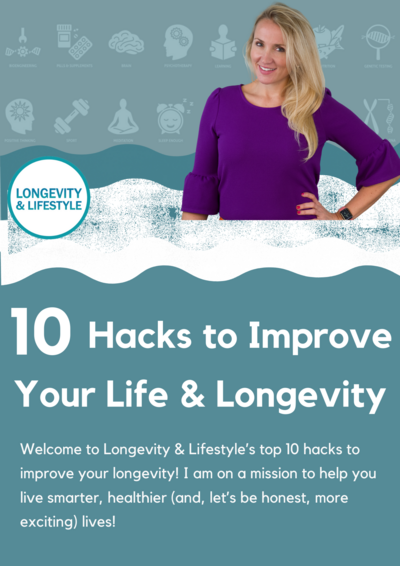
Steal Claudia's 10 Hacks to Improve Your Life & Longevity Playbook
FREE DOWNLOAD

Learn the secrets of health, lifestyle, business and finance optimization
Podcast
Top Resources

Steal My
10 Hacks to Improve Your Life & Longevity Playbook
Free guide
10 Hacks to Improve Your Life & Longevity
Want to learn how to live a smarter, healthier (and, let’s be honest, more exciting) life? Check out my free playbook with top tips just for you!
By signing up, you agree to join the Longevity & Lifestyle newsletter and to receive emails. We respect your privacy and abide by strict privacy policies.




LONGEVITY & LIFESTYLE
© Longevity & Lifestyle llc 2021 | Design by Tonic | Photos by social squares, Unsplash & Rebecca Reid
SEND ME A NOTE >
GET ON THE LIST >
@longevity&lifestyle
follow along: