#233 The Science of Hunger: GLP-1, Appetite Control & Natural Weight Management With Sarah Kennedy
The Longevity & Lifestyle podcast
The Longevity & Lifestyle podcast
The Longevity & Lifestyle podcast

Episode 233
Sign up for
The Longevity & Lifestyle Insider
Join Claudia's Longevity & Lifestyle Insider newsletter to get top tips, insights and strategies on optimizing your life, health and business!
By signing up, you agree to join the Longevity & Lifestyle newsletter and to receive emails. We respect your privacy and abide by strict privacy policies.



“Most people come back and say, ‘You’ve taken the noise from my brain.’” - Sarah Kennedy
In this illuminating episode, Sarah Kennedy, founder and CEO of Calocurb, unpacks the biology of hunger, the gut-brain axis, and the powerful role of GLP-1 in appetite regulation. Drawing on over 15 years and $30 million of New Zealand government-backed science, Sarah explains why hunger is driven by our most primitive brain systems — and how understanding this biology can finally bring peace with food.
We explore how bitter taste receptors in the gut stimulate appetite-suppressing hormones, why dieting can actually increase hunger over time, and how natural GLP-1 activation differs fundamentally from pharmaceutical injections like Ozempic.
We explore:
- The evolutionary biology of hunger and food noise
- How GLP-1, CCK and PYY regulate appetite
- Why calorie restriction backfires long-term
- Natural vs synthetic GLP-1 pathways
- How appetite regulation supports metabolic health, insulin sensitivity & longevity
This is a science-grounded, compassionate conversation that reframes hunger — not as a personal failure, but as biology you can finally work with.
ABOUT THE EPISODE & OUR GUEST
Get 10% off at calocurb.com/longevityandlifestyle with code CLAUDIA10 at checkout.
SPONSORS
Unlock peak energy, mental clarity, and long-term health.
If you’re an entrepreneur, leader, or high achiever who refuses to settle for burnout, fatigue, or suboptimal health - this is for you.
I help top performers optimize their energy, longevity, and success using science-backed strategies, biohacking, and personalized health protocols.
Book a Complimentary Peak Performance & Longevity Coaching Call
This free exploratory session will help you:
• Identify what’s holding you back from your highest potential
• Gain clarity on your energy, focus, and longevity goals
• Discover a proven framework for sustainable high performance
Spots are limited - apply now to reserve your session.
🔗 APPLY HERE
Peak Performance & Longevity Coaching Call
Show Notes
00:00 From Veterinarian to CEO: Sarah's Journey
04:35 The Role of Government in Research and Development
12:17 Understanding Calicurb: Science Behind Appetite Control
13:13 Natural Alternatives to GLP-1s
17:59 Clinical Insights and Appetite Regulation
21:27 Practical Protocols for Cravings and Eating Habits
24:01 The Psychological Freedom from Food Obsession
26:55 Metabolic Health and Appetite Regulation
28:26 Daily Nutrition Practices for Long-term Health
PEOPLE mentioned
Products Mentioned
MORE GREAT QUOTES
“When you come off the GLP-1, of course you get this intense rebound hunger — you just want to eat everything.” - Sarah Kennedy
“I’ve been taking Calocurb for six years now… and I can say I’m at peace with food." - Sarah Kennedy
Legal Disclaimer: Please note, to avoid any unnecessary headaches, Longevity & Lifestyle LLC owns the copyright in and to all content in and transcripts of The Longevity & Lifestyle Podcast, with all rights reserved, as well as the right of publicity. You are welcome to share parts of the transcript (up to 500 words) in other media (such as press articles, blogs, social media accounts, etc.) for non-commercial use which must also include attribution to “The Longevity & Lifestyle Podcast” with a link back to the longevity-and-lifestyle.com/podcast URL. It is prohibited to use any portion of the podcast content, names or images for any commercial purposes in digital or non-digital outlets to promote you or another’s products or services.
PODCAST EPISODE TRANSCRIPT
Claudia von Boeselager: Welcome to another episode of the Longevity and Lifestyle Podcast. I'm your host, Claudia von Boeselager. I'm here to uncover the groundbreaking strategies, tools, and practices from the world's pioneering experts to help you live your best and reach your fullest potential. Don't forget to subscribe to the podcast to always catch the latest episodes.
Legal Disclaimer: Please note, to avoid any unnecessary headaches, Longevity & Lifestyle LLC owns the copyright in and to all content in and transcripts of The Longevity & Lifestyle Podcast, with all rights reserved, as well as the right of publicity. You are welcome to share parts of the transcript (up to 500 words) in other media (such as press articles, blogs, social media accounts, etc.) for non-commercial use which must also include attribution to “The Longevity & Lifestyle Podcast” with a link back to the longevity-and-lifestyle.com/podcast URL. It is prohibited to use any portion of the podcast content, names or images for any commercial purposes in digital or non-digital outlets to promote you or another’s products or services.
PODCAST EPISODE TRANSCRIPT
Claudia von Boeselager (00:50)
My guest today is Sarah Kennedy, founder and CEO of Calocurb Ltd, a revolutionary weight management product developed after 15 years and 30 million of New Zealand government-backed science. Today, Calocurb is sold in five international markets and continues to grow rapidly across channels and Before launching Calocurb, Sarah held several senior roles in including Vice President International Farming based in China,
Managing Director of Dairy Nutrition and Managing Director of RDI, Fonterra's chain of rural retail stores. Prior to joining Fonterra in 2011, she spent over 20 years in Dietary and Animal Nutrition, including 10 years as a Managing Director of Healthries, Vitaco, New Zealand Limited, where she tripled company revenue and oversaw the merger of Healthries and NutriLife to form Vitaco, the third largest health and wellbeing company in Australasia.
Originally trained as a veterinarian, Sarah has held a variety of senior executive positions across agribusiness and the food industry. In 2009, 2010, she completed the Sloan Fellowship Program in Global Leadership and Innovation at MIT, and she has served on numerous boards spanning government, private, philanthropic, and publicly listed New Zealand companies. Today, we're going to dig into the exciting world of understanding hunger, GLP-1s,
and alternatives and all good things around this miracle molecule. So please enjoy.
Claudia von Boeselager (02:16)
Sarah, welcome to the Longevity and Lifestyle podcast. I'm so excited to have you on today's show.
Sarah (02:20)
Thank you Claudia, I'm excited to be on.
Claudia von Boeselager (02:22)
So you've had such a fascinating career, Sarah, from veterinarian to corporate executive to CEO of Callicurb. What's inspired you to move into the world of human nutrition and ultimately launch Callicurb?
Sarah (02:35)
Oh look, wonderful question, I get asked a lot. Interesting enough, being a veterinarian, of course you learn far more about nutrition than a doctor does, because if you think about it, animals, or particularly production animals, everything is nutrition. So so much of your training is in nutrition. I practiced for about five years and then specialized in animal nutrition.
Claudia von Boeselager (02:55)
Mmm.
Sarah (03:01)
And in fact, firstly at all, actually specialized in aquaculture. So I did salmon and shrimps up in French Polynesia. But I also did the underwater sea world in New Zealand. So was feeding sharks and everything like that. I had an amazing amount of fun and then just really got into more animals. And then when I took over as CEO of the largest, very iconic health brand in New Zealand,
Claudia von Boeselager (03:16)
Amazing.
Sarah (03:28)
obviously moved into more human nutrition and really have stayed in that ever since. But Calocurb was presented to me, or the research was presented to me in 2017. And at that stage, it was just the And it was brought to me and they said, this is when I say they, the New Zealand government does all primary research in New Zealand.
20 million at this stage and they get it to a stage where they think all this could be commercialized so then the business managers take over they brought this product and I was completely and I still say it blown away I had never seen well it wasn't even a product it was an extract but that they had that much science in this larger category that we could own from
literally from source to shelf. So, know, but like the man that liked them, he bought the company. I was a bit the same. I'm like, I love it. I want it. And so in doing that, you know, I raised the money, I formed a team. And that's when we launched Calocurb in 2018.
Claudia von Boeselager (04:35)
I'm excited to dive into all the science, but before we dive into the science, can you share a bit about how the remarkable foundation, how
New Zealand government does that research? Is that like typical that they look at certain initiatives and they spend 20, 30 million in research and then look to bring things to market? I'm just curious to understand.
Sarah (04:54)
Yeah, it's interesting. you're not wrong, Sam, because Australia has a similar system. They're called Crown Research Institute. And ⁓ they're literally owned by the government and they're funded by the government. And I suppose it's just natural for us. But you think about it, primary research doesn't happen, particularly in smaller countries, because we don't have large pharmaceutical companies. They can spend billions. But of course, smaller companies can't.
So it's a way of creating science within our ecosystem. all of these, my Calico was developed by a research institute called Plant and Food Research, and they have about 600 scientists and they have about seven locations over New Zealand. And obviously by their name, plant, they are very plant. So they have bred all the kiwi fruit,
And in fact, where we come from, Kalecube, comes from a specific hop extract that actually breed all of the hops in New Zealand. yeah, so this is what, so in 2010, a group of, I always say a group of very talented scientists, and they were talented, had a hypothesis that they would find a natural extract that suppressed appetite.
Now, if you think about it, was way, way, way before Ozempik and was OV and Zepar. So they had this and they put it in. The grant paper was called Foods for Appetite Control. They put this in and got a 20 million dollar grant back, which was, you know, it's still a healthy grant. And so they got that back and they did. Now, why did they think they'd find that? Some of it was historical. Interesting enough.
Claudia von Boeselager (06:16)
Yeah.
Sarah (06:37)
In the Scottish Highlands, in times of famine, Scottish people chewed very, very bitter heath berries to suppress appetite. It's actually been said that Charles II gave it to his mistresses to get them to lose weight. I mean, isn't that typical? He probably should have taken it himself. And in the Kalahari Desert, tribesmen chew very, bitter cactus.
before they go out hunting. And in fact, that is the basis of Houdia. So they knew bitter suppressed appetite. And I'll say a little bit more about that because that's an evolutionary adaptation of humans. So they had this hypothesis that they would find this. They first of all, they mapped, which was fascinating to me, they took 300 biopsies from endoscopy and colonoscopy.
from right down the gastrointestinal tract and actually showed we have taste receptors right down our gastrointestinal tract. So not just on our tongue, we have 25 on our tongue, but they go right down through our gastro, and these are called TAS2R, but they're bitter taste receptors. And at different locations in the gastrointestinal tract, they release different hormones. So in the stomach, if activated,
they release ghrelin, the hunger hormone, which is why we have a lot of these aperitifs, as you know, because they're to stimulate hunger or to get you ready to eat. But if you go past the stomach into the upper duodenum or upper gut, they stimulate CCK, GLP-1 and PYY. So three of the very powerful appetite suppressing hormones.
So why does our body do this? Well, it's this defense mechanism. It's a secondary defense mechanism against you potentially eating something poisonous. So bitter was poisonous, so often associated. So if you eat something very bitter on your tongue, you'll spit it out. If it goes to your stomach, you'll release ghrelin because it seemed to eat more to try and dissipate that or to...
reduce it if it goes to your upper duodenum well it's way too late so it stimulates the release of these three very very powerful appetite suppressing hormones so I found it fascinating that's a human adaptation evolutionary but in fact plants sort of evolved alongside us so if you think about it when they want you to eat something so let's say a strawberry it's very very sweet
and the seeds, we're carrying their seeds. But if you go to eat the leaves, they're very, very bitter. Same as an apple tree, because the tree doesn't want you to eat the leaves, it wants you to eat the fruit. So kind of we evolved along the way together. So they did this and that was, they showed that we did this. But then they're like, okay, so how do we stimulate it? So they tested over a thousand different natural extracts.
Claudia von Boeselager (09:27)
fruit.
Sarah (09:42)
and literally only two And the reason for that was, you know, if this was activated the whole time, you know, we'd have a cup of coffee and we wouldn't eat. So it's this evolutionary. So two, one was a potato oxalate, which is fantastic, but it's poisonous. So you'd be thin but dead. And then the other one was a hop. And they're like, this is fantastic.
They then went and tested about 50 different hop varieties. Now remember I told you they bred all the hops in New Zealand. So they had them and they found the Eureka, which they then named Amarasate. Amara meaning bitter and sate meaning satiation. As I always say, never ever let a scientist name anything. No one in the world can pronounce Amarasate.
they love it because it's like, what's wrong?
Claudia von Boeselager (10:30)
⁓
Sarah (10:33)
Now remember, human clinicals are expensive and they took it in and this was an expensive trial because it was 30 males but they're all cannulated so they could take bloods all the way through. gave them Calicoop, which didn't actually have a name then, but they gave this capsule an hour before having an eat to your full lunch and an eat to your full snack and they measured all the bloods and in that they showed that we increased
a CCK by 600 % and GLP1 by 600%, PYY by about 400%, so slightly lower, but that's in the average an 18 % reduction in calorie intake. So basically what it's doing is it's super stimulating your endogenous or your natural release.
of your own appetite suppressing hormones. And really to throw in there, I'll also say that many people say, compare it to ozemp, compare it to something like that. What's the difference? Well, two differences is, the main one everyone wants to know is, a semi-glutide, if you have a semi-glutide, you will reduce on average around 25 % of your calorie intake.
Claudia von Boeselager (11:34)
Yeah, let's talk about that. Yeah.
Sarah (11:50)
⁓ We're around an average of 18 % The other thing is with the semi-glutite it is a synthetic hormone Nothing wrong with the synthetic hormone, but they've changed a molecule in it So it doesn't get broken much slower breaking down in the body So it lasts for seven days. So you have like I would say at about 3000 % GLP-1 which decreases over the week. You have high GLP-1
when you're asleep, you have high GLP-1 all the time. You don't need a high GLP-1 all the time. We stimulate it when you need it, which is when you're going to eat. So I love the grass because they show, you know, they show you're normal. Because we all release GLP-1, but we super stimulate it. We literally do it by twice and you see the grass with the calicurb. And so we're super stimulating it.
Claudia von Boeselager (12:24)
Mm-hmm.
Sarah (12:44)
your gut brain. God that's a really long answer isn't it?
Claudia von Boeselager (12:46)
I was absolutely fabulous and I'm so
fascinated by it as well. And I've been trying the callocurb and I love it. I was before meals, if I knew I was going to be meeting, you know, friends for a bigger meal or something like that as well. And you really feel the difference, which is great because I traditionally would be someone who might, my sort of gut brain connection wasn't the fastest when eating. And then I realized after, I've actually eaten too much. So it's so nice to not have that level of hunger going into.
a meal and obviously doing what I do, I'm very cautious about what I'm eating, et cetera. to notice something like that from a natural base versus, you know, obviously GLP-1s for certain people have their time and place, right? And there are certain benefits for certain people. However, if you can have a natural substance, it's so much more powerful. So I just think that that's really important. Would you even say for people who are taking GLP-1s that this could be complimentary or would you say it's better not to mix them?
Sarah (13:36)
⁓ Look,
absolutely not remember we are stimulating your endogenous or your natural So practitioners are using it. Well in three ways they're using it as an alternative So for people that can't take the side effect remember you get around 67 % of people have gastrointestinal issues and of course you are because you're putting it in at a very very high level, you know, it's almost your brain say hey something's going on here and
as an alternative. People can't afford it, they want something natural, they don't want to inject themselves. The other one is while you're on it, because they can keep the dose down at the lowest level. So say something like a trisepatide, they can take it at two and a half mils, which is the starting dose, and they can keep them on the starting dose. So what does that do? It reduces the cost and it reduces the side effects, and you're actually stimulating your natural.
And of course, at day five, when they will get a breakthrough hunger because it's degraded, of course, calicoob is there so they can go through to day seven. But the third one, and I really want to impress on that, is I don't say it's an if, it's a must, which is when they're titrating off. You have, and most people don't realize this, but when you tell them they get it, you have suppressed your natural hormones to zero.
So we have all the clinical papers on that. you're, cause your hormones go woo hoo, I don't need to do anything. I'm off, I'm off on holiday. I don't need to do anything. You've done it for me. It's like taking a testosterone or anything like that. You've suppressed it down. And so when you come off the GLP-1, of course you get this intense rebound hunger. You just want to eat everything. And of course you'll get, this is where the weight rebound comes in.
We actually call it the valley of death because you come off this incredible hunger and of course you're going to break any habits that you've formed, you're just going to eat. As we know, in a year 75-78 % of people put the weight back on and in two years about 99%. So it's not an if, it's a must in that titrating down.
Claudia von Boeselager (15:46)
Mm-hmm.
Sarah (15:53)
And what I find fascinating and I'll be able to tell you hopefully in a couple of weeks time, because our fourth human clinical beyond blinded, scientists believe we upregulate these receptors, we don't downregulate. So when you stop calicoob, you actually, you've kind of, I kind of think of it like I've exercised these little taste receptors. So I've upregulated them, I haven't downregulated them. I've made them more,
Claudia von Boeselager (16:01)
Mm.
Sarah (16:19)
gut-brain excess have made it more receptive.
Claudia von Boeselager (17:35)
Wow, that's really powerful as an added bonus on top as well. And could you share Sarah bit around, as you mentioned, the science has been developed over 15 years and there's been different clinical studies. So this is going to be the fourth one, but what have been some of the measurable outcomes like the appetite reduction, calorie intake, body weight change? Maybe you can walk people through listening. What have you seen in real time and maybe some anecdotes as well?
Sarah (17:59)
Well certainly anecdotal, but the second human clinical was done on appetite in males. And we gave Calocurb at, so they were 24 hours, water only fast. And we gave Calocurb at 16 hours and 20 hours. And we showed in males an 80 % reduction in increased hunger. So massive. So at 24 hours, they were 80 % less hungry than the control.
We then had to go and do it. I was a bit grumpy about it. We had to go and do it. And I shouldn't say this. I'm so delighted we did. But we had to go and do it in females to get our Australian registration. Because they're like, yeah, but you showed it in males. It may not happen in females. And I'm like, you know what? Anyway. So I had to do it in females. Now you think about a double blind trial in women with three treatments. We had to do 30 women, placebo, low dose, high dose.
You have to do women in their exact same stage of their menstrual cycle on the exact same day of the week and this was during COVID. So, you know, it took around 18 months and quarter of a million dollars. You can see why I was grumpy. But I was so glad that we did it. A, because I couldn't leave the country. you know, I was in New Zealand. We were like the place you could leave but never come back.
Claudia von Boeselager (19:17)
You
Sarah (19:17)
and
we did it and we showed and we don't quite know why we have hypothesis but women are more sensitive to GLP-1 so when women remember we gave it at 16 hours and 20 hours we got 100 % decrease in increased hunger and 120 % decrease in craving so at 24 hours they were craving less than they were at 16 hours
and they were at the same hunger at 24 hours than they were at 16 hours. So eight hours in the last eight hours of 24 hour fast. We also did rebound eating and we got 14 and a half percent reduction in calorie intake. So that was four hours after their last dose. So very significant in that. So you look at the applications in that just as you said.
You know, you're going out for a big meal or like for me if I know I'm going to eat late I will have it because I don't want to get there and I'm going to eat everything. You know and ruin all my good work during the day. A lot of people say it stops there eating after dinner. So take it before you eat less but you will feel full for a lot longer. So you're far less likely to go and go for that chocolate bar or something salty.
The other one I say to women is during the luteal phase of the menstrual cycle, so the typical PMS, women on average will eat 200 calories more a day, actually more likely to eat, they can eat up 600 calories. Now that's natural because your body's saying you may implant an egg, so I want to be prepared for this, I'm going to get all of this in, but of course we're not going to implant an egg every month.
Yeah, so there's just all of these applications and you can come in and out of it. That's the thing I like. know, mean, know full PMS Look, we're coming up to holidays. You want to eat. You're not going to upset your mother or your mother-in-law, you? By saying, you know, you want to eat, but you just don't want to eat as much. You don't want to be like the fattened calf. So eat, but just not as much.
Claudia von Boeselager (21:27)
I love your analogies. Sarah, can you share what the ideal protocol is? Let's say somebody who has, you know, relatively active lifestyle, they're trying to maintain good health, but it's always those cravings, maybe they're that afternoon dip or whatever it might be, and they want to make better food choices and not have that constant cravings and distracting them. How often should they be taking Calocurb and
what intervals.
Sarah (21:51)
So just for that and really just maintaining or actually losing weight. I take it at about, well you wouldn't have taken an hour before a main meal, but I take it at about 10.30. Now how do you remember? It's always a thing. Most people have a cup of coffee or a drink at about 10.30 in the morning. Just remember there.
want to get a nutritious lunch but you just won't eat much and it'll take you through the afternoon. Similarly, take it an hour and an hour a half before dinner. Once again, set it on your phone but just try and remember and it will just A. So twice a day at least an hour before on a relatively empty stomach. Why do we say that? It's a delayed release capsule. You want it to go through your stomach.
into your upper duodenum, your upper gut and that's where it'll release and it'll start stimulating these hormones. So I intermittent fast because I'm lazy and it's just easy. So I take mine at about nine in the morning. So it doesn't have to be that hour but if you want to get that reduced meal intake I take mine at about nine in the morning and of course it just sees me through till about one o'clock.
and I can walk past those muffins, I can walk past things like that. And you're like, no, I'm fine. It takes the noise away. So you ask what the feedback is. Most people come back and say, you've taken the noise from my brain.
Claudia von Boeselager (23:15)
Beautiful. Yeah. And someone who used to have like eating disorders as a teenager and all those struggles and like, mean, the amount of women and conversations about, I have to stop eating so much, I have to do this and this constant struggle as well to have a natural opportunity that you don't need to be injecting yourself with something is really phenomenal based on science, which I love as well.
Sarah (23:35)
I think most women have that and often people say, why did you start Calocurb I had and I always say, it's always got to be something personal to do something insane like this. Absolutely insane. I'd had a love-hate relationship with food my whole life and many people will relate that. Love it but hate it. Eat it but say, why did I eat that much? Why did I do that?
know, binging, not binging, dieting, all the rest. And I've been taking Calocurb for six years now, and I probably take it once a day because, it's just a maintenance for me. And I can say I'm at peace with food. You know, I can enjoy it, but I just don't, I don't have a hate relationship with it. I feel comfortable. And that is just such a relief, ⁓ that constant discussion in your head.
Claudia von Boeselager (24:04)
Mm-hmm.
Mm.
Yeah.
Sarah (24:28)
I want it, but I don't want it. I shouldn't have it. I could have it. All of those things.
Claudia von Boeselager (24:33)
it's like a new freedom, I think as well. Even Oprah Winfrey, I mean, she was talking about Ozempic, but again, a GLP one. She said for the first time in her life, she understood how like naturally thin people, can just do what they want in a day. And it's not that constant inner battle and conflict, which so many people are ashamed about. They don't share about it and talk about as well, but it just frees you to be you and not constantly be in that sort of inner battle as well. yeah, really.
Sarah (24:59)
What I want to say to women is it's not about willpower or anything like that What most people don't realize is hunger or your appetite control is actually situated in your hind brain And that's a very primitive brain and it's so I think it's fascinating if you reduce your calories by 25 % per day your hunger Doubles over four months. That is your noise it doubles
and what your greeelin is going, hey, you could be going into a famine. And it's telling your hindbrain, go out and eat something so you are being driven. If we weren't driven, we'd all be lying in our caves going, you know what? Now it's raining, so you don't wanna go. So this is it. And then of course we have this forebrain, our forebrain over our hindbrain, and this is where it says, no, this is the noise. No, you don't need to eat. You've had that. It's not healthy in that.
Now you put stress, tiredness, alcohol, hormones and that little forebrain goes bloop and then your hindbrain goes wee off we go and you think about it how often have you eaten hot chips late at night after having a few glasses of wine? That's because all of your inhibitions have gone and you're like yeah we're gonna do that. That's your hindbrain telling you. So I often say to women hey
The noise is not bad, it it was your evolutionary system. So it's not bad, and in fact you probably would have survived versus all the thin people, like, oh, you know, I'm not gonna eat. But it's what you eat and how you eat
Claudia von Boeselager (26:34)
And so calico is a great way to bring back that control and that sense of freedom, I guess, as well for men and women, obviously, too. Yeah. And from a longevity perspective, how does the appetite regulation influence essentially the metabolic health, insulin sensitivity and inflammation, which we know is so important. These are all the key underlying drivers of aging. So maybe you could expand on that for people listening.
Sarah (26:56)
Well, know, excess weight is going to stress your body in every way, form and type. You know, you think about every aspect of your body when you've got fat in your abdominal area, you're going to stress it, you know, on your muscular skeletal. They're seeing all of these incredible benefits. And of course, your body wasn't designed to carry, you know, want some fat for times of famine, but it doesn't want to carry.
this excess fat. So certainly this leanness, or sense of leanness, and particularly, you know, I'd say for women going, God, we get it rough, we? Going into perimenopause or menopause, you start to accumulate fat around your middle. And women say to me, why have I lost my waist? And this is what happens. you know, and that's not good. It's not good for any of your internal organs. So, I had to say it with
you know perimenopause and menopause because of your estrogen reduction you actually have to eat 200 calories less a day just to stay the same size. So you get it you eat 200 calories more during PMS and you have to eat 200 calories less but you know the good news is we are more sensitive to GLP-1 so let's just take the upside on it.
Claudia von Boeselager (28:14)
I love it as well. Beyond the supplementation, what are some of the daily habits or nutrition practices that you personally believe make the biggest difference in long-term and weight management health?
Sarah (28:26)
Look, I'm just a huge proponent of protein, know, and we just don't get enough protein You know, I mean we all know it's about 120 grams per day, which sounds easy But if you think about an egg and he going he has seven grams of protein, you know People go all you know, but I'm having ham on my sandwich or something like I'm having chin But you're having a slice, you know Try try to get that protein and particularly with aging because we do get muscle degradation
we do and if you find it hard, which it is to get that breast of chicken or something like that, try a protein drink, you know, just to get that 30 grams in there. Watch out for bars, watch out for the nutritional panels. So many of them may have 30 grams of protein, but they also have hideously high sugar in there. So I'd say, you
as a caveat just watch out for those nutritional panels. You know and so that for me is protein. Protein is everything.
Claudia von Boeselager (29:27)
Amazing. And I would just add to that as well that some people are like, well, you know, how much sugar? And I was reading that like anything above five grams per a hundred grams and be careful because the food manufacturers will trick you and it'll be like only two grams of sugar per 30 grams. do the math, calculate up about how much sugar you're actually consuming and just be, you know, wary of that. And when you would eat something like that as well. yeah, but I think that eating that
Sarah (29:42)
That's it.
Claudia von Boeselager (29:51)
protein and I think I a lot of people, they say, I'm having three eggs in the morning, but that's 21 grams, that's not the 130 grams. ⁓
Sarah (29:57)
It's fantastic, three eggs, love it, but it's just not enough. I mean that's
less than 20%. In fact, the staff that I work with hate me because I'm always eating boiled eggs because they're the end and they're like, that's disgusting. I know, know, but I'm always, because it's just such an easy form of protein.
Claudia von Boeselager (30:12)
You and the bodybuilders.
What
do you eat, Sarah? mean, you've studied this all the way back in veterinary school, obviously for animals though, but what is your ideal nutrition in a day?
Sarah (30:27)
I do try and be natural. you know, I'll always, well, I fast because I'm lazy. And that just means that, you know, I have one less meal. I am lazy. I'd love to say I do it for a whole lot of reasons, but I just have one more less meal a day. I, you know, is it right? I don't know. My lunch would always be a couple of eggs, ⁓ hummus and some cottage cheese. And I think I eat a huge amount of salad.
It's just such an easy go-to. it is, you we get so many pre-prepared salads now. Just be careful of the dressings as well. You know, put these ranch and that, they're actually more than the salad. You know, I think I told you, I was recently in Italy and they only put olive oil and balsamic on the table. You really only need to splash those over and taste it. And then for dinner, it'll be chicken or a steak or something like that. So, and salad.
Claudia von Boeselager (31:00)
Yeah.
Sarah (31:20)
Salad, salad, salad. what we forget is all of these toppings, dressings, toppings. We were out at dinner here in America the other day and had a baked potato and they're like, do you want all the toppings? And I'm like, no, I'll have them on the side. But if they put them all on my baked potato, my little happy, very good for me baked potato would be terrible. You know, I'd have sour cream, butter, cheese, bacon bits, all of those.
Claudia von Boeselager (31:26)
Mm-hmm.
I think that's the really important point as well. like, by the way, like we, I've just put olive oil, like cold pressed olive oil, sometimes a little bit of balsamic, fresh lemon, even with some lime, some really good, like good quality salt. I'm Kalahari desert salt at the moment from things which I'm obsessed with.
Sarah (31:56)
That's it.
The other thing is put a couple of crunchy seeds on top. Seeds are good for you. So they will really lift up a whole salad. you know, I'm like a rabbit, but I do eat a lot of salad and I like it.
Claudia von Boeselager (32:07)
Yeah, love seeds.
amazing. We need it as well. Sarah, where can people follow you, find out more what you're up to, learn more about Callow Curve? Where would you send them to? We'll link everything in the show notes.
Sarah (32:24)
it's just www.calocurb.com and you know people often ask why did you call it calocurb it's such a naff name. Well you know when you're looking for a name you you've got to have something that describes but also what most people don't realize is you're going to have something that can be trademarkable around the world.
Anyway, so CALO meaning calories and KURB meaning curb those calories, which in fact it does. and you know, we're on Facebook, we're on Insta, we're on all of those and there's some pretty cool and these little hints. We do not try and prescribe to people what to do.
We put all of our energy into the science. But we have some pretty cool things coming up on there.
Claudia von Boeselager (33:11)
That's amazing. And dear audience, Calocurb and Sarah are kindly offering you a 10 % off to try it out. So if you go to caliCurb.com forward slash longevity and lifestyle and use the code Claudia10 at the end at checkout, you can check it out for yourself and see the benefits as well. So Sarah, do you have any parting thought or message or piece of advice for my audience today?
Sarah (33:35)
No
really I mean it's been wonderful being on and talking to you but you know as I said to you I can only say it from an anecdotal it has given me such incredible freedom you know to have this piece and you know I wish I'd known it a lot a lot lot earlier and you know if you're one of those people like me with that noise all the time yeah
Do try it and where you can always get hold of us. You can always ask us questions
Claudia von Boeselager (34:03)
Beautiful, beautiful. Thank you so much, for coming on today. Thank you to your audience. I hope you enjoyed it as much as I did. It's been such a pleasure, Sarah. Thank you.
Sarah (34:10)
Thank you.
I’m Claudia von Boeselager
Longevity Coach, detail-loving educator, big-thinking entrepreneur, podcaster, mama, passionate adventurer, and health optimization activist here to help people transform their lives, and reach their highest potential! All rolled into one.

Hey there!

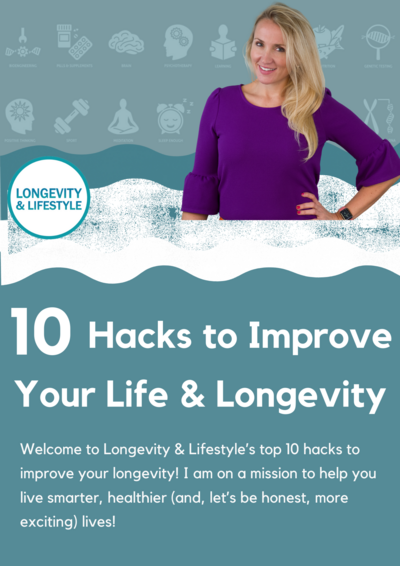
Steal Claudia's 10 Hacks to Improve Your Life & Longevity Playbook
FREE DOWNLOAD

Learn the secrets of health, lifestyle, business and finance optimization
Podcast
Top Resources

Steal My
10 Hacks to Improve Your Life & Longevity Playbook
Free guide
10 Hacks to Improve Your Life & Longevity
Want to learn how to live a smarter, healthier (and, let’s be honest, more exciting) life? Check out my free playbook with top tips just for you!
By signing up, you agree to join the Longevity & Lifestyle newsletter and to receive emails. We respect your privacy and abide by strict privacy policies.



LONGEVITY & LIFESTYLE
© Longevity & Lifestyle llc 2021 | Design by Tonic | Photos by social squares, Unsplash & Rebecca Reid
SEND ME A NOTE >
GET ON THE LIST >
@longevity&lifestyle
follow along: