#236 Mastering HRV & Nervous System Sovereignty — How Emotional Athleticism Shapes Longevity, Leadership & Stress Resilience with Salim Najjar
The Longevity & Lifestyle podcast
The Longevity & Lifestyle podcast
The Longevity & Lifestyle podcast

Episode 235
Sign up for
The Longevity & Lifestyle Insider
Join Claudia's Longevity & Lifestyle Insider newsletter to get top tips, insights and strategies on optimizing your life, health and business!
By signing up, you agree to join the Longevity & Lifestyle newsletter and to receive emails. We respect your privacy and abide by strict privacy policies.
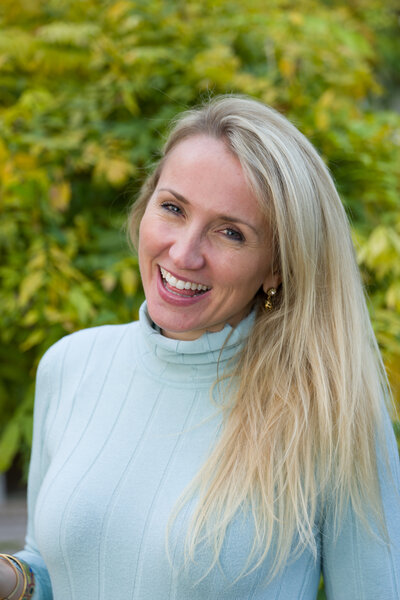

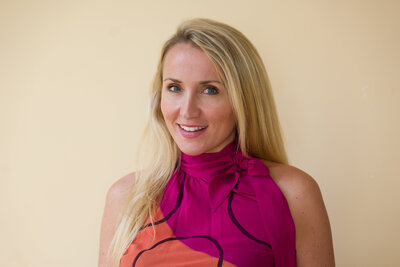
“It’s not about being regulated all the time. It’s about having sovereignty over your nervous system.” - Salim Najjar
In this episode, nervous system and HRV expert Salim Najjar reveals how heart rate variability acts as the language of the nervous system, guiding us toward emotional resilience, clarity, and longevity. Drawing from his own journey—from entrepreneurial burnout to nervous system sovereignty—Salim explains why learning to regulate stress is no longer optional in modern life.
We explore
- How childhood patterns shape adult reactions
- Why you can’t think your way out of overwhelm
- How practices like breathwork, sleep, reframing, and community can transform both health and performance.
This conversation reframes stress as a training ground—and HRV as the compass back to balance, purpose, and embodied leadership.
ABOUT THE EPISODE & OUR GUEST
Get $300 off with code CLAUDIA
Visit carolbike.com/claudia and use code CLAUDIA at checkout.
Get 10% off your MOVE+ Pro at kineon.io/claudia.
SPONSORS
Unlock peak energy, mental clarity, and long-term health.
If you’re an entrepreneur, leader, or high achiever who refuses to settle for burnout, fatigue, or suboptimal health - this is for you.
I help top performers optimize their energy, longevity, and success using science-backed strategies, biohacking, and personalized health protocols.
Book a Complimentary Peak Performance & Longevity Coaching Call
This free exploratory session will help you:
• Identify what’s holding you back from your highest potential
• Gain clarity on your energy, focus, and longevity goals
• Discover a proven framework for sustainable high performance
Spots are limited - apply now to reserve your session.
🔗 APPLY HERE
Peak Performance & Longevity Coaching Call
Show Notes
00:00 Emotional Athleticism: A Biological Necessity
06:14 Understanding Heart Rate Variability (HRV)
09:20 Transforming HRV: Personal Journey and Insights
12:27 Pathways to HRV Growth: Sleep as Foundation
15:26 Hormetic Stress: Training the Nervous System
21:11 Reframing the Shift: The Power of Mindset
22:57 Understanding Heart Rate Variability (HRV) and Its Impact
24:42 The Journey of Letting Go and Embracing Change
26:53 Reframing Challenges: The Power of Perspective
29:04 The Science of Intention and Purpose
34:52 The Role of Community in Emotional Regulation
41:13 Leadership and Vulnerability: A New Approach
45:22 Practical Strategies for Emotional Regulation
PEOPLE Mentioned
Products Mentioned
- Oura Ring
- NuCalm
- Super73 Electric Bike
- PEMF mat
- The Hero's Journey
- Finding Joe
Terminology
- Heart Rate Variability (HRV)
- Autonomic Nervous System
- Sympathetic Nervous System
- Parasympathetic Nervous System
- Emotional Athleticism
- Nervous System Sovereignty
- Theta Brainwave State
- Limbic System
- Amygdala Hijack
- Hormetic Stress
- Non-Sleep Deep Rest (NSDR)
- Binaural Beats
- Observer Effect
- Somatic Healing
- Co-regulation
- Frozen Emotions
- Polyvagal Response
MORE GREAT QUOTES
“Curiosity and levity have been instrumental for my journey back to wholeness.” - Salim Najjar
Legal Disclaimer: Please note, to avoid any unnecessary headaches, Longevity & Lifestyle LLC owns the copyright in and to all content in and transcripts of The Longevity & Lifestyle Podcast, with all rights reserved, as well as the right of publicity. You are welcome to share parts of the transcript (up to 500 words) in other media (such as press articles, blogs, social media accounts, etc.) for non-commercial use which must also include attribution to “The Longevity & Lifestyle Podcast” with a link back to the longevity-and-lifestyle.com/podcast URL. It is prohibited to use any portion of the podcast content, names or images for any commercial purposes in digital or non-digital outlets to promote you or another’s products or services.
PODCAST EPISODE TRANSCRIPT
Claudia von Boeselager: Welcome to another episode of the Longevity and Lifestyle Podcast. I'm your host, Claudia von Boeselager. I'm here to uncover the groundbreaking strategies, tools, and practices from the world's pioneering experts to help you live your best and reach your fullest potential. Don't forget to subscribe to the podcast to always catch the latest episodes.
Legal Disclaimer: Please note, to avoid any unnecessary headaches, Longevity & Lifestyle LLC owns the copyright in and to all content in and transcripts of The Longevity & Lifestyle Podcast, with all rights reserved, as well as the right of publicity. You are welcome to share parts of the transcript (up to 500 words) in other media (such as press articles, blogs, social media accounts, etc.) for non-commercial use which must also include attribution to “The Longevity & Lifestyle Podcast” with a link back to the longevity-and-lifestyle.com/podcast URL. It is prohibited to use any portion of the podcast content, names or images for any commercial purposes in digital or non-digital outlets to promote you or another’s products or services.
PODCAST EPISODE TRANSCRIPT
Claudia von Boeselager (01:55)
My guest today is Salim Najjar, an engineer turned nervous system and HRV expert who guides CEOs,
and elite performers toward nervous system sovereignty. Using HRV as the compass, he teaches individuals to alchemize stress into their greatest ally. After transforming his own HRV from 32 to over 100, Salim created the Art-A-R-T of the Heart framework, a path to embodying nervous system mastery. From launching his own beverage company to traveling the world and learning from spiritual masters,
Salim stands at the intersection of entrepreneurship, biohacking and consciousness. Today, he brings these worlds together to build a movement that returns empowerment to each individual, reminding us that our body's wisdom is the only guru we will ever need. I heard Salim speak recently and really loved his work and I think HRV is so fundamental to living well and for longer. So I hope you particularly enjoy today's conversation.
Claudia von Boeselager (04:35)
welcome to the Longevity and Lifestyle podcast, Salim. It's such a pleasure to have you with us today.
Salim Najjar (04:40)
Pleasure is all mine. Thank you so much for asking me to come join.
Claudia von Boeselager (04:44)
Yeah, pleasure. And this is such an important you talk about, and I love this term, becoming an emotional athlete, which I really love, right? And 90 % of modern health issues are linked to chronic stress, dysregulation. So what does emotional athleticism look practice? And why is it becoming a biological necessity, not just a luxury?
Salim Najjar (05:06)
Yeah, so many different ways to answer that. I think to start, I believe that we don't have control over anything out here. We only have control over how we react to what's happening out here and the way the autonomic nervous system works in our nervous systems. Its sole job is survival, right, and safety. And it runs on programs and patterns based on our prior
history, our prior stories, our traumatic experiences that happened for survival. And if we get triggered by something and the amygdala fires off, we go into the limbic reptilian brain and we will respond and react to what that nervous system and the story around whatever emotion is stuck, we will respond with that pattern, that same pattern versus
having access to our frontal cortex, which is where our memory, our cognition, our intuition, all of the incredible stuff that we have learned on our journey sits and lives. And I like linking it to an analogy of hospitals in Florida, they have this fail switch, right? Where there's a lot of hurricanes and tornadoes there. And if you hit a button, all the metal shades come on, right? To protect everybody inside the hospital from glass, hurting them.
brilliant program put in place to protect people. However, if there's a shooter in the building and they hit that button, it's not so brilliant of a program, but the program only knows an on-off switch, right? And that is a flavor of how our nervous system works. If we get triggered, if the mind perceives an external threat, we go into that limbic response for survival. And that's why
get in an argument or do something and look back and be like, how did I do that again? How did I say that again? What I know better than that. And we need to bring compassion to ourselves because the reality is that the nervous system was acting for survival. And so when I say training to be an emotion athlete, it's really training to build the capacity to have more agency. And I use the word sovereignty to choose how you want to respond.
to what you're seeing versus going into a habitual autonomic response.
Claudia von Boeselager (07:13)
And typically from the amygdala and that fear state, which is typically programmed from childhood, would you say?
Salim Najjar (07:18)
Yeah, so the, you know, the brain baseline is theta between the ages of two and seven. the theta is one of three states in the parasympathetic, which is when our brain is oscillating between four and eight hertz. And it is a state like into meditative, you know, zen like between conscious and unconscious where we're not really awake, eyes are usually closed, but we're susceptible.
to energies around. Our nervous system is like a sponge and we absorb things. And that's actually the baseline of youth between the ages of two and seven, that theta state. So we call it our formative years because they quite literally form the imprints and patterns in our nervous system. And then throw on top, we don't have a prefrontal cortex developed during those years. So we don't have the ability to discern reality ourselves and we kind of just accept it as is. So if a caregiver
you know, yells unintentionally or has a reaction, even though they may think, you know, it's just in the moment and everything's gonna be okay, a child who doesn't have the ability to discern that himself or herself, and there's a sponge absorbs that reaction and it gets imprinted and they end up, you know, just repeating that same program, which on a quantum level,
is just a, I call it a frozen emotion that's stuck in the fashion. I mean, I got that from an incredible book, The Body Keeps Score, which I know I mentioned at the conference that just talks about how we are grownups living in these adult meat suits projecting all of our stuck frozen emotions. So to answer your question, yes, a lot of it comes from those formative years and also later years, seven to 14, middle school, high school, I had a lot of stuck.
emotion around, you know, some traumas in those years. Even earlier, you know, there's trauma from womb, from birth, from all those things. And if you believe in past life in that world, I do too. And so all that generational trauma, cultural trauma, all that is carried, I believe in the field.
Claudia von Boeselager (09:13)
I do.
Yeah.
That needs to be worked through as speak at conferences about the triad for longevity, the body, mind and spirits, and you have to do that shadow work and clear that trauma, be it your own, ancestral, whatever it might be, will stay with you as well. to unpack here. I'm super excited.
For a lot of people, they probably heard the term HRV. So I want to unpack that a little bit. Maybe you can explain a bit just for someone who's maybe not familiar to understand. we've hear about it in mainstream now, right? think Aura alone has over a million users tracking their HRV daily, but very few people really understand what they're looking at. So could
decipher that a little bit for people just to make sure everyone's on the same page. And what is it really telling us about emotional and physiological resilience by this magic number?
Salim Najjar (10:05)
love it, with pleasure. So HRV stands for heart rate variability. And what that is measuring is the gap or the variance between each of your heartbeats. And what that gap indicates is how your heart and nervous system is perceiving its ever-changing environment. So essentially, your relationship to your perceived stress and a direct reflection of the health of your autonomic nervous system
and its ability to go from a sympathetic fight or flight state into a parasympathetic rest and digest state. So it is a real time indicator of how your body's feeling, of what's resonant for your body and what's dissonant for your body. And it varies. It varies 40, 60, 80 times a minute, depending on your heartbeat per minute, right? So it's not something that's just gonna stay. So it's a lot of data. And that's why I really like to think of it as a language.
the language of your nervous system. And when you think of languages, you don't think of English being better than French, being better than Spanish, or a language is good or bad. That's why I said there's no good or bad HRV score. It's just data, right? The whole intent of a language is for an ecosystem within a community to communicate. The whole intent of your HRV score is for your nervous system and body to communicate only with you, which is why I think there's been...
frustration in the optimizing world because we're so used to, and I was the most guilty of comparing and trying to hit a certain number and trying to optimize and yeah, yeah, yeah, all of us. with this particular biomarker, you definitely can improve it for yourself, but that's the only score you really should be comparing because the reality is if it's measuring how we are perceiving,
Claudia von Boeselager (11:38)
Salim Najjar (11:55)
our reality, we perceive our reality through our senses, through our touch, through our taste, through our sight, through our smell, through our ears, but most of all through our thoughts, through our relationship to what is happening. So if we think we have a bad score or if we think someone has a better score and we're not doing good enough, we're actually leading to the next bad score because that's the story that's happening up here, which is why
It's been such a beautiful number for me to get more attuned to my body versus just being up in the mind.
Claudia von Boeselager (12:31)
So we're going to unpack a few things shortly as well, but you transformed your HRV from it. And I know it's an N=1, right? So everyone listening, it's not comparing, but it's to show that you can improve or if it's going down, it's an indicator, right? And you transformed your HRV from I believe it was to over a hundred and that's a psychological identity shift, right? So what were the deeper internal changes? And this is where I think it gets really interesting, which is, psychologically, somatically
unlocked that level of coherence for you.
Salim Najjar (13:02)
Yes. So always the number one question, how do you improve it? Right. And I think even before answering that, when you said the baseline went from 30 to above a hundred, above 150 at one point, it's my baseline. I want to clarify that because if you're measuring HRV via your aurora ring or a wearable, what they're giving you is your morning HRV score is your average nightly HRV score, meaning the average gap between every heartbeat at night.
which is a good barometer and indicator of the load that you put on your nervous system the day before. And so I look at the baseline, which I define as your average score over the last 30 days, which is a beautiful snapshot of the health of your nervous system over the last month. And so if you're utilizing HRV as a language, then if you wake up and you have a baseline of 40, then you see a morning score of 20. That's not a bad thing. That's just your nervous system saying,
whatever you did the day before was more of a load than it's used to, the best thing you can do is listen and honor it. And instead of continuing to push harder or stay up late for work or do the thing that we're so conditioned in culture, nourish your body, go for a leisurely walk instead of a high intensity workout, do something a little more gentle. And on the flip side, if it's higher than your baseline, that's your nervous system giving you permission to consciously push it a little bit.
and stretch it and build that capacity and malleability. So that's the first thing I just want to clear up. And then in terms of how I improved mine, it's really part of now what I have created as a framework that I call the art of the heart. And art stands for awareness, regulation, transformation. And that is a three act arc that is not a ladder we climb once and we made it and we're regulated and that's it.
but rather a daily act of devotion towards nervous system sovereignty. And I'm very intentional to use the word sovereignty over nervous system regulation, which is a big thing that people are talking about as they're realizing the beautiful stat you gave on chronic stress and it's linked to all aging and disease. So the importance of understanding the health of your nervous system, but it's not about nervous system being regulated all the time. If we're regulated all the time,
we're not gonna increase the capacity to go do and handle more. It's more important to have agency and sovereignty over your nervous system and taking it from a stressful state into a parasympathetic state. And so this three act art of bringing awareness to what is happening internally or how your body's responding to something and then working with different tools and modalities to regulate.
that internal state of your nervous system and consistently bringing that awareness and regulation over time leads to the transformation. so within this offering and framework, I have what I call my five pathways for HRV growth. And they very much weave into my personal story because that's how I made the pathways. ⁓ Yeah. And so the first pathway is sleep as the foundation.
Claudia von Boeselager (16:00)
Yes, please share.
Salim Najjar (16:06)
And that's no surprise. Everybody knows in the longevity world, the importance of sleep. So I know I don't need to go into much detail on that, but the simplest thing I could say is it's the only thing evolution hasn't gotten rid of in any species and evolution does not make mistakes. And so the importance of honoring sleep, you mentioned circadian rhythm, which is the key really behind sleep, the internal clock of our body. Super, super crucial. And for me, I was that
very extreme biohacker living in New York City, showing off I was hacking my way to five hours of sleep, running 10 miles every other day, listening to three audio books a week, raising money from 170 people for a beverage company, doing the, know, ba-ba-ba-ba for five, yeah, eight hours a week. And my HRV baseline was 32. And when I understood what HRV was and how it related to stress and knew the importance of,
Claudia von Boeselager (16:37)
.
A type.
Salim Najjar (16:58)
longevity and its correlation to chronic stress, I committed to improving this. And so the first thing that I really realized was I needed to honor and revere my sleep and prioritize what my body needs. That doesn't mean seven hours, eight hours, we're all very different. An incredible book, Why We Sleep, talks about that, but at least just listen to what works for my body. And so that was the first thing that started really seeing the step changes.
So sleep as the
Claudia von Boeselager (17:25)
what did you change in your sleep? I'm curious. Cause so many people struggle with sleep and obviously everybody's different, but what are some things that were a game changer in it? Was it just the length of time or did you change some other things around your sleep too?
Salim Najjar (17:36)
Yeah, for me, because I was already doing the blue light blocking and all the things, but I was only sleeping five hours a day, which means I was not getting my REM sleep. Like in the Oura ring show sleep score, although all of them show it, that's the accuracy of it. And at times, like I don't pay too much attention to that. I more so always pay attention to how I feel, but I know I was not getting any REM sleep because REM usually comes in the later cycles. And if you cut out, if you're only sleeping five hours, you're cutting out one to two cycles of sleep and
And so I was not getting my full cycle of sleep. So that was really for me, the biggest thing, but also just changing my relationship to it from thinking like, there's plenty of time to sleep when you're dead, right? That famous quote that I had lived by and, and, and realizing that, ⁓ no, if I sleep in honor and give my nervous system the reset that it needs, actually have more clarity to be more efficient during, during my day and have sustainable productivity. So.
Claudia von Boeselager (18:17)
I used to think that,
Salim Najjar (18:32)
⁓ That really was the biggest change for me.
Claudia von Boeselager (18:36)
Amazing. So sleep was number
Salim Najjar (18:38)
second pathway is hormetic stress as the catalyst. And hermetic stress or hermesis is this philosophy of intentionally eliciting a mild stress and then consciously dropping the body into a parasympathetic state. So this is really where the training, the training of the nervous system to increase the capacity and malleability to handle more stress.
The good news for most people, we don't have a problem putting ourselves in a stressful state. We're all very good at doing that in this modern day and age. However, most of us, and I was the most guilty of this, is not completing the equation and dropping the body back into a parasympathetic state until we go to sleep, our deepest parasympathetic state. So essentially, we wake up from that sleep state.
look at our phone, check an email, get an argument, and we stay in this mind-made perpetual beta sympathetic state for eight, 10, 12 hours until we go back to sleep. And that's not how we evolved as humans, creating this nervous system and this sympathetic state. That's not what it was meant for. That's actually why chronic stress is the leading cause of cellular inflammation, which is the root cause of all aging, disease, and death, because of that prolonged stressful state.
which essentially then all of the vital oxygenated blood that's going to our visceral organs goes to our extremities, which is great if we need to actually run, fight or freeze, but that only happens for an hour, two hours, not eight, 10, 12 hours a day, every single day. So, hormetic stress, for me that showed up as continuing to run my beverage company every day and the stress of all that, but consciously throughout the day, multiple times, dropping my body into a parasympathetic state.
using all of the incredible biohacking technologies or contrast therapy or breath work or whatever. I would just throw it a whole kitchen sink and train to actually get my baseline above 150 because I was putting myself in the most stressful arena and then consciously dropping out of it. So that's really the philosophy of hormetic stress.
Claudia von Boeselager (20:39)
this is such powerful tips and tools many people. going to learn something new with this too. So using breathwork, contrast therapy, etc, but did you have a protocol? Did you have a routine? Is there particular ones that you found were, and again, we're all a little bit different, but were there particular ones you found most impactful or powerful?
Salim Najjar (20:57)
Absolutely, and thank you for emphasizing that we're all a little different because everything that I'm sharing is what resonated and worked with me. That's really where the art framework comes so handy within each of these pathways because to bring awareness to what is resonant for your body, which one of these tools, because again, cold therapy very much is shown for women during ovulation may not be the best thing, right? And ⁓ so to use HRV as a compass,
Claudia von Boeselager (21:19)
Yep.
Salim Najjar (21:25)
to listen to, okay, I tried this, wow, my body clearly did not resonate with this, let me try something else and see what works, see how I can learn to regulate amidst a perceived stress or a consciously elicited stress is what will lead to that baseline. But for me, hands down, the biggest game changer that I still utilize daily, every one of my clients utilize daily is a company and a technology called Nucalm N-U-C-A-L-M, have you heard of it?
Claudia von Boeselager (21:51)
I have the app on my phone, a friend recommended it and I haven't, used it properly yet.
Salim Najjar (21:55)
Yeah, so it's the only patented technology guaranteed to get your body in a parasympathetic state without the use of any substances. It uses binaural beats. Binaural beats has been around for millennia and you could Google, YouTube it and listen to the tracks. What's actually happening physiologically is it's taking two different frequencies. So for example, 16 hertz in one ear, 10 hertz in the other ear.
sending them in each ear and the brain gets confused and chases the delta. So it's a way to guide your brain into a desired state because remember that each parasympathetic-sympathetic, they correlate with brain waves and the six hertz is that theta very zen-like meditative state. And so it's a way to, in the middle of the day, guide the body into that and why nucalm has the pattern is,
because they don't just do 16 hertz, 10 hertz, they slowly take your brain on a journey from the beta that it's in, the 14, 16 through alpha, down to theta, and then they oscillate. And then they bring you back up. So Tony Robbins calls it the best power nap he's ever had, because they have a track as short as 20 minutes. I've been using it for so long, I have an incredible discount code as well. would happily share with your audience, it's THATHRVGUY and I could send it to you, but...
It was for me such a powerful tool because I could not shut off the monkey mind in the middle of the day, but I would at least once a day do that for 20 minutes and I would stack that with a PMF mat, hydrogen inhalation machine, read all the things because anything you do when you're in that theta parasympathetic state gets enhanced because it's actually more blood is circulating everywhere and it's just exponentially amplifying whatever you do your body during that state.
My friends used to call it the Salim experience and they would come and literally put on blindfold, lay in this bed with all this stuff and in 20, 30 minutes have a full on experience.
Claudia von Boeselager (23:46)
I love because have red light and only listen to suffrage of frequencies. But this is a whole another level with the nucalm So I'm going to start stacking that my thing because I am trying to do the breaks during the day. I otherwise have that stress thing it's chronic because you get used to being at that level. So, OK, the Salim stack. I like that. OK.
Salim Najjar (24:02)
And that's what you know, it's called NSDR, non-sleep deep rest in the biohacking world, which is essentially just a power nap and dropping your body into the parasympathetic state. So yeah.
Claudia von Boeselager (24:12)
Yeah,
and you would do that once a day. kind of midday or would you?
Salim Najjar (24:16)
Yeah, yeah, at least once a day and I would do it. I would try to do it sometime between like one and four. But you could do it anytime. It's again, you just really want to see your nervous system go like this throughout the day, not just at night.
Sleep, hormetic stress, third pathway is reframing the shift. And potentially the most important one, because again, if HRV is measuring your relationship to your stress, to your story, then what is going on up here is the most important thing. And that so beautifully showed itself for me in my journey because I ended up
you know, becoming aware of HRV six years ago, continuing to train and run the beverage company and train my HRV and train to be an emotional athlete and got it again to above 150 consistently. And I share that because now I'm actually probably between like 90 and 120 or something. So I'm less than I used to be, but it's because I'm not putting myself in as stressful a situation as I used to be. And I'm very happy with how I feel now. And I don't need 150. I don't need 200 because it's not about having a high number. It's about feeling good.
at the end of the day. So I think that's important to share.
Claudia von Boeselager (25:25)
That's a really important point because you're not putting yourself in such a stressful situation, if I understood this correctly. You're not going to have such an HRV if you have to do that extreme countermeasures because it's the variability that you're measuring. So if you have a calmer life, it doesn't necessarily mean that your HRV will be higher. It just means that you're not having the extremes. Is that right?
Salim Najjar (25:45)
100 % and it blows people's mind when I say it because they're like, you used to be above 150 all the time, now you're at 100 or 90 or one to like, don't you want to be better? And it's like, I feel better than I've ever felt in my life. And I don't need to train as hard as I used to train. I'm not a professional that's why at the end of the day, like the most important thing is how you feel.
Claudia von Boeselager (25:46)
Okay, aha.
Mmm.
Yeah.
Mm-hmm.
Salim Najjar (26:08)
I mean,
HRV is the biggest correlation to how you feel. And if you utilize it like that to really listen, yeah, I think that's the best value ⁓ for it.
Claudia von Boeselager (27:15)
Okay, this is huge because this is like a big, so during COVID times my HRV was over a hundred and I was like, I was doing well, right? So my biohacking mind that moved on from there, but it's now, averaging over the last month around like 90 or something. So I was like, I need to get it over a hundred, you know, in my mind, sometimes it even drops down to 60, but I think it's, a really interesting point that you have to look in general, A, how you feel, but B,
If you're not having extreme stresses, which sometimes I do, anyway, extreme stresses, then you don't need to recover as much. So you're not going to have the higher HRV Okay. So this is very interesting intel studying. Thank you very much.
Salim Najjar (27:51)
My pleasure. And at the end of the day, we know the one thing research has proven in the HRV world is, you know, as you age, it tends to decline because of all the stress that puts on, that you put on your body as you age. However, I have seen it myself and all my clients, the opposite happened. If you train it to see the baseline, you know, improve. So that doesn't mean like, you know, I'm not living a stress life and I don't want to see that number go up.
It just means don't think because you are at something you need to be at that. just you need to feel into again, what is most resonant with your body in that moment. So yeah, we just wanted to share that. ⁓ So the reframing, the catalyst, I was continuing to run the beverage company on the outside. was doing amazing number two beverage in Whole Foods on the East coast. Number one beverage in Thrive, over 2000 retailers in America.
Claudia von Boeselager (28:32)
Thank you.
Salim Najjar (28:45)
and with that, the beverage industry is a very financial intensive one. And so there was a lot of demand and I was struggling raising enough capital to keep up with that demand. And it was on my birthday, about two and a half years ago, in front of all my friends and community, I asked to step into less doing more being a common statement echoed amongst entrepreneurs approaching burnout. it had been nine plus years of
of running this beverage company with my co-founder and raising money and getting myself in debt, trying to keep it alive. And I got gifted in front of all my friends after asking that a Super 73 electronic bike, this Burning Man bike that I so desperately wanted. And I take said bike for its first spin on the Venice boardwalk. It was my backyard at the time and the sun is setting and I'm like, okay, it's gonna work out. It always works out. The money's gonna come in. Everything's gonna be fine.
and I get in the silliest accident that anteriorly dislocates my right shoulder, tears my labrum, fractures 30 % of my shoulder socket off. I had to go to the ER, I to dislocate it to relocate it. Excruciating pain, I wake up the next morning furious, my mind is like, how does this happen now? How can I raise money without a right shoulder? All the stories. And my HRV that morning was 30, rightfully so, even though my baseline was 150 at that time, plummeted to 30.
And I luckily had a call with my coach that day and I tell him the story and he breaks out laughing. And I go, what the hell is so funny? And he goes, let's break down the body spiritually. The arms represent the doing, the torso, the body represents the being, the shoulder connects the doing to the being. What did you ask for on your birthday? Less doing, more being. What did you get? Exactly what you asked for.
from the gift in front of everybody that you asked for it, how can you not laugh at the cosmic joke of the universe? And the second he said that, I did laugh and I was like, wow, I get it. I wasn't listening. My body had been asking me politely for a while to let go of the beverage company and step into this new chapter of HRV and nervous system sovereignty. had started coaching, published my Instagram, all the things, but
Claudia von Boeselager (30:33)
You
Salim Najjar (30:56)
because of my mind's attachment and my own belief in raising money from 170 people and friends and family, I would not allow my attention or focus to go anywhere but this thing. And so I was like, okay, I will listen. I will find a way to let it go and I will go do what my soul had been calling for so long, which is to travel. And actually Bali was high on that list. And 24 hours later, after sort of second day,
my HRV tripled to 97 after that call with my coach, simply because I changed my relationship to the injury happening for me, right? And that's just a micro example of really how powerful reframing and your relationship to your story is for HRV, which is also why it's important not to compare scores and think you have a bad score, you need to be somewhere because truly your mental and emotional state impacted.
more than anything I've seen in with any one of my clients. The biggest step change I've seen in my own HRV or theirs has always been awareness and processing and feeling what I call the master program or the core wound or the thing that is one of our biggest repeated programs, usually from childhood or from a relationship with a parental figure that we are projecting on every flavor and vertical in our life.
Claudia von Boeselager (32:13)
And I love that reframing because it's so powerful. mentor once told me like, go through your day instead of saying I have to use the words, I get to, I get to get up. I pick up my kid. I get to eat.
Salim Najjar (32:22)
I love that the amount
you can ask any of my friends because sometimes they're like, was like, you need to do that or are you choosing to do that? Yeah. Yeah. ⁓
Claudia von Boeselager (32:31)
Yeah, yeah, I get to do
that. one of the things that you just mentioned around the reframing that you say it's happening for you. And I know people struggle with this because it's having this and I've been working on this over the last year is trust that things are divinely guided. And I think that's a bit more of the spiritual component as well. So what is something that you would like people to know around that reframing that
goes against maybe traditional way of thinking that you have to do, do, and it's not gonna work out otherwise. And how do you learn to kind of let go, surrender, trust that things are happening for you, not to you?
Salim Najjar (33:04)
Yeah, that is part of the daily act of devotion. ⁓ And I guess I would share, you know, because I come from an engineering analytical mind and how I have come to this truth and fully believe it is science has also very much proven that we materialize our reality with our attention.
Claudia von Boeselager (33:09)
you
Salim Najjar (33:27)
The observer effect, the double slit experiment done in 1807 by Thomas Young and so many other physicists and quantum scientists has proven that an electron appears under a microscope when the observer puts their attention on it. Otherwise, it's its wave form as infinite potential. It only materializes into a particle once it's measured. And if you were to take that on a macro scale,
We're just a bunch of atoms with floating electrons. So literally, it's a simulation or a matrix. And I call it an educational simulation because I truly believe that it is always happening for you because if you were to map out your body, anytime we perceive anything, especially a challenge or a stress, beneath that, there's always an emotion or multiple emotions associated with what we're perceiving.
and directly connected to that emotion is a physical sensation that's stuck in the body. And if you peel the onion one layer deeper, an emotion on a quantum level is just a scalar wave of energy, its frequency, like that electron. And there's no such thing as a good or bad emotion. As humans, we're meant to feel every emotion on the spectrum, and science has proven to feel it for about 90 seconds, and then that wave moves through you. However, if the nervous system cannot process
that emotion in that moment, or more often than not, we're in those formative years that we discuss between the ages of two and seven, and we don't know how to, then that wave of an emotion freezes and forms a glacier in the fascia in our skin. And all we are doing, as we discussed earlier, is projecting these frozen emotions. So an analogy for that is that I give is the number one fear in humans is documented to be public speaking.
over even death, right? Massive fear of mine. Anytime I was about to get on a stage or speak in front of a large group of people, I'd get knots in my stomach. And I used to think that the knot came from being on a stage. The reality for me now was that I was co-creating and materializing that stage and that perceived stress to feel what my mind was calling an uncomfortable knot in my stomach, which was really just a frozen, stuck emotion from a past event.
Right, so the magic comes from dropping into the body and feeling the emotion. that's, you you talked about earlier, I believe you said, you know, something around healing and things that we need to do to heal. And to me, like healing is really feeling what is stuck inside of us is the best way to heal. you were there, I think, for the HRV reset that I guided us through at the end.
And that's really part of the training to be an emotional athlete. It's getting yourself in a safe place, so not like in real time and intentionally eliciting the perceived stress or trigger and then dropping into the body and feeling it. Because if we go back to the analogy of the hospitals in Florida and how our nervous system responds, it is very hard to drop into the body and feel a sensation when we're triggered.
when we're in our story, when something is happening that we don't think is for us. Like it's very challenging to do in real time and we need to have compassion to ourselves in those moments. But if we can reflect on a perceived stress, if we can from a calm place audit these things and then drop in and feel, it gives us more agency and sovereignty in the moment to choose a different responsive if we so want.
Claudia von Boeselager (36:54)
And then it's training like a muscle. it's, pausing and then going back to it. But what does that process look like if someone's maybe new to the practice? would you recommend in a day where they know that maybe they drive in traffic to work in the morning and you know, someone cuts them off on a daily basis. They're already triggered. They walk into the office, they were triggered by the colleague. Then someone spills the coffee. So instead of going down that spiral, what is something people could start with?
you know, from the pause and being in the moment to train that muscle then so that they have a choice on how to react keep their HRV in a good place for them.
Salim Najjar (37:28)
Yeah, again, that's so unique to each individual, but I'll just go back to that art framework, right? Just the continuing dance of awareness, regulation, transformation. so awareness is first they need to become aware that, man, that person cut me off and I'm pissed or, man, this thing happened at work or my boss said this or whatever. Like become aware of the state that you're in, which HRV is an awesome compass and support for that. And then start utilizing
Claudia von Boeselager (37:37)
Mm-hmm.
Salim Najjar (37:56)
the insane amount of data, technologies, tools, modalities that we have now in this modern day to experiment and see which ones work for you. I mean, breath is the cheapest, easiest, freest one, but there's Nucalm there's all these different things, PMF, red light, contrast therapy, so many different things that could potentially support and just experiment and have fun with it.
Claudia von Boeselager (38:20)
So guess that's the broader training. And then in the moment, it's just breathing, pausing and not reacting so let's have a look at the nervous system, stress, coherence, inner leadership. We know that the body sends four times more signals to the brain than the brain sends to the body. Yet most people still try to think their way out of overwhelm, right? And I'm coming from a very cerebral past analytical life Why is this
fundamentally backwards. Can you unpack that a bit?
Salim Najjar (38:46)
Yeah, absolutely. And there were still two more pathways that we want to circle back to those that we want to unpack these. OK, because I think it's important the last two pathways. It kind of ties a little bit, I think, into the reframing where we're going with it. So the fourth pathway is intentionality, the alignment. And this one.
Claudia von Boeselager (38:53)
Let's do everything. Let's do it.
Salim Najjar (39:09)
It's definitely not normally on the optimizing list of things when it comes to physical nutrition, all that. But I found for myself and especially my clients, a big, big game changer. And so for me in my story, I ended up letting go of the company and that looked like a holding company coming to acquire it so that it's still alive and going and all my investors.
getting a piece of that, however, the debt didn't go to the new company and had to file for personal bankruptcy. And so a total just dissolution of every aspect of my identity, ego, financially, physically, emotionally, and I went to Bali. And I contemplated every morning that statement, less doing, more being. And every morning my beautiful mind would come up and be like, but we love to do, we're so good at doing, what are we gonna do if we're not doing and just being and...
that lovely chatter and then one morning I finally had an epiphany that that statement less doing more being is mind-made and dualistic in nature and it implies that doing and being are mutually exclusive when the reality is we're always being even though we're unaware of it half the time and we're always doing even if we're sitting or breathing so it's not about doing less and being more it's about the intentionality in your doing
the why in your doing. And I believe HRV is a direct reflection of how aligned you are with your purpose, how aligned you are with what your body wants. And it is a compass guiding you towards that alignment. And a compass works on three points to triangulate. In this situation, point number one is what you're perceiving. Point number two is how you're responding to what you're perceiving.
And point number three is your intention, your why, your purpose to compare your response to. And so if you do not have or are not auditing what your intention, what your purpose is, then most of the time, and I was very guilty of this, you're running on an old program, an old story, an old belief that to build a company, you need that grit, you need that ground, you need that entrepreneurship, but you maybe don't need it to that extent anymore.
However, you're just so used to it and you haven't paused to reflect on where your current version of you, where your body through its evolution and consciousness is. And so super, super important to align with your purpose, your intention, your why for HRV growth.
Claudia von Boeselager (41:35)
I'm going to ask you something around intention and And again, this is old programming that maybe a lot of people have. I need to go to work. I need to take care of my family. Right. So that's not the purpose that you're talking about here. Are you talking about that deep, profound purpose of why each individual is on planet earth to serve and give back? And how does one get that if you're very much into way of thinking
the have to's versus the I get to's. Can you help people understand how to better understand round intention? Like how do you get to your purpose and being in service to the world?
Salim Najjar (42:08)
Yeah, I very much was one of those people that thought I needed to sacrifice and support and do based on my own programming from losing my father at a young age and being the oldest and you know, the caregiving role that the younger version of me took on. And, you know, I will just tie it back to the educational simulation and my truth and belief that everything that we are seeing is just a reflection or a mirror of what's inside of us, right?
And so if that is the case, then the best thing that we can do for the world is be our most authentic self, is be present and allow our actual essence, our art to come through. And the best way to do that is to listen to your body, to regulate that nervous system, to allow your fullest self to come through. And so the thing that brings you the most joy, even if
you think in this moment may not provide or support in the long run is always what the world needs. And we're so programmed and conditioned, and that's a whole nother rabbit hole that we're definitely not gonna go down on this podcast, to think that that isn't the case and that we need to be making this much money and doing this and all this checklist of things that society has us believing what success.
is and look like. But for me, how I was able to break through that was really just zooming out on a macro scale and questioning, you know, what I believe this is, which is not an easy thing. And again, it's a daily act of devotion and practice towards reminding myself that.
Claudia von Boeselager (43:46)
I guess it's like what Joseph Campbell says, follow your bliss, right? And figuring out what that is. And I guess also hearing between, is it from the ego or is it like that genuine bliss and then taking steps towards that. And I guess the more you focus on your bliss, the more beautiful things also appear, right? It's like when you, you know,
What do they say? Well, like if you find little things to be grateful for, more things to be grateful for appear. So it amplifies as you step into that journey, would you say?
Salim Najjar (44:14)
100%, 100%. And that's why I really wanted to bring this up, because for my clients, for this, I recently launched a course and I have a mastermind. And in the mastermind, we focus, like I focus with clients on really just bringing curiosity to that purpose statement and going through exercises to try grounding into it. Because a purpose statement doesn't need to be one thing for the rest of your life, and it could evolve as you evolve, and you could have multiple purpose statements, like supporting my family and this, but.
but to really listen to what your body wants and kind of align to that and allow that to be what you lead your actions with has for me and again, clients always seen improvement in HRV.
Claudia von Boeselager (44:52)
Beautiful. In your work with CEOs and founders, what is the most common nervous system pattern that you see? And is there like a signature dysregulation of high achievers?
Salim Najjar (45:02)
Yeah, and I would say not even just high achievers, honestly, if peel the onion back enough, it's with, would, nearly everybody is,
usually a ⁓ self-love, self-love, a self-worth, and or stemming from a belief of separation and wanting to get or receive validation, right? And which makes sense if you prescribed it as being a dualistic world with polarity. But yeah, it's always, you know, a belief that
that you are not whole and that there's things that are needed, which is part of the human experience and it doesn't just snap your fingers and that goes away, but it's a flavor of that.
Claudia von Boeselager (45:41)
So I love how you call HRV is the language of the heart. And if HRV is the language of the heart, what happens to that language when we experience real love, the kind where potentially someone truly sees us or we even truly see ourselves? Can love itself become a form of nervous system repair?
Salim Najjar (46:00)
And that leads perfectly into the fifth and final pathway, which is community, the amplifier. And science has very much proven with the 80 year Harvard study on longevity and health, which took over I think 72 youth from the Boston area and studied every aspect of their lives, 80 years, medical records, spouse interviews, colleague interviews, all the things.
Claudia von Boeselager (46:05)
Mm-hmm.
Salim Najjar (46:23)
three generations of scientists all looking for what led to a longer, healthier, happier life. And after all of that data, they came back with one barometer and that was relationships and not quantity, but quality, right? One person that you feel you could be vulnerable in front of that you wholeheartedly love totally shifts the physiology inside of you.
It's the same pillar that's in every blue zone in the world, community. So we see it across all longevity studies. And that's because, to your point, the nervous systems co-regulate and we synchronize to the nervous systems around us. And again, all a nervous system ever wants is your safety. And so if we can feel so safe in the presence of someone who unconditionally loves us, what that does to your nervous system is it amplifies.
amplifies it, so the community as the amplifier. So very, very important to have quality depth in relationships.
Claudia von Boeselager (47:20)
is it any relationship? Could it be obviously with pets for some people? This is their Is it love relationships? Is it friendships? Is it siblings, family? Is there a spectrum? Or it's just any?
Salim Najjar (47:36)
any and that Harvard study showed like whether it's a church community, whether it's a spouse, whether it's a friend, but any quality relationship, right? And what I found, you know, sometimes friendships are even more so at times healthy because the reality is partners, the most love and also the biggest mirrors and teachers who are gonna
tricky in a beautiful way and if both sides are aware of that, then there's incredible magic to go deeper, but you need to come back to that conversation and go through the conflict in a conscious adult way in order to get past that versus a friendship. There's not as much expectation or an organization or a group or a gathering like that. ⁓ And you don't have that expectation. So you could.
be a little more vulnerable at times and drop it and not have that. But no, there's any kind of, or a pet, just a person or thing that allows your nervous system to just, yeah.
Claudia von Boeselager (48:37)
Beautiful. So if someone listening wants to be more of an emotionally regulated leader, and obviously managing people can be a big stress trigger, what are some key practices that you help some of the CEOs and founders, etc that you work with to not only regulate themselves, but to help others regulate?
even in stressful situations like a company environment.
Salim Najjar (48:59)
Yeah, so the first thing I share with any client, especially an executive, is again, if you prescribe to, which I take them through the science that this is an educational simulation, then anything that they're seeing, including their colleagues, is just a reflection of them. And so the best way we can support anything outside of us is to embody the thing that we want to see.
⁓ And so I believe true leadership is, you know, showing and embodying the change that you want to see. And that looks like vulnerability. That looks like, you know, leading by example. That looks like having the difficult conversations. At times that does mean boundaries and changing an organization, but always taking full ownership over
what is happening and yeah, think vulnerability is a very, very big one that I see in the leadership role and yeah.
Claudia von Boeselager (49:54)
I think that's a really good point around vulnerability as well. I've been trying to be more vulnerable as a reforming A-type perfectionist. Like everything's fine, everything's fine. The house is burning behind, now it's fine. So being more vulnerable. And I had Jim Donnelly on runs now Humanaut. He says he cries every day. And like he'll weep and stuff like that too. And he's like, I'm not really weeping, you know, he's one with his emotions, but I think it's really important to be, as you were saying before, the authentic.
Salim Najjar (50:11)
Mm-hmm.
Claudia von Boeselager (50:20)
self and unabashedly because you give other people permission essentially for those who need it to be the same and embrace their emotions Where can people find what you're up to? What would you where would you like to send people? We'll link everything in the show notes.
Salim Najjar (50:33)
So appreciate that and My handle on all social media is thathrvguy, T-H-A-T, HRVguy. My website, thathrvguy. I recently launched my first offering, The Art of the Heart.
which comes with a HRV fundamentals course and a much deeper dive into all the things we talked about. It includes the HRV reset, audio bully and visually it has a bunch of discount codes and hookups for all the different technologies that have supported me on my journey in a beautiful community as well. So that would be the best place.
Claudia von Boeselager (51:07)
Beautiful, we'll link those. Salim, do you have a parting thoughts or message or piece of advice or ask for my audience today?
Salim Najjar (51:14)
I would leave you guys with two of my favorite allies and tools on my daily journey of nervous system sovereignty. the first is curiosity. Really just bringing curiosity as much as you can into your experiences, especially the ones that trigger you.
ask yourself internally, like, why am I acting like this or why do I feel like this? And see what the answer is. Be truthful with yourself. And then in conjunction, levity. Levity in terms of laughter and lightness into that curiosity because the reality is if you bring enough curiosity and get to the root of the question, you're probably gonna laugh at the
Claudia von Boeselager (51:47)
Hmm.
Salim Najjar (51:58)
the ridiculousness of the
Claudia von Boeselager (51:58)
Ridiculousness.
Salim Najjar (52:02)
five-year-old that's running the show internally and be like, ⁓ that's no longer the case. I actually don't need to do this. I think I need to, but I don't need to. And so if you could bring that levity, that lightness into it, just, makes the journey of, I'm cautious to use the word healing now, it makes the journey of just returning to wholeness or remembering your wholeness just.
Claudia von Boeselager (52:22)
Hmm.
Salim Najjar (52:25)
more enjoyable. So Curiosity and Levity have been instrumental for my journey and yeah, that's what I would leave you guys with.
Claudia von Boeselager (52:34)
Beautiful. Yeah, curiosity also say play as well. We forget to have fun. That's where the child is welcome.
Salim Najjar (52:40)
100 % and
that goes with the levity. Yeah, just lightness, play. Yeah, yeah, for sure.
Claudia von Boeselager (52:45)
Beautiful. Thank you so, so much, Salim, for staying up late in Bali to come on today. And thank you to your audience for tuning in. It's been an absolute pleasure.
Salim Najjar (52:53)
The pleasure was all mine. Thank you, Claudia.
Claudia von Boeselager (52:55)
Thank you so much.
I’m Claudia von Boeselager
Longevity Coach, detail-loving educator, big-thinking entrepreneur, podcaster, mama, passionate adventurer, and health optimization activist here to help people transform their lives, and reach their highest potential! All rolled into one.
Hey there!
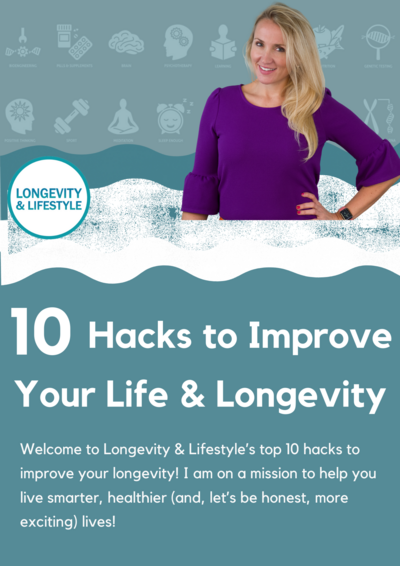
Steal Claudia's 10 Hacks to Improve Your Life & Longevity Playbook
FREE DOWNLOAD
Learn the secrets of health, lifestyle, business and finance optimization
Podcast
Top Resources

Steal My
10 Hacks to Improve Your Life & Longevity Playbook
Free guide
10 Hacks to Improve Your Life & Longevity
Want to learn how to live a smarter, healthier (and, let’s be honest, more exciting) life? Check out my free playbook with top tips just for you!
By signing up, you agree to join the Longevity & Lifestyle newsletter and to receive emails. We respect your privacy and abide by strict privacy policies.


LONGEVITY & LIFESTYLE
© Longevity & Lifestyle llc 2021 | Design by Tonic | Photos by social squares, Unsplash & Rebecca Reid
SEND ME A NOTE >
GET ON THE LIST >
@longevity&lifestyle
follow along: