#253 Dr. Darshan Shah — Become the CEO of Your Health Before Disease Becomes Your Diagnosis
The Longevity & Lifestyle podcast
The Longevity & Lifestyle podcast
The Longevity & Lifestyle podcast

Episode 253
Sign up for
The Longevity & Lifestyle Insider
Join Claudia's Longevity & Lifestyle Insider newsletter to get top tips, insights and strategies on optimizing your life, health and business!
By signing up, you agree to join the Longevity & Lifestyle newsletter and to receive emails. We respect your privacy and abide by strict privacy policies.

“Modern healthcare is excellent at treating disease but often poor at creating health.”
- Dr. Darshan Shah
In this powerful conversation, Dr. Darshan Shah - board-certified surgeon, longevity physician, entrepreneur, and founder of Next Health - joins Claudia to discuss why modern healthcare often focuses on managing disease rather than creating health, and what we can do to change that.
After performing more than 20,000 surgeries, Dr. Shah experienced his own health crisis despite being a highly trained physician. That wake-up call transformed his approach to medicine and led him into the world of prevention, health optimization, and longevity.
We explore:
- Why Modern Healthcare Often Fails to Create Health
- The Personal Health Crisis That Changed Dr. Shah's Life
- Why Prevention Is More Powerful Than Treatment
- The Importance of Becoming the CEO of Your Own Health
- Muscle Mass, Metabolic Health & Longevity
- Why Sleep Is One of the Most Powerful Longevity Tools
- The Hidden Drivers of Chronic Disease
- How Stress Accelerates Aging
- The Future of Personalized Healthcare
- Practical Strategies to Increase Health Span and Quality of Life
This episode is a powerful reminder that longevity is not about simply living longer - it's about creating the energy, resilience, and vitality to fully enjoy every decade of life.
ABOUT THE EPISODE & OUR GUEST
Unlock peak energy, mental clarity, and long-term health.
If you’re an entrepreneur, leader, or high achiever who refuses to settle for burnout, fatigue, or suboptimal health - this is for you.
I help top performers optimize their energy, longevity, and success using science-backed strategies, biohacking, and personalized health protocols.
Book a Complimentary Peak Performance & Longevity Coaching Call
This free exploratory session will help you:
• Identify what’s holding you back from your highest potential
• Gain clarity on your energy, focus, and longevity goals
• Discover a proven framework for sustainable high performance
Spots are limited - apply now to reserve your session.
🔗 APPLY HERE
Peak Performance & Longevity Coaching Call
Show Notes
00:00 The Journey to Health Optimization
01:20 The Wake-Up Call: A Personal Transformation
05:51 Understanding the Flaws in the Medical System
08:33 Core Pillars of Health and Longevity
13:10 The Importance of Nutrition in Health
17:08 Strength Training: A Key to Longevity
19:37 Establishing Health Baselines
20:10 Understanding DEXA Scans and Diagnostics
21:18 The Importance of Blood Testing
22:14 Interpreting Blood Work Results
24:22 Essential Home Diagnostics
25:50 Mental Health and Emotional Well-being
26:50 Functional Diagnostics and Gut Health
29:37 Navigating Functional Medicine Testing
30:54 The Impact of Toxins on Hormones
36:47 Hyper Preventative Medicine
39:46 Advanced Cancer Diagnostics
41:08 Brain and Lung Health Diagnostics
43:03 Exploring Advanced Therapeutics
44:13 Future of Longevity and Health
PEOPLE Mentioned
Products Mentioned
MORE GREAT QUOTES
"The goal isn’t simply living longer—it’s staying vibrant while you do.” - Dr. Darshan Shah
Legal Disclaimer: Please note, to avoid any unnecessary headaches, Longevity & Lifestyle LLC owns the copyright in and to all content in and transcripts of The Longevity & Lifestyle Podcast, with all rights reserved, as well as the right of publicity. You are welcome to share parts of the transcript (up to 500 words) in other media (such as press articles, blogs, social media accounts, etc.) for non-commercial use which must also include attribution to “The Longevity & Lifestyle Podcast” with a link back to the longevity-and-lifestyle.com/podcast URL. It is prohibited to use any portion of the podcast content, names or images for any commercial purposes in digital or non-digital outlets to promote you or another’s products or services.
PODCAST EPISODE TRANSCRIPT
Claudia von Boeselager: Welcome to another episode of the Longevity and Lifestyle Podcast. I'm your host, Claudia von Boeselager. I'm here to uncover the groundbreaking strategies, tools, and practices from the world's pioneering experts to help you live your best and reach your fullest potential. Don't forget to subscribe to the podcast to always catch the latest episodes.
Legal Disclaimer: Please note, to avoid any unnecessary headaches, Longevity & Lifestyle LLC owns the copyright in and to all content in and transcripts of The Longevity & Lifestyle Podcast, with all rights reserved, as well as the right of publicity. You are welcome to share parts of the transcript (up to 500 words) in other media (such as press articles, blogs, social media accounts, etc.) for non-commercial use which must also include attribution to “The Longevity & Lifestyle Podcast” with a link back to the longevity-and-lifestyle.com/podcast URL. It is prohibited to use any portion of the podcast content, names or images for any commercial purposes in digital or non-digital outlets to promote you or another’s products or services.
PODCAST EPISODE TRANSCRIPT
Darshan Shah, MD (00:00)
I really believe in 2026, we have the capability to not die of chronic disease. And even though that's the top 10 causes of death right now, if we could just get healthy and stay alive long enough, we will get to a place in the next 10 to 15 years where people are not dying of chronic disease anymore. I really believe this kind of upward trajectory of chronic disease is gonna go downwards and people are gonna live old age and die of natural causes with much more frequency. I do think that there's gonna be
incredible therapeutics that come out that not just cover the symptoms of disease but actually reverse chronic disease.
Claudia von Boeselager (00:33)
My guest today is Dr. Darshan Shah, board certified surgeon, longevity physician, entrepreneur, and founder of Next Health, one of the world's leading health longevity platforms. What makes Darshan's story so fascinating is that after performing more than 20,000 surgeries, he realized that modern medicine is incredibly good at treating disease, but often falls short when it comes to creating true health. His journey became deeply personal when he found himself
Overweight, stressed, inflamed, and metabolically unhealthy, despite being a highly trained physician. That experience sparked a complete transformation and led shift his focus from disease management to health optimization, prevention, and longevity. Darshan earned his medical degree at just 21 years old, becoming one of the youngest physicians in the United States before continuing his training at the prestigious Mayo Clinic.
Today through Next Health, his podcast Extend and his work with thousands of patients, he helps people become what he calls the CEO of their own health, taking ownership of their energy, performance, health span, and future well being. In today's conversation, we're going to explore why so many people are getting sicker despite spending more on healthcare, what actually moves the needle when it comes to longevity, and how each of us can take control of our health before disease ever shows up. Please enjoy my conversation with Dr. Darsian Sha.
to the Longevity and Lifestyle Podcast, Darch. And it's such a pleasure to have you with us today.
Darshan Shah, MD (01:53)
Thank you for having me.
Claudia von Boeselager (01:54)
So you became a physician at twenty one years old, trained at the Mayo Clinic, performed more than twenty thousand surgeries, which I can't even imagine what that must be like. So you must be a very calm person. And you've built multiple successful businesses. Yet, despite all of that medical knowledge, you found yourself overweight, inflamed, stressed, and metabolically unhealthy. How did that happen? Can you walk us through that journey?
Darshan Shah, MD (02:16)
Yes, for sure. You know, I think what a lot of people don't realize is when you become a doctor, don't really learn how to stay healthy. In fact, it's the opposite. It's almost like you're in seal chain training and they destroy you from the moment you
Claudia von Boeselager (02:26)
Mm.
Darshan Shah, MD (02:29)
Get into medical school all the way until the moment you start a practice. And then because you're so used to it, you think that that's normal life is to, you know, sleep three to four hours a night, drink a massive amount of coffee every morning, use alcohol to wind down, and you know, don't really think about exercise or food at all. And I lived that life for 20 years. And I was operating like a maniac. I did surgery 12 to 15 hours a day sometimes. and after that I would run my business at a large
business owning multiple surgical centers and I would run that business. And I just basically ran myself into the ground. And the wake up call for me was I was ready on a handful of prescription medications. And I as a physician, I thought that was normal, you know, I'm 40 something. It's just normal, right? It's normal to get diabetes and high blood pressure and medications will take care of it. And so the wake up call for me was I was so stressed that I got this autoimmune disease that was eating away at the tissue of
Claudia von Boeselager (03:09)
That's what you're taught. Yeah.
Darshan Shah, MD (03:24)
my scalp and skin of my forehead and I would get severe headaches and I couldn't function. And so they put me on a very heavy duty immune suppressive medication and I knew something had to change. I knew this was not the life I wanted to lead for the next you know 30, 40 years.
Claudia von Boeselager (03:27)
Wow.
Darshan Shah, MD (03:40)
if I was even able to lead a life because it was a high chance when you have multiple medical problems, including an autoimmune disease and on multiple medications, including very, very strong immune suppressives that you might not live to see the age of 70 or 75. And and you know, we were just talking about our children offline. I just had my son at this point too. So, you know, the juxtaposition of having a brand new baby and facing my own mortality at the same time, it was really tough. So that spook was a wake up call for me.
Claudia von Boeselager (04:08)
And so what happened at that moment in time when you realized, okay, I've got a newborn, I'm not doing well, I wanna be around for my life, but my kids and my family. What was that trajectory then thereafter?
Darshan Shah, MD (04:19)
Yeah. So after that it was a trajectory of, you know, just deciding you had to get healthy. But I had absolutely no idea what that meant.
Claudia von Boeselager (04:25)
to pause there a second. That's a really
important point. You as a trained physician didn't know what it meant to get healthy. and that's the problem with medical school. That's the problem with the system, right? So it's sick care. But anyway, so I just wanted to highlight that
Darshan Shah, MD (04:30)
Right.
I want to talk about that a little bit too. Let's talk about the problem with healthcare next. But let me just tell you what, like where my perspective is on that was I learned all of the deepest techniques on how to keep people alive. I did trauma surgery, I ran the intensive care unit at the hospital for many years. I ran a burn center for a year as well. I knew that if you were about to die, how I would keep you alive. No problem, right? But the science of health is exactly
Claudia von Boeselager (04:41)
Yeah.
Darshan Shah, MD (05:03)
the opposite, right? And so you don't learn that in medical school. And so I went to a nutrition class. I was like, I knew nutrition was a big piece of my problem. I was eating garbage. And even when I thought I was dieting by only drinking three frappuccinos a day as my only meal, things were getting worse. And so I went into this nutrition class and I sat next to someone who talked to me about functional nutrition.
And I learned so much. Not only did I change my diet, but I got introduced to this new field of medicine that was just blowing up called functional medicine. And for the first time I learned about gut health, about hormones, about stress and its implications. And I started to just use whatever I learned on myself. And it was a remarkable, I would say, change in my life. Within a year, I was able to reverse all of my chronic diseases except for high blood pressure.
But I was able to get off multiple medications, including the medication that was the immune suppressive medication for my autoimmune disease, which I was told by the best rheumatologists in Los Angeles was a permanent thing that I would be on. And ever since I stopped that medication, I have not had a single headache, I've not had any progression of my disease, and I've never taken a medication for it.
So it just goes to show you how much we just ignore in in the medical world on how much health actually plays a role in reversal of disease, you know? So yeah.
Claudia von Boeselager (06:25)
Cause the body wants us to
be healthy, right? And so maybe you can walk that through a little bit. a lot of people like, well, my doctor says I need to stay on medication. But like my doctor tells me that, you if I take the medication, I can maybe maintain my level as a type 2 diabetic or whatever it might be. So where is the fundamental issue in medical school or the blind belief of, well, my doctor told me? What would you like people to understand with that concept?
Darshan Shah, MD (06:47)
Excellent. That brings up what I was gonna talk to you about before.
We need to go back into history a little bit and understand where this medical system that we built came from. we have spent trillions of dollars on this medical system. And the reason we have is because we have built a system that keeps us alive. The first use of this system was to fight infections. Millions of people died all the time of infections. And it was the saddest deaths ever. It was usually women having children that would die of postpartum sepsis or the children.
That would die of childhood diseases, right? the first person treated with penicillin was a woman that was having postpartum septus and she was about to die in 12 hours. They gave her penicillin, she lived to stay alive for her children. Her child later got an infection that was also treated with penicillin, that child lived. It was a revolution in medicine. And so then we developed anesthesia so we could do surgery to keep people alive. Then we started developing medications for cancer, etc.
But then what happened was in the last fifty
75 years, we started developing chronic disease. And if all you have is a hammer, the whole world is a nail. The system started developing medications for these chronic diseases with not a thought about what is the origin or how do we reverse this chronic disease. And so we have this trillion dollar incredible system that keeps us alive that was never built for chronic disease reversal and management in the first place. And that still goes true today. In 2026, a medical student is educated.
educated on the science of keeping you alive when you're about to die.
It is not built for the reversal of chronic disease. And because all we have is pharmaceuticals and surgeries to alleviate symptoms, we don't have that thought process in our brain. And that's where the problem is. And so I think a lot of people have this misconception and frustration with our system. I look at it as like, let's appreciate what we've built. It's kept has doubled our lifespan and it's kept us alive. And we don't have to necessarily worry about dying from like a simple fall and breaking a leg or something like people used to all the time. However, it's not built for chronic.
Claudia von Boeselager (08:33)
Mm-hmm.
Darshan Shah, MD (08:42)
Disease reversal. And all, in my opinion, the other thing I want people to know is anytime they hear from their doctor that you're going to be on this forever.
Really question that. There is no reason to be on pharmaceutical medications forever for chronic diseases like diabetes, hypertension, cholesterol lowering medications, et cetera. And I say that because I know hundreds, now thousands of patients that have gotten off these medications for these same
Claudia von Boeselager (09:06)
So I think you brought up a really interesting point there. First of all, that the medical system is very good at acute care. So you were saying like the broken legs, you know, surgery, things that we need, which is absolutely phenomenal. And that still to this day is beautiful. But that pandemic of chronic diseases that
did not exist previously and it's not developed in that way. And even as you were saying, you know, as a highly trained surgeon, you didn't know what it would take to get healthy. And you were talking about nutrition And if you think about it, it's wild, right? Because nutrition is the medicine we feed our body every day. Yet it's not taught in medical school, although that is apparently going to be changing now, thankfully, finally in 2026, which is just ludicrous And so it's some of the fundamental things that are missing. And I've had other and including Dr. Dale Bredesen on who was saying, you know,
In medical school, it's all about diagnosis, prescription. And so I think for people to understand when they go to speak to their doctor that it's not necessarily that they're ill-intentioned, but they just might not have the training or the awareness to think differently about things. and so I think that those are really important facets and factors that people need to appreciate that it's not the doctor's fault necessarily, but they mightn't be up to speed on things So tell us about your journey into that world. So you started with nutrition.
Obviously now is next health, so we have a big trajectory of being in the longevity health optimization world. But what does that look like for you? What are some of the pillars and keystones that are so important that you'd love people to understand?
Darshan Shah, MD (10:24)
Yeah, so, you know, when you go on this health journey, you find it might be a little bit overwhelming for people because there's so many things to learn about and know, you know, your hormones, your microbiome, your brain health, how does emotional health fit in? And what what I really found was that all of these pieces are actually very important, but people...
should understand that even though health is complicated, because, you know, we have a human biology and we have trillions of cells that we don't even begin to understand how complex it is, it's not infinitely complicated. There's a few core pillars that if you focus on, you will get 95 % of it right. And then if you want to go down the biohack and rabbit hole, you can, right? And so what I did for myself was exactly that I focus on the core pillars. I put the big rocks in place at the bottom
of my pyramid and made a really stable foundation. And then I just kept building on top of it. And what I started doing is in my surgical practice, patients would ask me like, what are you doing? You're looking great. You're losing weight. you know, you seem like you have more energy, et cetera. And I said, look, here's the things I'm doing. I did this with my diet. I did this with my exercise routine. I'm focusing on
I realized then just to finish that thought was that I need to this all under one roof for people. And so that's why I started a new clinic called Next Health to put it all under one roof. So the specifics are basically understanding your health falls into basically four verticals is the way we take people through our journey of health. And if you look at these four verticals, are four layers of the pyramid. The first
foundational layer is your lifestyle. Okay. And your lifestyle includes your sleep and recovery, your exercise and movement, your nutrition, and finally your emotional health and your sense of purpose and being. And so we really work on that first. And I'm a big believer in the Pareto principle that there's 20 % of the actions that you could take that will give you 80 % of the result. And so with nutrition for me and for most of my patients is understanding what metabolic health is. Metabolic health
is your body's ability to utilize the energy that you put into it. If you put too much energy into your body and your body can't use it, you're going to get sick. And sick meaning not just diabetes, but you're also going to get a higher risk of all of the chronic diseases out there, right? So having good metabolic health is critical. So how do you do that? Number one is you change your dietary intake and change your dietary pattern. The big rocks there are getting rid of ultra processed food completely. Anything that comes in packaging, know, most
of the time you should not eat it. You should learn to again shop, cook, and focus on foods that are good for you rather than cause you disease and cause your body inflammation and metabolic disease. If you do that, I don't care what kind of diet you can eat. You can eat a Mediterranean diet. You can eat a vegetarian or a vegan diet. Most of the time,
Eliminating ultra processed food is a massive health shift for people and it was for me as well. Now once you get that right, the next big rock for nutrition is understanding three core components of nutritional intake. And that is number one, you have to have a lot of vegetables in your diet. These are nutrient dense and fiber.
rich vegetables is what I'm talking about. So, you know, not the starchy ones, the fiber rich ones. So you have to have at least 500 to 800 grams of those, preferably organic. Number two, you have to have enough protein in your diet from good sources. What is enough protein is different for every person. Every person has a different protein need, but most people are getting about half the protein they need on a day to day basis. And lastly is focusing on good fats, good fats from fatty fish, from avocados, from olive oil and from nuts.
Claudia von Boeselager (13:43)
Mm-hmm.
Darshan Shah, MD (13:51)
you put those three things into every meal that you eat, there's no way get it And so that.
Claudia von Boeselager (13:56)
Which is great, right? So people
listening they're like so complicated.
Darshan Shah, MD (14:00)
And then, you know, there's a lot your glucose levels. So the next piece of this to take you to the next level is understanding like how you can monitor your glucose levels. I highly recommend people get a continuous glucose monitor, whether you're a diabetic or not, and understand what is your glucose levels doing all day. Check a couple of biomarkers like hemoglobin A1C and fasting insulin and become an expert on metabolic health.
There's two other things that affect your metabolic health. It is how well you're sleeping and recovering, and also how much you're moving. So the big rocks there for movement is you must be moving every 45 minutes. So never sit in one place for more than an hour. Get up, move around, go for a little walk around the office, take a call while you're walking. I have a walking desk here. I spend most of my time on the walking desk.
Claudia von Boeselager (14:26)
Mm-hmm.
great.
Darshan Shah, MD (14:44)
Whether you go to the gym or not, I don't care. If you're sitting sedentary for more than one or two hours at a time all day long, no matter how much you go to the gym, you can't counteract the problems go ahead. Yeah.
Claudia von Boeselager (14:55)
Can I just pick up on that point? Cause they say
like sitting is the new smoking. I said that to somebody the other day. She looked at like I had two heads. I was like, okay, she hasn't got this, bearing in mind that was in London, so it's not as advanced in the US. Why is sitting, just so people understand, so detrimental? I have a stand up obviously try to walk as much. I try to get my goal is 13,000 steps on a day and on average. Sometimes I make it, sometimes more. Why is sitting so detrimental? Just so people really understand.
Darshan Shah, MD (15:18)
multiple reasons. Number one is your metabolism lives in your muscle. what I mean by that is most of the that are metabolically active are in our muscle.
When you're sitting, specifically in a sitting position on a chair, none of your muscles are really activated, very few of them, especially the large muscles of your calf, of your thighs, et cetera. And so if your mitochondria are not working, they're dying and you're not using the glucose in your bloodstream. So that's number one reason. Second reason is just a position that humans sit in now on a chair. It locks your hip into a really bad place and lack of hip mobility leads to long-term disability and long-term
And so at least the back pain to start with, then people just start moving less and less and less and less. And it's like this vicious cycle of the position of sitting as well. And I mean, those are the two big reasons. And so, you know, I think that a lot of people are focused on the number of steps they get a day. I like that as a metric. Like if you need a metric, like I do, I need a number, you know, that I know what am I doing right. But even if you just keep an alarm on your phone
Claudia von Boeselager (16:05)
Mm-hmm.
Mm-hmm. Yeah.
Darshan Shah, MD (16:22)
I just turned the egg timer. There we go. Yes, you have one too. Right?
Claudia von Boeselager (16:23)
Darshanil, you'll you'll appreciate this as well. It's great, the ADHD
timer Yeah. Yep.
Darshan Shah, MD (16:30)
It is the best, right? Exactly.
And then, know, what I tell people to do after they get moving a little bit all day long and try to get to 7,500, 8,000 steps a day, or just every 45 minutes is now you've got to go to the gym and do something that might not be inherent in most people because we've all been raised in this kind of like, you know, calories in, calories out, get on the treadmill for hours mentality, you know, and doing a lot of movement, which I think movement is great at the gym, but
really you should start every workout with strength training because we know at the age of 40, both men and women will programmatically lose muscle mass. And once again, muscle mass is so important. I try to shift people, know, most people are 80, 90 % aerobic exercise and 10 % strength. I try to just get them to at least 50, 50 the workouts.
Claudia von Boeselager (17:15)
I love it. And just a point on that, like I do strength training three times a week. I'd say I'm stronger now than I have been my whole life. I'm 44. you know, I can like hang on the monkey bar for like, you know, a little over a minute, which I'm quite proud of, right? Grip strength is a big thing. but it's funny, my 87 next week, 88-year-old father, he goes to the gym, he's I go for two hours, da-da-da. But he's like walking on the treadmill, then he's on the bike. I'm like, you need to do more weight training. Of course, you know, it's kind of hard at that age. She's kind of like,
Darshan Shah, MD (17:25)
Cheers, y'all.
Claudia von Boeselager (17:41)
But it's so fundamental, the muscle strength. And can you just walk people through why they need to be paying attention to it? Particularly women focus on the cardio, but they don't actually realize there's so many more benefits, I would almost argue, but I'd love to hear you as a medical professional opinion, in focusing on strength training, in focusing on building muscle, but also for bone health, right? So maybe you can elaborate on that just so people can understand.
Darshan Shah, MD (18:02)
Yeah,
absolutely. love talking about this topic. So one of things that I buy for every single one of my patients is what's called a grip dynamometer. Have you seen one of these?
Claudia von Boeselager (18:10)
I've done that with a timeline, I think, where you have to squeeze really, really hard, right? Yeah. Okay. I've done that.
Darshan Shah, MD (18:13)
Yeah, it tells you a
And you said you could hang from a bar for a long time, et cetera.
Claudia von Boeselager (18:19)
a minute. I mean l I'm not saying five
minutes, but still I'm proud of my minute.
Darshan Shah, MD (18:23)
A minute is great.
You should be proud of that. know, I think you're doing well. Yeah.
Claudia von Boeselager (18:26)
Thank you. Look what I have on my desk,
Darshan. You might might appreciate this, but I this is literally I'm on all these calls and I'm just doing grip strength training and it's it's easy. It's just like a distraction. So anyway, I've got a little of the hacks around me here.
Darshan Shah, MD (18:33)
Yeah, I love it. Yeah.
So grip strength is critical because grip strength is a proxy of your overall body strength. And we have massive amounts of data showing that grip strength is a direct predictor of your longevity. Now, what most people don't realize, especially women, is when you lose muscle mass, density and number. So your metabolism gets worse. When you lose muscle mass, you also have a much higher risk of Alzheimer's disease. All right. And when you lose muscle mass, you have a higher risk
of breaking a bone because your muscles support your bones. if your bones don't have that support of your muscle around them, they will break easier. And so, you know, the fate for a lot of women and men too, but mainly women, is getting Alzheimer's disease and also falling and breaking a hip. And then that leads to death, you know? And so, terrible.
Claudia von Boeselager (19:24)
Yeah, the statistic is terrible. It's almost like fifty percent
within a year. Yeah. I mean horrendous.
Darshan Shah, MD (19:29)
Horrendous right exactly my parents are like yours. I'm really trying to get them to strength train, but they're very resistant But I'm just dreading the day I get a phone call my mom falls and breaks a bone You know because it's like I know what her bones look like on a dexas scan. They're very very brittle
So, you know, I think people need to understand also to that point of the DEXA scan, how much muscle mass they have and how much bone density do they have. And so I get a DEXA scan on every patient at the age of 30 and then try to get them to do it yearly afterwards. We have a longitudinal kind of data point there. But yeah, yeah, we do, we do for all of our patients. And I think that, you know, that it's very important for people to have the numbers so they have a stark realization of like, ⁓ I'm in trouble right now. I got to do something, you know, the sooner you
Claudia von Boeselager (19:51)
Mm-hmm.
Mm-hmm.
Yeah.
Darshan Shah, MD (20:11)
you have to do something, the more time you have to correct it. And it's not that hard to correct, know, if you just really focus on it.
Claudia von Boeselager (20:15)
Yeah.
And it's really establishing the baseline, like no matter where you are, just to see, okay, this is where I am. There's, you know, population metrics, et cetera. But then you can have a point of comparison over time And so I think it's really getting people into that proactive be awareness of like what can I do and catch things early, right? So yeah, maybe you can talk a bit about diagnostics and what you like to look for. You've obviously mentioned the DEXA scan. Maybe you can explain for people what is a DEXA scan and what other diagnostics do you encourage people to look at.
Darshan Shah, MD (20:20)
Yes.
Yes, you know, DEXA scans are available everywhere and they're very inexpensive. You should really get one from about 50 US dollars or less, right? And this is basically a five to 10 minute scan of your body. It's an x-ray scan, but it's a tiniest dose of radiation, non-consequential. And it gives you what is considered the gold standard of how much muscle mass you have, fat mass you have, and bone density you have using an x-ray of your whole body. And it's tremendous data because you learn so much from it and it's motivating.
because you can track this over time. We highly recommend people do it once a year, every January. And it just gives you the risk factors that you need to know on how soon you're gonna get chronic disease and how...
Soon you'll die. It really does correlate well, you know? look, for me, I don't want to keep saying like, you know, longevity means living a long life. I do think living a long life is great if you have your mobility, if you have your brain, if you have your health span, you're not dealing with multiple chronic diseases, you You don't become a little old lady or little old man. That's what I'm really talking about. And so that's an incredible diagnostic to understand how quickly you're going to get there.
Claudia von Boeselager (21:42)
Yeah.
Darshan Shah, MD (21:51)
changes how quickly you can reverse the trend of getting to becoming frail and becoming like a little man, a little lady. The other diagnostics I really love are blood testing.
There's about 15 critical biomarkers that if everyone knew what they were and asked their doctor for them, they would dramatically know and be able to affect the trajectory of their health. I talked about one of them, hemoglobin A1c, fasting insulin. There's like HSCRP, which is a measure of inflammation, APOB.
a measure of your cholesterol levels. These are all very important. And if your audience wants a guide to these, I have one on my website that's free. It's at drshah.com slash biomarkers. Then it gives you the entire guide. Okay.
Claudia von Boeselager (22:30)
Perfect. And
we'll link that for everyone in the show notes So really, really helpful. maybe just a point to that and you can explain is that a lot of people go and they get their blood work back and like, I'm normal or I'm fine. What would you like people to know when they get their blood work back and they're told they're fine? What should they be looking out for?
Darshan Shah, MD (22:47)
Yeah, so when you get your blood work back and anyone reads it for you and you don't understand what the number means, that's a problem. That's like handing the profit and loss statement of your business to someone who has five minutes to glance on and go, oh, you're fine. No, it doesn't know you at all. Right. And so you need to know what those numbers really mean. Right. And so fine is it optimal or not?
right? You want to be optimized. You want to have the blood biomarkers of someone who's really, really healthy. And then from fine to not fine, there's a massive difference. And it takes decades to get from fine to not fine. And then from not fine to disease diagnosis, there's another massive difference, right? I'll use hemoglobin A1C as another example. It's a three month average of your blood sugar.
5.2 or below is optimal. That means your mitochondria are doing their job. You're doing an incredible job with your diet by not slamming too much carbohydrate and sugar on your system. You're moving well, you're sleeping well, your stress is managed pretty well. However, if you get to 5.7, it means you have pre-diabetes. Now you're doing pretty much a lot of things wrong.
between 5.2 and 5.7, optimal and pre-diabetes, there's two decades of poor lifestyle habits, right? And so that's where we really can make a difference if we know what those numbers are. Now, when your doctor tells you you're fine,
Claudia von Boeselager (24:00)
Yeah.
Mm-hmm.
Darshan Shah, MD (24:06)
it's any number under 6.5. 6.5 is when they tell you, you have diabetes, time for metformin, time for insulin kind of thing. so you don't want to wait till you get to 6.5. That's a big problem. And it's a big, big problem right now because we know in the United States, it was recently published, 90 % of Americans are metabolically unhealthy. 90%, it's almost everybody. It's so terrible.
Claudia von Boeselager (24:27)
It's just wild. Ninety percent.
Yeah.
Darshan Shah, MD (24:31)
It's a
mess and people just don't know what their data shows. That's a big problem. Yeah.
Claudia von Boeselager (24:35)
Mm-hmm. So we were looking at diagnostics.
I we've gone on a bit of a tangent. So we were looking at the pyramid and we were talking about the foundations. We're looking at diagnostics. We'll go back to the pyramid again. But just to finish up on the diagnostics. So we've had DEXA, we've had the blood work. What are the other diagnostics that you would really implore people to have? if they have access to Next Health, that would obviously be amazing, but otherwise to to search for it in wherever they are in the world.
Darshan Shah, MD (24:56)
So I would love for everyone to just go on Amazon and go to whatever website you want.
and by a grip dynamometer, what we talked about, understand your grip strength and measure it every month. I would love everyone to get their own blood pressure cuff. We call high blood pressure the silent killer in medicine because it is. People live with it for decades and it's slowly eroding away at every organ in your body. And thirdly, I like for them to get what's called a bioimpedance scale. This is a scale that gives you much more than your weight. I always tell people, if you have a scale that just gives you your weight, just throw it away. That's a garbage number. You want to know what your skeletal muscle mass
Claudia von Boeselager (25:26)
Okay.
Darshan Shah, MD (25:29)
and your fat mass is every time you step on that scale. And a bioimpedance scale sends a little electrical current through your body and tells you what those numbers are.
Claudia von Boeselager (25:32)
Uh-huh.
So there's inbody. I have a renfo one with the Renfo is probably not as good. you have a Renfo? Is it okay? I mean I like the numbers on it. I'm like, this is is it okay? Okay.
Darshan Shah, MD (25:39)
⁓ I hope that's okay. Yeah. Yeah. Great.
It's more about tracking the directionality of it. Like you, don't
know if you've ever noticed this, but like if I go on vacation for a couple of weeks, I come back and I haven't really focused on anything. My skeletal muscle mass goes down by a couple of points. It's pretty annoyingly right. you that. Yeah, yeah. there's a Hume scale Renpho in body, you know, just find one that.
Claudia von Boeselager (25:53)
Yep.
Yeah, unfortunately, annoyingly, right? All that hard work. Yeah, so the rent was okay. Good, good, good.
Darshan Shah, MD (26:05)
Don't focus too much on the number itself. Just make sure that you're tracking the direction and make sure you're stepping on the scale the same time every day. So I tell people first thing in the morning, step on the scale.
Claudia von Boeselager (26:13)
Mm-hmm.
Yeah, that makes
sense Okay. So that's in the diagnostics kit. Anything else that you'd want to say around that? What about brain health, mental health, anything like that?
Darshan Shah, MD (26:24)
Yeah, so you know, that's kind of the home kit, right? We also have at our clinic, we make people take surveys once every three months about their mental health. So we kind of can track the direction of that. We do cognitive testing as well. Dr. Dale Bredesen, who you had on your podcast has an incredible online free test called Recode that people can take.
Claudia von Boeselager (26:41)
Mm-hmm.
Darshan Shah, MD (26:42)
And obviously, you know, the world of diagnostics in medical clinics like ours, we have thousands of tests available to us. But I people need to take the first step first, which is to do their own diagnostics, learn about what's going on with their own body with the tools I gave them. And then step two is to come to a clinic like ours where we can go to the next level with diagnostics like full body MRI, CAT scans of the heart, deeper functional medicine testing around gut health, around hormones, etc.
Claudia von Boeselager (27:09)
So maybe let's unpack as part of the pyramids. We have the foundational, we have some diagnostics that everyone can access to, then sort of the next level up is that maybe more in depth functional diagnostics that you were mentioning there What else is included in that next layer of the pyramid, Darshan
Darshan Shah, MD (27:24)
you for asking. So the next layer of the pyramid is functional diagnostics. What does that mean? Number one, doing tests of your gut health. We do a microbiome analysis. We also test for leaky gut. Gut health is such an important...
factor of our health that we just don't have any visibility into until we take a look under the hood by looking at these functional diagnostics. Secondly is your hormone health. a lot of people wait until they have perimenopause or manopause where they get 50 something years old and testosterone levels are really low. We need to start looking way sooner than that. Even in your adolescence and 20s, what is the trajectory of your hormones? So many women are being put on birth control pill with messes their
hormones up. A lot of men now are being exposed to toxins that reduce their testosterone level even in their 20s.
And that brings up the next piece of testing that we do, which is toxin screening. We do a urine toxin test for 150 different types of environmental toxins, including microplastics, PFAS, BPA, mold toxins. You've probably heard of some of these, and we want to eliminate toxins from our day-to-day life as much as possible, because toxins are another invisible factor out there that's really affecting our health. And so that layer of functional
testing. I also use some testing here around.
health conversations, testing, using what's called mini mental status exams and emotional health surveys are also very important for us in our clinics. But also this is where people, know, a lot of emotional health really has to do with like an inward look into your own journey and your own heart and your own traumas, your own sense of purpose. And I feel that this is where people can do a lot of self work through reading some incredible authors that are out there.
and really incorporating some of these techniques into their life.
Claudia von Boeselager (29:08)
And I think that's a really big piece that it's hard because it's more subjective, right? There's not a statistical analysis you can do. But I mean, at some conferences I speak on the triad of longevity and the body, mind, and spirit part. And if you've all this trauma, you can be optimizing on the outside. But what's the point of living if you're, you know, devastated or in deep depression or whatever inside And I'm really fascinated by the world of psychedelic medicine the powers of it. I was just at a talk by Imperial College London, Tommaso Barba.
also in the research is just so compelling around that. But we can maybe pause on that topic. We can I don't know what your view is on that the world of psychedelics for mental health. But maybe before we dig into that, I wanted to touch on, so you were talking about that layer with the
one thing I wanted to ask though, Darshan is that a lot of people, if they go to a functional medicine practitioner, they're like, well, there's so many tests being done. its so expensive. Are they needed? Why am I doing this? What would you want people to know? And also where budget is maybe a constraint for a lot of people.
What are some of it for that layer, if they want to go above and beyond the basics, what are some of the essentials and why would they be so important to do that?
Darshan Shah, MD (30:11)
Yeah, exactly. I want people to be very clear, like functional medicine testing is that next layer of the pyramid. Most people never get past the base of the pyramid. the tests that I talked to you about are on metabolic health, inflammation, cardiovascular risk. Those are basic tests that your doctor should order for you. And so if you download that biomarker guide, you'll get the basics. Okay. And then once you have those basics and you have those down, then the next thing you could do is functional medicine testing. Always start with the
basics
first because that's once again that's where you're get the most bang for your buck and those tests should be free through your insurance through their health system but if they're not you can get them at a pretty low cost at almost any online place now you can find a lot of people that are doing these tests
Claudia von Boeselager (30:53)
I'm really curious what you are seeing because, you know, from statistics I've seen, research I've seen I mean, microplastics are literally everywhere in the body. They're endocrine disruptors. You were talking about hormone levels being decreased. I think I saw some statistic that men now in their twenties have the same testosterone levels as men in their sixties in the from the nineteen fifties. I mean, there's some wild statistic which know, mood, focus, etc., there's so many
Darshan Shah, MD (31:11)
That's I was talking
Claudia von Boeselager (31:17)
life well-being functions that are rely on having healthy hormones. So what are you seeing out of, you know, from toxicity but also hormone levels? Like what trends are you seeing in your practice?
Darshan Shah, MD (31:27)
Yeah.
We're just seeing more and more people with dysregulated hormones at a way younger and younger age. And the reason in my mind is really having to do with lifestyle factors and toxins combined, right? Something changed about 50 to 60 years ago where there was a dramatic decrease in men's testosterone levels and also a dramatic change in women's levels of getting PCOS and perimenopausal symptoms, et
And that change occurred at the same time period when we started dumping massive amounts of chemicals into our environment. There's about 150,000 chemicals in our environment that have not been tested that are now out there. Yeah. It's really scary.
Claudia von Boeselager (32:05)
Well
Darshan Shah, MD (32:08)
Our bodies are really good at detoxification, but when you overwhelm the system, it's overwhelmed. It can't do it. And these toxins accumulate in our liver, in our glands, in our organs, everywhere. And these toxins are endocrine disrupting, meaning they mess up our entire hormone production system, not just testosterone and estrogen, but cortisol, thyroid hormones, all of them. And secondly, they're immune disrupting. Immune disrupting, meaning our immune cells don't work as well, or they go into
hypervigilance mode trying to fight these toxins. And so it's another invisible risk. Now, it might seem overwhelming because we're humans and we live in the world and what are we going to do? Like move to the moon? it's, we have to live in this world, right? Exactly. Alaska is beautiful and very, very low toxin levels, but here's what the normal human can do. The Pareto principle works very, very well for eliminating 80 % of the toxins in your life with 20 % of the effort.
Claudia von Boeselager (32:47)
Yeah.
Darshan Shah, MD (33:00)
20 % of the effort I divided up into air, water, food, and skin. Air, where do you spend the most time of your day? Probably in your bedroom where you sleep at night and also in your office where you're podcasting or doing your work all day. Those two areas, either you open your windows all the time because the air outside has good air quality index so you can look up on your phone. But if you're not opening your windows, they both need a high quality air purifier. Most people don't leave their windows open.
Claudia von Boeselager (33:25)
Or you do both. I've got both.
Darshan Shah, MD (33:26)
was gonna say most people and plants, exactly. Yeah, yeah, you're exactly right and there's certain plants
Claudia von Boeselager (33:27)
And plants. And plants that are detoxing as well.
Darshan Shah, MD (33:35)
if you look it up They're much better at detoxing the air as well than others. So
The second thing I would say is that you should look at your water. Most people are getting microplastics from bottled water. And so you want to drink your water from a filtered source, preferably reverse osmosis filtration, which you can install in your home and in your office for just a few hundred dollars now. And drink only out of glass bottles. Yep.
Claudia von Boeselager (33:56)
And and I would just
add the best is we what we represent with Lumara Collective is also reverse osmosis remineralization and you can even add hydrogen to the water So it is possible to go a whole another level. we can share more details in the link And yeah, maybe for your home, Darshan you need this for your family.
Darshan Shah, MD (34:06)
Yeah, absolutely.
13.
have one as well under our sink, but do the hydrogen, so I'm curious. I can't wait to see the light. The next thing is food. Food is another huge source of toxins into our body. Ultra-processed food is a huge culprit. Anything in packaging, all of these chemicals are massively disruptive to our gut microbiome.
Claudia von Boeselager (34:17)
Yeah, I'll share the details. Uhhuh.
Darshan Shah, MD (34:32)
And lastly, our skin. So our skin is exposed all day long to the outside environment, which we can do our best to protect ourselves in the outside environment. But why are we lathering chemicals onto our skin all day long with the lotions and the soaps and the shaving creams and the makeup that we use that are full of endocrine-disrupting and immune-disrupting toxins? Scan all of your products with an app. There's one called Yucca, one called Think Dirty. Skin deep. Change once, and you're done, right? It'll tell you how toxic your product is.
Claudia von Boeselager (34:55)
I love it. Yeah.
Darshan Shah, MD (35:00)
It'll give you a new one and you're done and you rest of your life instead of lathering toxins on your body You're no longer doing it anymore
Claudia von Boeselager (35:07)
And and a little anecdote to that it became great because before it was me telling my kids not to use certain things and now it's the Yucca app. It's not even me. I'm like, did you scan it with Yuka? What does Yucca say? So it's not me. I'm not to blame anymore. so as much as possible, I've got a twelve and a ten year old, so very much into the products and all the rest of it. But you know, I don't remember it back at their age being so obsessed with the different products and things like that too, all the kids and the birthdays and all the things that come into the house. And so it's scary because I tell them what happens then in your twenties and
issues with conceiving, et cetera, et cetera. Of course they're kind of looking at me, you biohacking mother here again with all these things, but it is true and it is real. So yeah, I think that that is really important. Also perfume and chemicals like even the household sprays that people use, right? And then they spraying, they're cleaning the area and then they're inhaling these toxic chemicals for hours and hours and hours. So just having the awareness of the levels of toxicity in our environments is scary, right? Yeah. But
Darshan Shah, MD (35:57)
It
is scary, right? Absolutely. But you don't want people to get overwhelmed and think that scary and there's nothing they can do about it. It's actually pretty simple to detoxify most of your life for the things that we just talked about. And then I also have another guide, drshah.com flash toxins. It's called the 52 week guide to completely eliminating toxins from your life. and it's just basically you can pick with your family one thing to do a week.
Claudia von Boeselager (36:08)
Mm-hmm. Mm-hmm.
Darshan Shah, MD (36:18)
to in your home. And I spend a lot of time on it, talk to lot of experts to put it together. And I think it can really move the needle for people. And like, look, like you can't do everything today. That's why I made it a 52 week guide. Pick what's easy for this week and do that. You know, maybe it's opening the windows super easy. Maybe it's calling someone in, you know, install a reverse osmosis filter, but whatever you do, do something once a week. And then after 50 weeks,
Claudia von Boeselager (36:24)
Uh-huh.
Mm-hmm.
Darshan Shah, MD (36:43)
You run of things to do, Right? ⁓ I'm curious, you've probably done 90 % of it, but I'm curious if you download it, if you find anything you haven't done yet.
Claudia von Boeselager (36:44)
Which is a great feeling because it always feels like never ending, right? And so
I'm gonna download, I'm gonna link it in the show notes there's always optimization, and especially living in London, it's damp and like, yeah. I mean, here the modus operandi if there's mold, they're like, we just paint over it. I was like, that's not how you treat mold. So yeah, it's a real issue. And so looking at your pyramids, what is that next level? Right. So let's say people have got, you know, level one, level two dialed in to the 80%, let's say.
is above. Are we looking at stem cells? Are we looking at peptides? What are we looking at there?
Darshan Shah, MD (37:21)
Yes, so the next level, the third level then is now that you've got your health in with good habits, you have a really good deep dive inside of what's going on currently in your biology is I call it hyper preventative medicine. Hyper preventative medicine is taking preventative medicine to the level that it should be in 2026. What do I mean by that? If you look at the CDC's website, they
tell you in 2024 what most humans died of. Number one we know is always heart disease. Number two is going to be cancer. Number three is going to be neurodegenerative diseases. Number four is going to be lung disease. Okay. And number five is going to be strokes. Okay. And so those are the main reasons people die in 2026. We have the technology to make all of those, not a cause of death, believe it or not for most people. Okay.
Claudia von Boeselager (38:08)
Which is
amazing. Yeah. I mean that focused on.
Darshan Shah, MD (38:10)
It's But our
medical system is focused on doing too much too late.
Instead, why don't we do a little bit very, very early more frequently so we don't have to deal with it in the future anyway, right? So let's go through each one of these. For example, cardiovascular disease, right? We have really good biomarkers to detect cardiovascular disease early. They're called APO-B and LP little a. Most people have never had neither one of these measured. And once you know your APO-B and LP little a is, you can optimize for both of those.
Claudia von Boeselager (38:15)
Mm-hmm.
Darshan Shah, MD (38:38)
Lp little a is a hereditary marker that almost no one's had done. 20 % of people have it. And it's a particularly bad form of cholesterol that you can reduce with medication. And so if you have it, you must be a medication. The other thing is with heart disease, it's not just cholesterol. I see a lot of patients that have high cholesterol and no heart disease and people low cholesterol and bad heart disease. So what else is going on? It's your blood pressure, it's your metabolic health and it's your inflammation. So you already have that data from what we talked about earlier, right?
With cardiovascular disease, you don't have to guess whether you have heart disease or not. A lot of people do. 50 % of people end up in the emergency room with a heart attack, not knowing they ever had heart disease in the first place. Why? Because no one's looking. How do you look?
There's very, very good scans available now to look. You can do a CAT scan of your heart. We do this on every one of our patients. We can look at it with AI and we can see every blood vessel and where the blockages are. So you just gotta ask your doctor to do this for you, right? There's another version of this that's even cheaper and easier. It's called the calcium score that I believe every human, men and women should get at the age of 40. And then every few years after that to see if you're developing plaque in your arteries.
State of the art is now what's called the CT angiogram, which is what I talked to you about earlier with laying out every blood vessel and seeing the plaque that's developed in it.
Claudia von Boeselager (39:54)
Which is fascinating. And you would say from at the age of forty, and then is it an annual test or would you say bi annual? How often?
Darshan Shah, MD (40:01)
It just depends on what your lifestyle is and what your cholesterol levels are, your inflammation levels, your metabolic health and your blood pressure. If you have a stack of a lot of issues going on there, then I would measure it every year. If you have none of those and they're optimized, probably every four or five years.
Claudia von Boeselager (40:15)
and what areas you wanted to break down? So coronary we talked about, and how about the others?
Darshan Shah, MD (40:17)
Yeah.
Let's go into Everyone's so fearful of cancer. And that's because really don't look for cancer until it becomes symptomatic.
The only cancers we look for are colon cancer with colonoscopies starting at the age of 40. Women are looking at their mammograms, getting a pap smear, their Joanne, hopefully every year. And men are getting PSA levels, hopefully every year too. That just covers four different types of cancers. There's 50 other cancers that kill people all the time and we know what they are. So now there are incredible diagnostics that are available. Full body MRIs that can be done in 45 minutes that look for these solid tumors in places that we never see them until it's too late, like your liver, your brain,
There's also a liquid biopsy test, which is a blood test for 50 different types of cancer that can find what's called cell free DNA in your bloodstream showing cancers that are shedding DNA actively right now. So these tests are getting better and better and more and more reliable. so i have people look into those as well. Cancer's biggest enemy is being diagnosed at stage one. The sooner you catch it, it's curable. If you wait till stage three or four and you feel symptoms, chances are that you're going to need chemotherapy, radiation therapy, surgery.
you're talking five years survival rates.
So brain health is also something that we think that, you know, if we're going to get Alzheimer's, it's just going to happen. I don't want to know. There's nothing more powerful than knowing what your gene status is so that you can make changes earlier. I'm just going to refer people back to your episode with Dale Bredesen. He's the expert.
Claudia von Boeselager (41:41)
Yeah, I've had I've
had two and he's coming on next week But I have a single copy of the APOE 4 Gene. My mother had none, but it's because of brain trauma, head trauma, and lack of estrogen post hysterectomy in the 90s that were her two main drivers based on Dale Bredison's diagnostic tests And as Dale says, it's 20 years in the making. I mean, this is what you're saying as well. And so if you look at what are your optimal markers and you stay in those ranges, the chances of you actually developing the disease are so minimal versus
if you just let everything go by the wayside but yeah, I love this topic. Yeah.
Darshan Shah, MD (42:10)
exactly.
It's good to know because then it's just your body telling you, you really need to make sure you keep your lifestyle in a really good place and check your other biomarkers and eliminate the toxins from your life because that's what's going to protect your brain for the long term, right?
Claudia von Boeselager (42:23)
Yes.
Darshan Shah, MD (42:23)
And then
I would say like lung disease, this is like actually number four on the scale and people don't ever consider it. And that's because once again, we discovered too late that we have problems and our lungs are not functioning optimally. And you can buy a very simple device online, once again, on Amazon that tells you what your lung health is by breathing into it. It's called the Peak Flow Meter and it's $15. It tells you electronically how well your lungs are working. And if they're not working well, breathwork exercises, exercising your
Claudia von Boeselager (42:29)
Mm-hmm.
Darshan Shah, MD (42:52)
talking to pulmonologists about maybe taking some medications can be incredibly helpful.
Claudia von Boeselager (42:57)
It's not measuring VO two max though, right? It's just the flow. Yeah.
Darshan Shah, MD (42:59)
No, VO2 max is different, but we do
use VO2 max a lot. VO2 max is your overall cardiovascular fitness measuring more about your mitochondrial health more than anything I would say, and also your overall cardiovascular fitness, but they go hand in hand.
Claudia von Boeselager (43:14)
Yeah. And I think what's really great, I don't know if you've come across Airofit out of Denmark, which is great for training. You can be literally sitting or standing watching Netflix or whatever you want to do, and you can do that training can you talk about some of the more advanced therapeutics that you are doing in clinic? What is your take on peptides, the stem cells or ECVs, TPE, all these other treatments and and therapeutics that are available out there? What is your view on them?
Darshan Shah, MD (43:37)
Yes, now you made it to the tip of the pyramid. And I always say, once you have all that in order, your lifestyle medicine, your functional medicine, your preventative medicine, then you can get to the tip of the pyramid. And
Claudia von Boeselager (43:40)
Yeah.
Darshan Shah, MD (43:49)
this is what's next, right? Like everything else is good. What can I do now? And there are things you can do now. There are peptides you can employ. You can try stem cells, plasma exchange. We do all of these things. And they really just kind of bring that additional layer of health to people. And I'm a big fan of these, but I don't like to use them on people that don't have.
their lifestyle and their functional factors in order first. I think it's super important to make sure that you've built this pyramid very mindfully. Now, that being said, some people need treatment. Plasma exchange is a good treatment for certain people. Stem cells are a good treatment for certain people with certain issues. But just for longevity purposes, you have to build the pyramid in that way.
Claudia von Boeselager (44:27)
To do it properly So looking forward as we're finishing up today, and I have obviously about fifty other questions, Darshan maybe we'll do a round two at some point, which I'd love. Yeah. But I'd love to hear what you are seeing from your perspective in the space of longevity, of health, what's exciting you most? What is keeping you busy nowadays and over the next 12 months?
Darshan Shah, MD (44:34)
I would love to.
Yeah, so I really believe in 2026, we have the capability to not die of chronic disease. And even though that's the top 10 causes of death right now, if we could just get healthy and stay alive long enough, we will get to a place in the next 10 to 15 years where people are not dying of chronic disease anymore. I really believe this kind of upward trajectory of chronic disease is gonna go downwards and people are gonna live old age and die of natural causes with much more frequency. I do think that there's gonna be
incredible therapeutics that come out that not just cover the symptoms of disease but actually reverse chronic disease. One of them already came out, the GLP-1s. This is reversing diabetes and metabolic disease in masses, right? And so we're going to see more of that for lung disease, for cancer, for cardiovascular disease, and we're going to be living in a world where we can reverse chronic disease. But the critical factor here is you can't do it just for medications. You have to do all the things we talked about now.
live long enough to then potentially use these therapeutics to really make sure that you get into an optimal state of health.
so we are opening 10 more clinics in the next 12 months. Having some discussions of opening one in London, hopefully, so that would be amazing. Yeah. And yeah, I those are the big things. think, you know, just opening more clinics, we're launching an AI enabled platform called Health OS that people can upload all their blood work to and it has memory and has all the research and the best doctors on it that can help you sort through this using AI and also talk to doctors. And yeah, those are the things that we're doing right now.
Claudia von Boeselager (45:51)
Congratulations.
great.
Darshan Shah, MD (46:15)
as well.
Claudia von Boeselager (46:15)
Just on the side, just for fun, exactly.
Darshan Shah, MD (46:17)
I have
my own podcast called Extend. So I interview scientists and doctors in health as well.
Claudia von Boeselager (46:22)
I love it. Yeah, beautiful. Darshan, we're gonna link everything in the show notes. Where can people follow what you're up to? Where would you like to send them to? And do you have any parting thoughts or closing message for my audience today?
Darshan Shah, MD (46:33)
Thank you so much, Claudia, for having me. It's so great that you're spreading this information. I just want people to know that you have full control over your health destiny and just...
This first step starts today and then just give yourself time and you'll just like me within a year or two, you can see massive improvements. it's really just sticking with it and doing something every day. You can find me at my Instagram, which is Dr. Shaw Longevity. You can also find me online at drshah.com and then you can find me at my podcast extend.
Claudia von Boeselager (47:02)
Beautiful. Thank you so much for coming on today. Thank you dear audience for tuning in. It's been an absolute pleasure.
Darshan Shah, MD (47:07)
Claudia, so much fun, thank you.
Claudia von Boeselager (47:09)
Thank you so much.
I’m Claudia von Boeselager
Longevity Coach, detail-loving educator, big-thinking entrepreneur, podcaster, mama, passionate adventurer, and health optimization activist here to help people transform their lives, and reach their highest potential! All rolled into one.
Hey there!
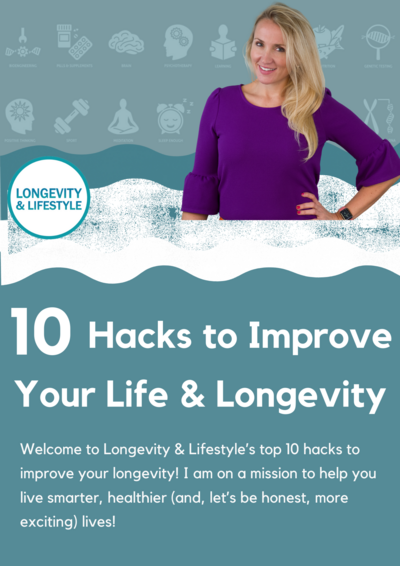
Steal Claudia's 10 Hacks to Improve Your Life & Longevity Playbook
FREE DOWNLOAD

Learn the secrets of health, lifestyle, business and finance optimization
Podcast
Top Resources

Steal My
10 Hacks to Improve Your Life & Longevity Playbook
Free guide
10 Hacks to Improve Your Life & Longevity
Want to learn how to live a smarter, healthier (and, let’s be honest, more exciting) life? Check out my free playbook with top tips just for you!
By signing up, you agree to join the Longevity & Lifestyle newsletter and to receive emails. We respect your privacy and abide by strict privacy policies.



LONGEVITY & LIFESTYLE
© Longevity & Lifestyle llc 2021 | Design by Tonic | Photos by social squares, Unsplash & Rebecca Reid
SEND ME A NOTE >
GET ON THE LIST >
@longevity&lifestyle
follow along: