#260 Tommaso Barba — The Science of Psychedelics: 5-MeO-DMT, Brain Aging, Depression & the Future of Mental Health
The Longevity & Lifestyle podcast
The Longevity & Lifestyle podcast
The Longevity & Lifestyle podcast

Episode 260
Sign up for
The Longevity & Lifestyle Insider
Join Claudia's Longevity & Lifestyle Insider newsletter to get top tips, insights and strategies on optimizing your life, health and business!
By signing up, you agree to join the Longevity & Lifestyle newsletter and to receive emails. We respect your privacy and abide by strict privacy policies.

“Neuroplasticity gives the brain an opportunity to change in ways that were once thought impossible.”
- Tommaso Barba
In this fascinating conversation, Tommaso Barba, entrepreneur, investor, and one of Europe's leading voices in psychedelic medicine, joins Claudia to explore the rapidly evolving world of psychedelic-assisted therapies and why governments, researchers, clinicians, and pharmaceutical companies are investing billions into the field.
From the science behind psilocybin and MDMA to regulation, commercialization, longevity, and mental health, Tommaso explains what's real, what's overhyped, and where the industry is heading next.
We explore:
- Why Psychedelic Medicine Is Entering the Mainstream
- Eli Lilly's Multi-Billion-Dollar Investment in the Industry
- Psilocybin, LSD, MDMA, Ketamine & Ibogaine Explained
- The Science of Neuroplasticity and Brain Health
- Psychedelics for Depression, PTSD & Anxiety
- Safety, Screening & Responsible Clinical Use
- Microdosing: What the Evidence Says
- The Regulatory Landscape Around the World
- Investment Trends and the Future of Psychedelic Companies
- What the Next Decade Could Look Like for Mental Healthcare
Whether you're curious about psychedelic science, mental health innovation, or the future of longevity medicine, this episode offers a balanced, evidence-informed look at one of healthcare's fastest-growing fields.
ABOUT THE EPISODE & OUR GUEST
SPONSORS
Not all supplements are created equally. BioLongevity Labs focuses on evidence-backed formulations, third-party testing, purity, and USA manufacturing to support energy, recovery, gut health, performance, and healthy aging.
Their bestselling formulas include:
- BioRetina - a peptide bioregulator complex designed to support eye health
- ShredMAX - SLU-PP-332 capsules designed to support mitochondrial biogenesis, fatty acid oxidation, and exercise capacity,
- BioGutPro - for gut-lining and digestive resilience, and
- BioRestore - for tissue recovery and a healthy inflammatory response.
Their approach is simple: fewer vague promises, more transparency, and formulations grounded in longevity science.
Get 20% off with code CLAUDIA20 at BioLongevitySupplements.com
Unlock peak energy, mental clarity, and long-term health.
If you’re an entrepreneur, leader, or high achiever who refuses to settle for burnout, fatigue, or suboptimal health - this is for you.
I help top performers optimize their energy, longevity, and success using science-backed strategies, biohacking, and personalized health protocols.
Book a Complimentary Peak Performance & Longevity Coaching Call
This free exploratory session will help you:
• Identify what’s holding you back from your highest potential
• Gain clarity on your energy, focus, and longevity goals
• Discover a proven framework for sustainable high performance
Spots are limited - apply now to reserve your session.
🔗 APPLY HERE
Peak Performance & Longevity Coaching Call
Show Notes
00:00 Introduction
02:28 Psychedelics enter the pharmaceutical mainstream
05:27 Why psychedelic research was banned
10:12 The major psychedelic compounds explained
12:46 Why modern psychiatry needs new approaches
15:34 Set, setting, and altered states
18:56 Why support and integration matter
20:23 Tommaso’s path into psychedelic research
22:41 Psychedelics, religion, and The Immortality Key
24:46 Using 5-MeO-DMT to study consciousness
26:37 What happens when the self dissolves?
27:49 Depression, neuroplasticity, and 5-MeO-DMT
30:47 Psychedelics for depression, PTSD, and addiction
32:39 Why psychedelics are not for everyone
34:02 Tommaso’s experience of ego dissolution
37:26 Presence, creativity, and intuition
39:12 Psychedelics, intimacy, and relationships
42:35 The future of psychedelic medicine
44:16 Final message: stay curious
PEOPLE Mentioned
Companies, Products & Organizations
MORE GREAT QUOTES
"Mental health is becoming one of the defining healthcare challenges of our generation.” - Tommaso Barba
Legal Disclaimer: Please note, to avoid any unnecessary headaches, Longevity & Lifestyle LLC owns the copyright in and to all content in and transcripts of The Longevity & Lifestyle Podcast, with all rights reserved, as well as the right of publicity. You are welcome to share parts of the transcript (up to 500 words) in other media (such as press articles, blogs, social media accounts, etc.) for non-commercial use which must also include attribution to “The Longevity & Lifestyle Podcast” with a link back to the longevity-and-lifestyle.com/podcast URL. It is prohibited to use any portion of the podcast content, names or images for any commercial purposes in digital or non-digital outlets to promote you or another’s products or services.
PODCAST EPISODE TRANSCRIPT
Claudia von Boeselager: Welcome to another episode of the Longevity and Lifestyle Podcast. I'm your host, Claudia von Boeselager. I'm here to uncover the groundbreaking strategies, tools, and practices from the world's pioneering experts to help you live your best and reach your fullest potential. Don't forget to subscribe to the podcast to always catch the latest episodes.
Legal Disclaimer: Please note, to avoid any unnecessary headaches, Longevity & Lifestyle LLC owns the copyright in and to all content in and transcripts of The Longevity & Lifestyle Podcast, with all rights reserved, as well as the right of publicity. You are welcome to share parts of the transcript (up to 500 words) in other media (such as press articles, blogs, social media accounts, etc.) for non-commercial use which must also include attribution to “The Longevity & Lifestyle Podcast” with a link back to the longevity-and-lifestyle.com/podcast URL. It is prohibited to use any portion of the podcast content, names or images for any commercial purposes in digital or non-digital outlets to promote you or another’s products or services.
PODCAST EPISODE TRANSCRIPT
Claudia von Boeselager (02:20)
Tommaso, welcome to the Longevity and Lifestyle Podcast. I am very excited to have you here today on such an exciting and important topic.
Tommaso Barba (02:26)
Thank you. It's a pleasure to be here.
Claudia von Boeselager (02:28)
it's
super timely, right? Because Eli Lilly just announced that they are purchasing a Thai Beckley for two point eight billion, rising to potentially three point eight billion dollars, with their pipeline, right? Include synthetic form of five MEO DMT, which is one of your specialities and they're looking for treatment resistant depression, which I think is such an important topic in area. So from your perspective as a researcher at Imperial Tommaso, how significant is this moment? What would you say?
Tommaso Barba (02:54)
I think from an institutional recognition, two thousand twenty six has been the year where psychedelics came into institutional light. And the first event happened in April when Trump signed this executive order to accelerate the research and the rescheduling of psychedelic substances for therapeutic purposes with psilocybin.
DMT, MDMA, 5MEO DMT, so all the pool of normal substances. Yeah. And this
Claudia von Boeselager (03:17)
Ibogaine Yeah.
Tommaso Barba (03:18)
it's sort of I would say informally inverted a ban that started in the 1960s with Nixon that declared the war on drugs and made all psychedelics illegal. before this event and I'm not going into Trump as a character for everything else that he's done, but in terms of our field, this definitely
sort of inverted this tendency that the government doesn't psychedelics and for institutions the FDA this is very significant even for big pharmaceutical companies Lilly because before their results have been here for a while. the initial results of light therapeutic benefits of psychedelics came around ten years ago with the initial depression trials and the work that has been done at Imperial and then at John Hopkins and some other teams in Switzerland.
But and I mean the signs of the therapeutic potentials were existing even in the 60s and the 70s. There were more than a thousand clinical papers published on the therapeutic potential of LSD and psilocybin, especially in treating addiction, alcoholism, but as a combination with psychotherapy. But so this science has been a bit here for a while, but what was missing was the institutional recognition. And this sort of happened, and now I think Lily.
made the step because there's not been any significant advancement in treatment of psychiatric disorders since the invention of SSRIs that happened in the eighties, which was a significant point. And then there's been changes and adjustments in the molecules pretty significant one with has been Ketamine with spravato
that is an approved treatment for depression. But apart from that, there's not been much. And I think the clinical trials shows that these drugs can be an effective treatment for several psychiatric disorders that potentially can go deeper into levels of the human psyche. And I think now pharmaceutical companies became interested in it. How this will look having this extremely powerful molecules in the hands of
this multi billion industries that they don't really know what they're talking about in the same way as people that have been involved in psychedelic research are. It's another question and we can
dive into it further, but it's a promising field, it's a very promising signal. And I think the psychedelic renaissance on how we call it needs to pass through pharmaceuticals before moving into other fields of society in a more mainstream way.
Claudia von Boeselager (05:27)
Yeah, which is so, so super exciting. I mean, this year's really been very, very big. And I'd love to just touch on the point and maybe you can elaborate on it just so people understand. you know, I was born in New York, Tomasso. I grew up with Nixon's all the brainwashing essentially, like this is your brain, this is your brain on acid, et cetera. Can you talk a little bit about the research that very lightly, but like the research that was showing before how fundamentally beneficial these psychedelics were
when done in the right set and setting, et cetera, in therapeutic context, and why they were banned. Because it's so important that people understand this and realize they've been brainwashed for many years and the research and the science is very contrary to what we've been made believe.
Tommaso Barba (06:07)
Yeah. I mean my professor David Natt, he always jokes saying that there have been two highly significant events in the twentieth century. One was the invention of the of the atomic bomb, and the other one was the invention of LSD. and this two has been the two events that most radically impacted the twentieth century afterwards. And you would say
why LSD? Why was that important? and it's because psychedelic drugs and the entrance of LSD into Western society, together with the discovery of magic mushrooms and the isolation of psilocybin, the active compound, in the 60s had an impact in society that was extremely powerful. psychedelics influenced art, they were the Beatles, the Pink Floyd were massively affected by it. Other artists Andy Warhol were
affected by the experiences with these compounds. Then psychedelics influence technology, Steve Jobs called his experiences with LSD one of the most significant experiences in his entire life. And they were an active part in what he envisioned to create with Apple later on. Then scientists were massively some of them impacted by the use of LSD. some story says that Crick had a conceptualization of the DNA Helix under
psychedelic experience and also the the PCR was developed as a consequence of psychedelic experiences. And these drugs entered in Western society and at the beginning Sandos that was the pharmaceutical company that was developing LSD they provided it for free to doctors and psychiatrists in an attempt to trying to understand what that drug was about and then it was trialed in many different patients in different ways good
others were more of a try, but the benefits seemed significant to the point that LSD and other psychedelics were used as an adjunct with psychotherapy in several parts of the US already, in the 60s and the 70s. The problem was that these drugs entered in society in a way that we weren't prepared for. We had the case of Timothy Leary that was a Harvard psychologist that
initially started to study L S D and psylocybin and he was massively impacted by them but his methods became more controversial. He started giving psychedelics to students and he was kind of really trying to push an agenda on how these drugs could revolutionize society to the point that he got fired from Harvard and then he developed sort of spiritual cult and an evolution of the masses and then
in America, there were moments in which several people were saying that using LSD as a cultural base, which by the way, I don't think that's the case, but
would have spiritualized society and massively change the masses, they were giving it away for free and it became a bit something complicated from a political level. And then especially because people using psychedelics, the so-called hippies.
That were highly opposing the strategies of the government back then. they were
against the war in Vietnam. They had this pacifist cultural values. They had the slogan, make love, not war, that then became
Claudia von Boeselager (08:53)
Mm-hmm.
Tommaso Barba (08:53)
super popular. And what happened is that the government wanted to stop this. And he knew targeting this population and trying to ban and demonize something that seemed to create political turmoil.
Would have been a strategy, and then ended up being pulled in the pool of drugs that was banned in the 1971 with Nixon. And after this, all the research almost stopped because all the findings stopped. LSD was described as something that could burn your neurons, scandalize make you blind if you stared at the sun while we were using it, and there was moral panic.
That diffused and this completely stopped the research for more than thirty years.
Claudia von Boeselager (09:27)
And I think this is just if anyone like doesn't believe this, just research this yourself. I think it's so important because you have to come with an open mind to this. So many people are like, no, psychedelics are bad, psychedelics are bad. And it's like you're basing it off misinformation, propaganda essentially, that was to drive an agenda to get more people to go to war in Vietnam, political agendas, et cetera. And so I think that's just really important if anyone's skeptical listening to it now, hopefully you're open your mind to realizing.
The science is actually there And so thank you for elaborating on that, Tommaso. So looking at the psychedelic landscape before we go down specific ones, can you help people to understand, you know, what does that psychedelic landscape look like? What are the different powerful studied, scientifically studied molecules?
that are showing so promising and then I'd love to touch a little bit on use cases, et cetera.
Tommaso Barba (10:12)
Yeah. So there are several types of psychedelic substances and they are defined in different ways by different criteria. the word psychedelic derives from two Greek words. One is dalos that means making manifest, reveal, and the other word is psyche that suggests our psyche or our soul. So psychedelics it basically characterized this prophecy of these molecules to make our mind
manifest or our soul being revealed into our conscious. And several psychoactive drugs have potential discapacity. However, the most modern characterization of classic psychedelics are serotonin 2 A agonists that are basically they activate a specific type of serotonin receptor that is the 5-HT₂A receptor, which is mainly expressed in the visual cortex and in the
prefrontal areas that are the most evolved brain areas, the one that I would say makes us more humans. And these yeah and
Claudia von Boeselager (11:04)
Yeah, versus the monkeys.
Tommaso Barba (11:06)
these drugs that are strong serotonin agonists are LSP, psylocybin that is the active component of magic mushrooms, DMT, that is contained in ayahuasca, that is a spiritual brood that has been used in the Amazon for hundreds or thousands of years.
We have five amino DMT that is contained in the venom of a toad, the Sonoran desert toad and is also used as synthetic, which has a slightly different pharmacological profile because also activates serotonin 1A receptors potentially to a higher degree, but it's still considered a psychedelics and it's the one that is the lead candidate of Lily. We can go back into this.
Later. Then we have other drugs MDMA that is considered a psychedelic in a certain way, but is more of an empathogen. Ketamine
Claudia von Boeselager (11:48)
Mm-hmm.
Tommaso Barba (11:49)
is a dissociative psychedelic, as certain doses can act as a psychedelic, but can in other doses can be a dissociative anesthetic. And
Claudia von Boeselager (11:56)
Mm-hmm.
Tommaso Barba (11:56)
then it's several other types of drugs that some people call it psychedelic, some others they they don't, but
the ones that are mainly studied now are psilocybin for treatment resistant depression, which has phase three data that shows rapid and durable depressive symptoms for several weeks after one or two doses of psilocybin. And MDMA that has been studied up to phase three for PTSD and combined with psychotherapy. Then
other candidates that are attracting a lot of attention are FiveMeo, DMT and isolated DMT. And the reason is because they induce powerful psychedelic experiences that they last more or less an hour before the psychoactive effects are resolved. And this from a commercial point of view, it's an important adjunctive because people can
be treated potentially in shorter time windows that fit better with hospital hours and all these sort of things.
Claudia von Boeselager (12:46)
And so I want to take a step back also before we dig into them. can you share your thoughts on the current landscape of Western mental health and Western mental health treatment with talk therapy and SSRIs? Can you shed a little bit of light so people can understand why psychedelics could be such an important discovery or rediscovery or renaissance?
In supporting people with treatment resistant depression, PTSD, addiction, etcetera.
Tommaso Barba (13:12)
Yeah. I think modern psychiatry still has very primitive ways to treat human suffering and medicine and made giant steps in treating diseases of our body, but hasn't really made great steps in treating diseases of our mind or our soul, I would say.
in a certain way. And the reason is because mental health disorders are much more complex than a mere imbalance of neurotransmitters.
And this was a story that was pushed quite strongly by pharmaceutical companies in the eighties and the nineties saying that depression is just a disquilibrium of neurotransmitters in your mind. But the reality is that depression is a very complex disease. It is almost a fever.
it indicates that something is not going right in your mind and body complex, but the cause of it is not always revealed to us and sometimes depression has some biological causes some other times it's psychological causes it can have societal causes and it can have even spiritual components and
mental health treatments, they affect some aspects of it and they can be extremely beneficial in some cases, but they are still quite at the surface in order to make human quality of mental life better. And I think psychedelics could offer something that modern mental health treatments are not able to offer, but at the same time, by
being treatments that go much deeper into one owns mind. I think they require a level of care that I'm not sure if as society we are capable of fully addressing yet. And this has to do we yes with individual that consumes them, but also the support systems that they have from a therapeutic team and the community that they go back in. And we are still in this infancy to understand how to better use these molecules.
Claudia von Boeselager (14:51)
Yeah, and I think that's a really important point. And I've had in various researchers and around the different psychedelic space on also discussing it too. And I think really understanding that's set and setting. It's almost like you're opening up the subconscious, right? And so it's not just something you can, you know, do at a party on a Saturday night because things can go terribly wrong So I think it's something to be taken very, very seriously. And obviously, as a disclaimer for anyone listening, these compounds are still illegal in many jurisdictions. So please, you know, be safe and be smart.
about this just to reiterate. but can you walk us through a little bit what makes the psychedelics different? It's not just a prescription drug you take at home and you go on go about your day. Like maybe you know with psilocybin we can talk about five MUDMT separately, but what is set and setting meaning for you and the integration
Tommaso Barba (15:34)
Yeah, I would say there are several aspects that make psychedelics very different from any other psychiatric drugs that we have on the market. the first and the most simple one is that they are profoundly psychoactive. these treatments induce profound alterations of your consciousness, of your sense of self, of your emotional life that can sometimes be pretty overpowering. they
can induce experiences in which you feel almost your full sense of identity is distorting away. They can induce profound emotional releases and experiences that have been sometimes described as mystical. So it's something that doesn't normally happen in our everyday life or that we need to deal in our everyday life.
And on this other level that is the one about setting setting that you talked about, that means that psychedelic drugs are profoundly influenced by the place that they are administered in, the overall atmosphere and the mindset that you have before you take such a drug. And for example, taking a psychedelic drug, so in the presence of a therapist,
in an environment where you listen to a certain type of music and you are encouraged to focus inward is very different than taking psychedelics at a rave party and kind of enjoy and vibe with the music. It can be a beautiful, meaningful experience but if that would be enough to heal people from trauma it everyone that goes to festivals will be completely sorted out mental health wise and this is clearly not the case.
So it's an experience that is influenced by the context in which is partaking. And this is something that again is new from psychiatry because this doesn't happen with other psychiatric drugs. And as I said, it in uses experiences that sometimes are really well integrated, that it means that they end up having entering in a structured way into the personal identity of the person.
But other times they require much more psychological support because they can open up things that of your psyche that normally were were very hidden and pushed down and sometimes when they come out they need to be dealt with. They can't be hidden anymore.
Claudia von Boeselager (17:24)
And having support with that. And interestingly, I went to Tomaso's fabulous talk recently in London. And when I was leaving, outside on the street, this gentleman came up to me and he was saying, and this is an example of like what not to do, he had taken in a unconventional setting, somebody had decided to offer ayahuasca, like a one-day experience. He had taken it zero integration, zero preparation, zero
Understanding and it does essentially open up, you know, different triggers inside. And if you've no one to speak to, and he said he felt completely lost, he didn't want to continue his job, but he didn't know what to do, and he was a bit lifeless. And and I was trying to explain to him that you know, finding somebody, I even suggested contacting Imperial to see because my network in London in this regard is a little bit thin, but who could help him with integration? Because clearly he was completely lost.
and so it was really interesting. That was an example and you hear about these stories too, and that's why this is not to be taken lightly. I mean, you are literally rewiring the brain, and there are benefits to that. You have that beautiful neuroplasticity effect and reversing brain aging. I've had Talia Eisenberg from Beyond Ibogain on, and we were discussing sadly the late Nolan Williams research around the Benjamin buttoning, the brain, essentially reversing brain aging by one and a half years.
So there are so many benefits to it, but it needs to be done correctly. So I think just for anyone listening, it has to be done in the right setting with trained professionals. and then really looking at that integration, the new insights that come up, how do you incorporate them into your life? How do you not destroy everything in your life, but bit by bit integrate it so that you can remain living well, would you say?
Tommaso Barba (18:56)
I hear a lot this narrative that condones free psychedelic use, saying, this drug has been used by hundreds of years by indigenous populations and they are a part of their sacraments, and so we should have the right to use them too. And in a way, I'm open to this interpretation, but at the same time there's never been a time in history in which psychedelic drugs have been so widely accessible without the strong cultural containers that normally
Are capable of sustaining and supporting these powerful experiences. in any of these indigenous cultures, psychedelic drugs are consumed around societal rites and ceremonies that yeah, yeah,
Claudia von Boeselager (19:26)
Experts, yeah. The shaman.
Tommaso Barba (19:28)
under the guidance of experts and not consumed in your room by yourself without anyone that can really guide you
into this direction and they are involved into the overall structure of society from when people are from a very young age. It never happens that you are completely blind to anything that has to do with this world the secularities can open up you to and then suddenly by chance you jump into it with all of yourself in your forties without anyone around you really understanding what you've done. That's scary. That's
something that people should not take lightly and it can be the cause of a lot of mental turmoil over time.
Claudia von Boeselager (20:04)
Yeah, I think that's a big warning I had another doctor friend who was also offered to do this ayahuasca retreat over weekend and she was gonna go back to work on the Monday lives. It's like not a good idea. Tommaso,
can you share about your entry point into this? So what first drew you personally to decide to focus your career on psychedelic research? Can you share a bit about that?
Tommaso Barba (20:23)
Yeah. I've always been fascinated by the mind and in general weird things. And I always joke saying that I was interested in fossils, crystals and insects and all the sort of things and I think yeah, when you arrive to psychedelics there's nothing weirder you can really look at. And
Claudia von Boeselager (20:40)
Yeah.
Tommaso Barba (20:40)
I have a passion with psychoanalysis, I've always been fond of
Freud and Jung that were one of the two main psychoanalysts of the twentieth century. And by studying in my early years, I realized how much older thinking was almost thrown away by modern psychological thinking because it was not easy to study and to dissect. And a lot of times it's also embedded in a sort of
mythological thinking that is beautiful to read, but maybe doesn't really have a strong resemblance to day-to-day life. But was everything that they said a lie, or maybe we just didn't have the instruments to really study the mind at such depths? And I think the latter is the answer. And psychedelic drugs can be a tool not only to heal trauma but also to study the mind, study the depths of our minds that normally are hidden from our conscious awareness. And this is also
a strong line of my work that is beyond the therapeutic frame and is more to understand who we are through the help of the substances.
Claudia von Boeselager (21:36)
Which I'm really excited to still dig into too. And I actually wanted to mention before you were talking about like the history, and a lot of these have hundreds, if not thousands, of years of history, right? These psychedelic substances. Have you read The Immortality Key? Yeah. Which
Tommaso Barba (21:49)
Yeah, I did. I did.
Claudia von Boeselager (21:51)
is a fascinating book Do you wanna elaborate briefly on it just so people realize how far back it goes?
Tommaso Barba (22:41)
Yeah. when I mentioned earlier these drugs were involved in a lot of indigenous civilizations. They were mainly involved as a tool for spiritual and religious discovery. And there are signs all around the world that psychedelic drugs might have been involved in the birth of several spiritual movements and religions across humanity. we have
signs in ancient cave paintings that you know in Algeria that they show mushrooms figures there are talks about this soma in ancient Hinduism that was a potion drink that was a mix of different psychoactive drugs. There are some the depictions from ancient Greece that shows l the potential presence of
psychedelics use back then. There is all the story around Eleusinian mysteries that was one of the most secretive ceremonies in ancient Greece that showed that the consumption of psychedelic drinks was used by these ceremonies to facilitate spiritual experiences and it might have contained
a fungus from which er call ergot from which LSD is derived. And the thesis of the immortality key, it says that psychedelic drugs might have been involved in the birth of Christianity, the early births of Christian thinking, by using a version of this drink that was sort of passed into ancient Rome and was involved in the sacraments, the wine that
became mainly psychoactive over time, but this might have been much more psychoactive at the very beginning. There are still not strong scientific evidence about these theories, but there's some of it. And
it might come in the years to come. But I find it very fascinating and very plausible.
Claudia von Boeselager (24:13)
Yeah, for sure. I mean, I think he tried as much, I've forgotten the author's name now at this moment, but the immortality key for anyone interested in understanding it. And it makes sense, right? And I think also if you think about the Senate in Rome, right? So you're taking power away from one person and you're spreading it over several people is a very typical trait, right? Where you realize like we're all one and all these different experiences that come from it. So anyway, to be confirmed So
let's share a little bit about your focus there for your PhD, which you're kindly taking time today to step away from to discuss. What did you decide to focus your PhD on, Tommaso?
Tommaso Barba (24:46)
So my PhD focus on using psychedelic drugs as a tool to understand consciousness and our sense of self better. it's mainly focused around the 5 MeO DMT that is the compound that we briefly talked about, but not as a therapeutic tool, but as a tool to understand our consciousness and our sense of self better. And I think that something interesting about psychedelic drugs is that they sort of
defamiliarize consciousness that it means that they make our normal sense of being you, of being a person embodied in your body with a personal narrative that has roots in your past and is oriented towards the future a less of a given concept. they make your normal way of functioning of your brain different enough so that you start to realize that a lot that you normally define you is a result of different
brain processes rather than being a unitary construct that is a given. And for these reasons, these drugs can be used to study consciousness better. And this is what we are doing with 5MODMT with results that are still in progress. But ideas we studied 5MO DMT on experienced psychedelic users in a similar way in which you study experienced meditators users and
We asked them to undergo a five MeO experience in our lab while we were measuring their brain with high density EEG headsets and asking them every few minutes to give us ratings of no-self or ego dissolution and from a zero that is our normal space to a complete dissolution of having a body and having a narrative identity. And by doing this over time, we while requiring the brain data, the idea is trying to map.
the brain dynamics related to these feelings of dissolution of who you are and trying to link the phenomenology with the functioning of your brain. And it's a work that has been pioneered by Dr. Chris Timmerman in our lab and I've been continuing with him and FiveMeODMT is an amazing tool to study these experiences.
Claudia von Boeselager (26:37)
Yeah, they call it the God molecule. And Brian Johnson recently like filmed himself and was talking about it too. And maybe you can touch a little bit more on did you test yourself in this experiment You must have, right? Yeah. How's that possible, Tommaso? You're writing about this. You need to talk about your own experience, huh?
Tommaso Barba (26:46)
No, I haven't. I haven't. I haven't. I'm open I've had other experiences,
but five MeO I'm waiting yet. I know that I want to do it. But
Claudia von Boeselager (26:57)
Uh-huh.
Tommaso Barba (26:58)
as I said before, I'm treating it with a lot of respect and I think I'm getting ready to it.
I've had experiences with medium doses
in therapeuting settings, but I've never had the full release experience that you get when you get a high dose of five Meo The normal
is a total dissolution of your identity and I'm curious. I think it will come, but it's not there yet.
Claudia von Boeselager (27:17)
Me too. I
know they say it calls you when you're ready, right? Yeah, I'm very curious But for somebody listening and they've been like, well, what does Eli Lilly want to do with dissolution of ego, right? So why would Big Pharma be interested in something like this? Or what do you think the promise is with the five Me O DMT above and beyond, you know, because it obviously not many people are going to believe that Eli Lilly is interested in the spiritual component, right? And I want to touch on that separately. But from a
brain neuroplasticity, healing modality. where do you see promising signs in the research already? And then I'd love to touch on the spirituality component
Tommaso Barba (27:49)
Yeah. 5MeO it's been studied up to phase two B trials that showed the one dose induces rapid and sustained improvements in depressive symptoms in people with treatment resistant depression, which with a short psychedelic experience, which I think it's what
Fascinates these pharmaceutical companies more. That is okay,
Claudia von Boeselager (28:06)
Mm-hmm.
Tommaso Barba (28:06)
this compound is showing us results that we haven't seen for a very long time in psychiatry. And this accompanied with the institutional openness to it, I think is driving the interest. but like why such a molecule? there are different lines of research. One is the more neurobiological one
that is around this concept of neuroplasticity that is the capacity of the brain to change and adapt in facing different experiences and neuroplasticity is marked in many animal studies as the growth of new synapses and dendrites between brain cells and which is different in neurogenesis that is more the growth of new brain cells which
Has been documented in some live cultures of brain in hippocampal cells with 5 MeO DMT, but it's still very preliminary. But and the idea is maybe psychedelics can contribute to the growth of new synapses and neurons, and in this way they can have therapeutic effects by allowing the brain to see things in different ways. But the neuroplasticity story is still not fully studied in
In humans, because it's more difficult to do. And we assume that there are parallels around it. But with humans you study the psychology and you study the brain effects of these drugs using techniques EEG or functional neuroimaging. And there's still not much published research on the brain effects of 5MeO DMT. Some preliminary research by our groups showed that
It can induce some brain effects that are similar to deep meditations, despite some differences. So it's kind of going in that direction, which opens up to the spiritual that you mentioned. And and I think that when we look these days at Western society, I think we could argue that Western society functions on an overactive ego in a certain way. That
We develop this strong sense of self that became so fundamental to navigating individualistic societies. And it's really important tool to have, but at the same time, we pay the price for it. That is a feeling of disconnections from each other's and from nature, which we are a strong part with. and think this and and this sense that you're
Strongly trapped in your point of view is the cause of a lot of mental suffering that we are going through in the twenty-one century. And these drugs done in certain ways can potentially induce relaxation of this normal sense of self, and this could be conductive of psychological flourishing or psychological healing.
But again it's a two way dance between society and the individual and I think we still haven't sorted out how that will gonna play out.
Claudia von Boeselager (30:30)
What's the yeah, perfect landscape and how to manage that And I think, maybe you can talk a little bit about the use cases from psilocybin, right, to then even, you know, with five MeO DMT to Ibogaine. I mean, have you looked personally at the whole landscape and all the different molecules, or are you focused in just certain areas?
Tommaso Barba (30:47)
I looked at several of them. I've been directly involved in research with psilocybin DMT and Five Me O DMT. I'm starting to be involved a bit with Ibogaine and I know MDMA more the periphery and from personal experiences that I've had therapeutically with MDMA. so I think I had a good overview of it. And the strongest
Scientific evidence is present for hard to treat mental health disorders depression, PTSD. There's promising evidence with alcoholism and other types of addictions, anxiety disorders. And overall, it has positive effects on mental health disorders that are characterized by excessive rigidity of your system. So that your sense of
personal narrative gets trapped in a certain narrative with very little degrees of freedom. And yeah. Yeah.
Claudia von Boeselager (31:31)
Like a loop, right? And you're just repeating it, repeating it. Yeah.
Tommaso Barba (31:34)
And psychedelics seems to relax these processes in order to allow more flexible and open brain thinking and in this way more conductive, psychological flourishing, in a way, as the ancient Greek says, the secret of happiness is it's freedom. And I think
that quote has a neurobiological truth to it. a system that is more free to navigate different states is potentially more in a state of happiness or positive mood. Even if you push it too hard, then there's psychotic thinking and psychosis schizotypical.
personality disorders that are a different set of disorders that can be linked to some excessive disorder in your brain system and that's why we don't give psychedelics to people that have a family history of psychosis, for example.
Claudia von Boeselager (32:14)
Exactly. Yeah. So would it be people who are like bipolar, schizophrenia, there's certain cases or psychosis? Those are ones this would not be for. and could you imagine a world, where you know, with enough research coming out, and if that model of set and setting and integration can really be found, like what is the right setting for the type of person? Would you say that the
Psychedelic experience is something that people should try with a lot of caveats, of course, but because of the safety profile.
Tommaso Barba (32:39)
I think potentially yes, but I don't think this will ever be for everyone.
I don't think that a lot of people in the world they might be so far from everything around their personal identity to really open up to something like this and I don't think there's necessarily the need. I think
it's something they can give you
a lot of positive healing, but as I said can also open up to a lot of questions about who you are and the nature of reality that not everyone wants to deal with in their everyday life. And so I think potentially it's gonna take time. It will initially attract just a specific type of person. But I think overall we don't know how this is going to yeah move and play out.
Claudia von Boeselager (33:18)
Cause I think what's so interesting is looking at the spiritual point of view, right? So we are born on a for people who know Joseph Campbell's hero's journey, right? We kind of discover a sense of self and we're all separated and then we go on the journey, something happens, and we learn something along the way, we give back to society. But then I think through the psychedelic experiences, you have that feeling of being one, right? And that we're all connected, etc. So it's that ego dissolution that we were talking about.
What are some of the spiritual awakenings, or maybe you can add some color to what you've seen with people who have had, and maybe also if you're interested, okay, sharing some of your personal experiences in a therapeutic setting. what does that mean, this ego dissolution? what do you feel after? You know, how do you function then in normal society? Cause everyone is normally ego driven, right? So how does that work,
Tommaso Barba (34:02)
I will take up this one talking more about my personal experience over the last year because I probably had my first guided psychedelic experience in the Netherlands last year at Backley retreats and I had truffle ceremonies where in the second one I took around five point five grams of mushrooms which
are a high dose equivalent to 25-30 milligrams of psylocybin. And we know from research that this is the dose in which normally people report these feelings of ego dissolution or mystical experiences. And I know what I was doing, I know I was going in that direction. And that was also one of my main intentions, understanding what that meant. And when I took it after an initial period of struggle I was able to let go and surrender.
Into these experiences. And what happened is that my sense of self, my sense of being Tommaso something that I had a story and it was separate from others, slowly dissolved into this feelings of boundless awareness in which I was in this white light and it was almost like a cliff that created my identity splashed into an infinite ocean.
And I was immersed in this ocean sometimes with my breath I was coming up and it was almost I was resurfacing and I realized I'm still Tommaso I'm still a human and then breathing again and dissolving again in this sense of infinite awareness that lasted for a period from four forty minutes to two hours is really hard to define but
slowly I came back and I had fragments of my childhood coming in and then slowly several events that led me to this specific point in my life. And what happened later on is that I came back and I had a strong sense of beauty and euphoria and everything around me was extremely beautiful. And in the days after I was in a state in which I was
present in my body, but my mental narrative was reduced. and I was highly captured by stimuli in the external environment. I remember a week after I was visiting my aunt in Italy and we were going on a boat in the sea. And I struggled to talk with people because I was so captured by the crest of waves.
breaking into the ocean and I was just kinda looking at it probably in the same ways that young children do. And that was the only thing I wanted to do. And for a period of some time I really struggled with the idea of I need to have a job. I need to go back to London. I need to be someone and it just kinda feel can I just be in a way. And it was kinda a slow realization of being okay
that's it's part of life and I'm lucky enough to consider what I'm doing my life mission I have a strong sense of purpose related to this and I think it was push me into continuing in do in this direction because and I could totally see why some people then maybe
have jobs that they don't find as meaningful as mine that then would really struggle to go back to their normal lives because it's hard when you can't experience this little reentrance in a period where you maybe didn't have to be someone in order to be happy. it's difficult to go back into that definition to go back living in a chaotic metropolis that requires so much from you and
your normal way of living and I and that's something slowly it faded away and fitted but for example I felt much stronger desire to be immersed in nature that before I didn't have as much. I had a bit, but I think it got strongly increased. I think I maintained this some of the sense of presence that I acquired over time. It's not something that lasts forever. I think you need to work
on it with other practices like meditation and potentially have other experiences in order to maintain it. But I think yeah, this is probably what I would define as the after effects of an ego death
Claudia von Boeselager (37:26)
It's beautiful. So I think the extreme like presencing what you're saying, especially directly after, but also seeing the world in a different way, right? So it's that neuroplasticity, it's kind of that reawakening. Would you say things like creativity, I don't know, what else? Intuition? What else opened up for you, Tomasa?
Tommaso Barba (37:42)
Mm-hmm.
Yeah, creativity. I'm less sure about potentially. Yes, in a way. I think also yeah, feelings of scandalize feeling more connected to my body, trusting more my feelings of what I'm feeling. Okay, this doesn't land right, it doesn't sit right,
and then that's probably intuition in a certain way, and just kind of like trusting.
Claudia von Boeselager (37:58)
Yeah, you're sensing into it. Mm-hmm.
Tommaso Barba (38:00)
Yeah, trusting.
certain type of instincts and certain types of ideas around people, around situations and okay, this fits right, this doesn't, and it's kind of feeling when I'm pushing against the Tao and when I'm in flow with my life flow in a way. Maybe.
Claudia von Boeselager (38:15)
Yeah.
So I think so too. So I've had ayahuasca experience and some like microdosing psilocybin, things like that too. But I used to be more perfectionist, anxious, and there's much more that feeling of like letting go. I don't worry about what somebody else thinks, which I think is a big freedom for me. It's like, okay, well that's their opinion. It just water off a duck's back. It's not like I don't care about them or something like that. And I definitely feel much more attuned to
what feels right And you have a better sense of things, I think personally. So I think everyone will obviously have a different, but in general across the board, people who are looking at this space, what I hear a lot are, you know, that sense of it's almost like a new self actually, where you're trusting your guidance, you're trusting your own intuition, your gut feeling much more and then opening that up So yeah, I think it's a gift, frankly, versus how things were before for me, but everyone is a little bit different.
Tommaso I also want to touch on psychedelics, intimacy, relationships, et cetera. So this is one of the most distinctive research areas around this. So why did you decide to study this topic?
Tommaso Barba (39:12)
I've always been fascinated by love and sexuality as strong human driving forces. it's something that it's there and strongly pushes us in our life. I think Eros in a psychoanalytical sense that is our life forces has roots in
the base instincts and instance into the spiritual ones in a way. And when it's cut in half it's been done by a lot by some modern religions for example Catholicism strongly cuts away the Eros from his more base roots that are what I define pure sexuality and kinda just focus on the topper ones and even when the lower ones are disbalanced it's when problems
come out in our self-functioning. And that's why the interest in psychedelics that are these profound experiences and something sexuality and romantic connections that are stronger drivers of human human behavior came into my sphere of interest in a way. And the combination of the two, the combination of love and psychedelics, I think, is
An extremely powerful combination that I think we still know very little about on how these drugs influence romantic relationships. in some ways they can act like a fertilizer and they can make the relationship more intimate and more connected. But if fertilizer used too much on a plant and in bad conditions makes the plant burn and instead of growing up. And I think psychedelis do that too, can
have negative impacts in relationships and when I talked about this at conferences and places I get people telling me how these drugs helped create in the intimacy for the love of their life. Other people tell me how that perpetuated abuse in romantic dynamics. And I think we still just crash the surface and it's a topic that I'm actively investigating so I don't have many answers yet on it.
We published in two thousand twenty four a paper that shows strong psychedelic experiences can have positive impacts on people's sex life, making them more capable of feeling pleasure, more connected with their partners, more open to try new things. And this is something that goes on the opposite, for example, with SSRIs, that they tend to have a blunting effect on sexual functioning. But this is how far as we are.
And I have a couple of studies that are now completed but I haven't looked at yet around the impact of psychedelics use in romantic relationships and romantic partners. And it's still a work in progress. I think I will have more answers in the next couple of years, but
it's something that I find deeply fascinating and extremely under researched.
Claudia von Boeselager (41:26)
Yeah, and I think there's such an important area that like sexual health also. And as one of my business partners was a longevity clinician, she says it's the canary in the coal mine. You know, any sexual dysfunction, it's gonna propel to other issues of cardiovascular disease, et cetera, et cetera. So it's also from a longevity perspective and health optimization perspective, super, super important. So if there are tools like psychedelics that could support that, I think it's really phenomenal. Are you familiar? Have you met Dr. Cat Meyer Do you know her?
Tommaso Barba (41:51)
Yeah, she's
she's a good friend of mine. Yeah. Yeah, yeah.
Claudia von Boeselager (41:54)
Okay, yeah, yeah, exactly.
She I've had her on the podcast And so she's also obviously trying to gather anecdotal
Tommaso Barba (41:57)
He's great. Yeah.
Claudia von Boeselager (41:58)
data from people on this And then Dr. Dave Rabin also does for MDMA assisted therapy. do you know him? Have you met him yet? Dave,
Tommaso Barba (42:04)
Yeah, I know the name. Yeah.
Claudia von Boeselager (42:06)
yeah, yeah, exactly. he's a good friend. And I think that for couples, couples therapy, and I think in your talk, and I've heard this too, that sometimes, you know, doing with your partner these psychedelics can either lead to
Growing closer or the opposite effect. So I realized like, okay, this
Tommaso Barba (42:18)
Yeah. Yeah.
Claudia von Boeselager (42:19)
person is definitely not for me and I'm going the other direction. I'm worried that we're finishing up soon and I know you need to get back to your work, but what are some things, Tomasa, that you're really excited about? What's happening in industry if we're looking forwards? What do you think
is most promising? you know, what makes you jump out of bed in the morning?
Tommaso Barba (42:35)
I think there's gonna be a strong sustained dialogue between science and policy and corporate in order to try to bring this drugs into society in a way that is sustainable and can reach people that they can normally can afford doing these experiences and as a form of traveling. And I think we are moving into that. I think
There's still so much that we don't know, and it's a field that could help science and spirituality connect better and in more coherent ways. And I'm really curious. it's been a journey for the last six years, and I hope it's gonna be for a very long time still. I never had a long term plan at all in life, if I have to be honest. And I
Claudia von Boeselager (43:11)
Molto Italiano,
very Italian of you, Tommaso. Just go with the flow.
Tommaso Barba (43:14)
Don't have it yet? Yeah. Yeah. I don't know
where this is gonna lead me but I'm open and I'm excited because I think there's still so much.
Claudia von Boeselager (43:23)
Would you think you're gonna stay in academia and continue researching? Mm-hmm.
Tommaso Barba (43:26)
For a while. For a while. I'm
not sure for how long, but I think I'm gonna be for a while. And
Claudia von Boeselager (43:31)
Mm-hmm.
Tommaso Barba (43:32)
I love the curiosity and I love kinda this element of fascination with the unknown, which is a strong component of research. But yeah. Let's see. Yeah.
Claudia von Boeselager (43:40)
And it's so compelling. The results are so compelling I mean, you
know, the model that we currently have with SSRIs, et cetera, it's not cutting it. So we need you, Tommaso, to continue researching, please. And helping so many people, mainstream too. Absolutely amazing. Tommaso, where can people find you, follow you, see what you're doing? Where would you like to send them to? And we can link everything in the show notes.
Tommaso Barba (44:00)
mainly Instagram and LinkedIn. I do science communication on both platforms, on content on psychedelics and mental health. So Tommaso Barba. it's in both social media and that's the best place to find what I'm doing.
Claudia von Boeselager (44:10)
Beautiful.
do you have any parting thoughts or message or ask from the audience today?
Tommaso Barba (44:16)
Be curious and be open and keep informing yourself if you arrived up to the end you are one of those people. So yeah. I think you're doing the right thing. Thank you so much.
Claudia von Boeselager (44:25)
Amazing. Thank you so much, your audience,
for tuning in and for Tomaso. It's been such a pleasure. Thank you.
Tommaso Barba (44:30)
Thank you.
I’m Claudia von Boeselager
Longevity Coach, detail-loving educator, big-thinking entrepreneur, podcaster, mama, passionate adventurer, and health optimization activist here to help people transform their lives, and reach their highest potential! All rolled into one.
Hey there!

Steal Claudia's 10 Hacks to Improve Your Life & Longevity Playbook
FREE DOWNLOAD

Learn the secrets of health, lifestyle, business and finance optimization
Podcast
Top Resources

Steal My
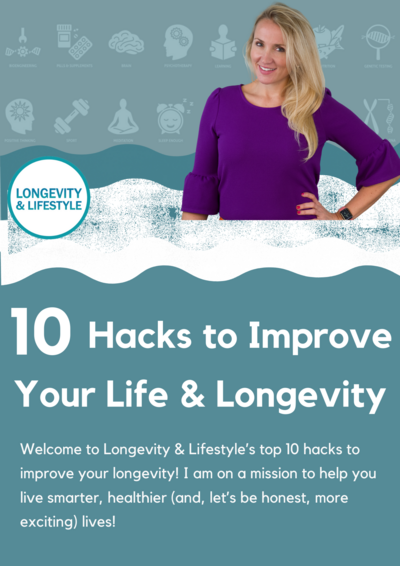
10 Hacks to Improve Your Life & Longevity Playbook
Free guide
10 Hacks to Improve Your Life & Longevity
Want to learn how to live a smarter, healthier (and, let’s be honest, more exciting) life? Check out my free playbook with top tips just for you!
By signing up, you agree to join the Longevity & Lifestyle newsletter and to receive emails. We respect your privacy and abide by strict privacy policies.



LONGEVITY & LIFESTYLE
© Longevity & Lifestyle llc 2021 | Design by Tonic | Photos by social squares, Unsplash & Rebecca Reid
SEND ME A NOTE >
GET ON THE LIST >
@longevity&lifestyle
follow along: