#267 Sander Brus — Sugar, Dopamine, Cravings & the Future of Metabolic Health
The Longevity & Lifestyle podcast
The Longevity & Lifestyle podcast
The Longevity & Lifestyle podcast

Episode 267
Sign up for
The Longevity & Lifestyle Insider
Join Claudia's Longevity & Lifestyle Insider newsletter to get top tips, insights and strategies on optimizing your life, health and business!
By signing up, you agree to join the Longevity & Lifestyle newsletter and to receive emails. We respect your privacy and abide by strict privacy policies.

“I consider sugar as the new cigarettes.” — Sander Brus
In this episode, Claudia speaks with Sander Julian Brus, Dutch scientist, entrepreneur, and founder of NoSu Health, whose journey began when COVID temporarily altered his sense of taste. After giving up sugary drinks, he unexpectedly lost 15 kilograms, sparking a mission to understand why sugar is so difficult to resist.
Sander reveals how sugar activates the brain's reward system, why ultra-processed foods keep us coming back for more, and how changing our relationship with sweetness could help break the cycle of cravings.
They also explore his work in preventive healthcare, from sustainable at-home diagnostics to AI-powered retinal scans that may help identify cardiovascular risk earlier.
We Explore:
- Why Sugar Triggers Dopamine and Keeps Us Craving More
- How Sander Lost 15 KG After Giving Up Sugary Drinks
- Why Ultra-Processed Foods Are Designed to Be Hard to Resist
- How Glucose Spikes and Crashes Influence Hunger and Energy
- Why Sugar Cravings Are About More Than Willpower
- How NoSu Health Aims to Change Our Relationship With Sweetness
- GLP-1 Medications, Appetite and Long-Term Behavior Change
- Why Food Quality Matters Beyond Counting Calories
- AI Retinal Scans and the Future of Early Heart Disease Detection
- Simple Lifestyle Changes for Better Metabolic Health and Longevity
From breaking sugar cravings to detecting disease before symptoms appear, this conversation explores how understanding our biology can help us take greater control of our long-term health.
ABOUT THE EPISODE & OUR GUEST
SPONSORS
Brain health deserves a place in your daily routine. Axolt is a daily brain drink with 46 carefully selected ingredients, formulated with input from a scientific advisory board that includes leading neurologists and brain health researchers.
What makes Axolt stand out:
- 46 carefully selected ingredients in one daily drink
- No caffeine or stimulants
- Input from brain health experts to inform its formulation
- A simple daily ritual that fits into busy schedules
Their approach brings a focus on brain health into an easy, everyday habit.
Get 20% off at axoltbrain.com/claudia
Unlock peak energy, mental clarity, and long-term health.
If you’re an entrepreneur, leader, or high achiever who refuses to settle for burnout, fatigue, or suboptimal health - this is for you.
I help top performers optimize their energy, longevity, and success using science-backed strategies, biohacking, and personalized health protocols.
Book a Complimentary Peak Performance & Longevity Coaching Call
This free exploratory session will help you:
• Identify what’s holding you back from your highest potential
• Gain clarity on your energy, focus, and longevity goals
• Discover a proven framework for sustainable high performance
Spots are limited - apply now to reserve your session.
🔗 APPLY HERE
Peak Performance & Longevity Coaching Call
Show Notes
00:00 Introduction
01:29 Surfing, dopamine & risk
04:47 Stroke recovery
09:45 Losing taste & food habits
14:22 Sugar, dopamine & cravings
19:14 GLP-1s & processed food
22:29 Breakfast & glucose swings
25:28 Quitting sugar & NoSu
27:00 Blocking sweet taste receptors
31:08 Reducing sugar & resetting taste
35:55 Sugar rewards & addiction
38:35 Gymnema & NoSu research
42:17 NoSu & GLP-1s
44:19 At-home diagnostics
47:14 Retina scans & heart health
50:38 Early detection & AI
55:45 Follow Sander
56:31 Longevity advice
PEOPLE Mentioned
Products & Organizations
MORE GREAT QUOTES
“It's more important to look at what drives our hunger.” — Sander Brus
Legal Disclaimer: Please note, to avoid any unnecessary headaches, Longevity & Lifestyle LLC owns the copyright in and to all content in and transcripts of The Longevity & Lifestyle Podcast, with all rights reserved, as well as the right of publicity. You are welcome to share parts of the transcript (up to 500 words) in other media (such as press articles, blogs, social media accounts, etc.) for non-commercial use which must also include attribution to “The Longevity & Lifestyle Podcast” with a link back to the longevity-and-lifestyle.com/podcast URL. It is prohibited to use any portion of the podcast content, names or images for any commercial purposes in digital or non-digital outlets to promote you or another’s products or services.
PODCAST EPISODE TRANSCRIPT
Claudia von Boeselager: Welcome to another episode of the Longevity and Lifestyle Podcast. I'm your host, Claudia von Boeselager. I'm here to uncover the groundbreaking strategies, tools, and practices from the world's pioneering experts to help you live your best and reach your fullest potential. Don't forget to subscribe to the podcast to always catch the latest episodes.
Legal Disclaimer: Please note, to avoid any unnecessary headaches, Longevity & Lifestyle LLC owns the copyright in and to all content in and transcripts of The Longevity & Lifestyle Podcast, with all rights reserved, as well as the right of publicity. You are welcome to share parts of the transcript (up to 500 words) in other media (such as press articles, blogs, social media accounts, etc.) for non-commercial use which must also include attribution to “The Longevity & Lifestyle Podcast” with a link back to the longevity-and-lifestyle.com/podcast URL. It is prohibited to use any portion of the podcast content, names or images for any commercial purposes in digital or non-digital outlets to promote you or another’s products or services.
PODCAST EPISODE TRANSCRIPT
Claudia von Boeselager (00:16)
My guest today is Sander Bruce, a Dutch scientist turned founder. When COVID took his sense of taste, he stopped drinking cola and lost 15 kilos without trying. That led him to find No Sue Health, which is taking on sugar. Let me start again. My guest today is Sander Bruce, a Dutch scientist turned founder.
When COVID took away his sense of taste, he stopped drinking cola and lost 15 kilos without trying. That led him to found Nosu Health, which is taking on sugar cravings and the food environment behind them. He also co-founded AUCAS Diagnostics, making biodegradable rapid tests, and working with IRO, which reads heart risk from a photo of your eye. Today we explore why sugar is so hard to resist, what it does to the brain.
what actually helps and how we catch metabolic disease earlier. Please enjoy.
Claudia von Boeselager (09:45)
So tell me to
kick off, what did you losing your sense of taste teach you about food? And maybe you can take us to that moment. What was happening? Where were you in your life? And why was this such a pivotal moment?
Sander Brus (09:59)
Yeah. So this was like three years ago, still during the pandemic and I got COVID for the third time. I tested myself because I'm also related having a company related to self-testing for COVID. And but the one thing I noticed is you know was that I couldn't taste anything at all. So sweetness, sour, bitter, umami, all the different tastes that we have, which was really
Unpleasant, of course, but it also changed how I think about food. So suddenly, you know, I was sitting on the couch and I could make the decision between, you know, having a Coca-Cola or some water. You know, normally, like three years back, I would go for the Coke or Coke Zero. But then, you know, I couldn't taste it and you know, I realized I made a different decision and going for that water instead. and you know
Afterwards, I did a deep dive in sweet taste receptors and how taste affects the food decisions that we make. And yeah, that opens a whole new world for me. So I started to realize that all of these bigger food companies, you know, they have whole labs working on making the best possible taste combination that there is, and it's referred to as the bliss point. So it's like sugar, fat, and salt.
It gives us, you know, as human beings the optimum pleasure. and it goes beyond free will. So then you start just consuming, consuming. That's why you cannot keep it at one piece of chocolate. You have to finish the whole bag. So, you know, it triggered that interest in taste. And at that moment I started with, you know, cutting sugar out of my diet, quite cold turkey. And
Here we are three years later and I never got back to my old habits, which is pretty cool. So it's like a behavioral change inspired by a covet infection.
Claudia von Boeselager (11:52)
so that was maybe one of the good things for you that came out came out of COVID, right? Not many people can say that. And just to double click on that point, it was Callie Means in the US who
Sander Brus (12:02)
Yeah.
Claudia von Boeselager (12:03)
was really talking about, you know, big food, etc. And I think this is really important for people who don't yet know, is that there is a whole like massive scientific industry in big foods to make you addicted to food,
Sander Brus (12:14)
Yeah. Yeah.
Claudia von Boeselager (12:17)
like you were saying, like.
And they've literally scientifically engineered this and all the way down to the sound of opening a wrapper makes in like satisfying certain things, or you know, the Pringles container or the Doritos or whatever it might be, but also obviously the sweets as well. And so it's that whole system that's there to scientifically engineer and make you almost helpless in order to to to resist these things because it it is and I'd l love to discuss also what's happening in the brain around it as well.
and then you just have this cravings again and again and again and it's just this horrible vicious cycle that goes on top of it. So we'll we'll get back to that point.
Sander Brus (12:55)
Even the coloring, even the coloring of food. So if you would give this is
a really interesting study, if you would give MMs like eight or ten different colors instead of four or five, people would consume more if there are like eight or ten different colors, like thirty percent more of the same MMs. So the food is identical, but just changing the appearance. And like you said, indeed, it could be with sound, it could be with the crunch effect. But mostly I realized for myself, because we are all born with somehow a sweet tooth.
because sugar was where you know, it was something that was seasonally available. But for me, the sweet taste was the thing that, you know, kept me hooked to food products. And in general, those products were ultra-formulated, ultra-processed foods. And indeed, I've listened to the podcast of Kaylee and of Kelly and K KC Meads as well. I've read the book Good Energy, I think it was called. It was an yeah,
Claudia von Boeselager (13:46)
Mm-hmm.
Sander Brus (13:48)
an amazing book, game changer for me.
And
all of those things, you know, you start to get more aware of the problem. And that helps you also to you know, keep a certain lifestyle there or certain, you know, diets only work for a short period of time. But as soon as you understand what are the big things to focus on, for example, cutting out sugar and then automatically cutting out ultra-processed food, yeah, it keeps you there for the long run. So yeah, for weight loss, for mood, and there are so many positive things that you that are associated with.
For choosing your share intake.
Claudia von Boeselager (14:22)
Hundred percent. and so the C D C says fifty three percent of US adults calories now come from ultra processed foods.
Sander Brus (14:30)
Yeah.
Claudia von Boeselager (14:30)
So why would you say, Sandra, that sugar is so hard to resist? What's happening?
Sander Brus (14:37)
Yeah. So it sets off a rewards, you know, process. and the the dopamine center, you know, the dopamine molecule. It's the molecule of more. So if you, you know, trigger the sweet taste receptor which starts on your tongue, it fires off the reward pathway, starts to generate dopamine and you basically want more. So that's it's not a fair b battle, you know, after all, especially if you combine it with
fat or with salt. So I saw this recently. It's like a trillion dollar industry, the food industry, fighting or like yeah combating with your ancient brain, seeking out for high calorie dense and sugary food. So it's not a fair battle. And I think what you see, and that's also the comparison that you can make with the cigarette industry. Like I consider sugar as the new cigarettes.
Something like this, or ultra processed food in general, as the new cigarettes. the same games or plays are it's it's being played as well, the same tactics. So, and this could be explained that some of the bigger, big tobacco companies they actually bought over some food industry companies, which Kelly means also shed light on,
Claudia von Boeselager (15:54)
Yeah.
Sander Brus (15:55)
like Philip Morris bought over Kraft Heinz. Same tactics, so the
Smartest PhDers working in the laboratories to make cigarettes addictive start to do the same thing with ultra-processed foods. And it worked. Like it's a phenomenal experiment. People started to consume more calories. But the thing is, you know, it's more a a calorie is not a calorie. That's one of the most important aha things for me. Of course, it's an it's an it's it's a thing that we can look at, but it's more important to look at what drives our hunger.
And that's more hormonal. And actually, the whole GLP1, Ozempic, Monjaro story is proving this. Like it's not a willpower drug, but it actually works on you know raising like playing with hormones like GLP1, which you naturally also make if you eat food. so it's a really complex story, but indeed, our reward center is yeah, I think the center of this. and
That also blames, I think the whole the willpower issue gives also some nasty, you know, feeling for some people. Like it's your fault. Like it it's similar to like, yeah, you could make your own decision if you want to smoke a cigarette, you can just keep it at one. No, that's super complicated. In this world of today, we need tools to navigate us towards healthy behavior and whole foods. And the only thing that could work and works on our satiety hormones and all of those things is Whole Foods.
There's not a single diet on earth that includes ultra processed, ultra formulated, hyper palatable foods. one of the greatest books I've just read is from a former FDA commissioner. his name is Def David Kessler. I have it over here. And the title is Diet, Drugs and Dopamine. And it's literally about this about the tobacco industry and the food industry and the similarities. And as soon as you understand that, you you you know you're looking at it differently.
Claudia von Boeselager (17:56)
A hundred percent. And I'm curious because a lot of the FDA, it's like a revolving door to go into Big Pharma. Did
Sander Brus (18:01)
Yeah. Yeah.
Claudia von Boeselager (18:02)
he go to Big Pharma after his FDA position? I don't
Sander Brus (18:06)
Curious, I don't know. Maybe I don't wanna know. No, I don't think so. Like
recently he was channeled in the US as well, about you know, sugar and the same tactics. So he's really critical and I think independent. but I know the stories like this. Yeah. Yeah.
Claudia von Boeselager (18:18)
Okay. I would hope if he's writing a book like that, I mean I can imagine exactly. No, but it's
it's it's wild if people really kinda t and there's not th there's some people like, conspiracy theories and all the rest of it too, but it's not, right? So as you said as well, right? Philip Morris bought over craft foods, they brought the addiction scientists who are specialists in addiction for nicotine because that was going down in the eighties over to the the food industry. There was a whole phase back then, fat is bad, right, across the board. We know that now there's healthy fats that are amazing for you when
amazing for your brain and all the rest of it. and so what they really were doing is making the food addictive. They were reducing fat and increasing sugar in the food. And there is a direct correlation. I've seen statistics on
Sander Brus (18:55)
Yeah. Yeah.
Claudia von Boeselager (18:57)
this in the rise in sugar in food. And even in the US, there's bread that has sugar in it. It's wild. I was like,
Sander Brus (19:03)
Yeah.
Claudia von Boeselager (19:04)
how is this possible? Sugar is in everything there. You really need to be able to read the labels. And then
Sander Brus (19:08)
Yeah.
Claudia von Boeselager (19:09)
you can see the direct correlation with increased diabetes, like chronic diseases, etc.
Sander Brus (19:13)
Yeah,
yeah.
Claudia von Boeselager (19:14)
And I also want
to touch on a point you mentioned with the GLP ones. I think that what's really interesting, the research is also showing around them, is that it is people who have like an addictive personality, right? So that dopamine driven
Sander Brus (19:25)
Yeah. Yeah.
Claudia von Boeselager (19:26)
and like there's a lot of ADHDers amongst us, all these entrepreneurs,
Sander Brus (19:28)
Yep. Yeah.
Claudia von Boeselager (19:29)
et cetera, that are wired in that particular way as well. And what's really interesting with the GLP ones is that it's reducing addictive tendencies. Yeah.
Sander Brus (19:38)
Yeah, it affects the reward center. Yeah. Yeah. Yeah.
Claudia von Boeselager (19:42)
Which is I mean, it's it's crazy the impact it's having. Even like airplane like airline industries are recalculating their numbers 'cause they need less fuel because people are all of a sudden less heavy because of this at long.
Sander Brus (19:50)
Yeah. Yeah. But one addition
is that as long as you're on the medication, it does it. But
Claudia von Boeselager (19:58)
Yeah. Yeah.
Sander Brus (19:59)
that's also what he describes in this book. Like as soon
Claudia von Boeselager (20:02)
Mm-hmm.
Sander Brus (20:02)
as you stop the medication, like he doesn't look at GOP1s as the solution, but as a tool. And I think that also could help a lot. Like it could help us to understand what are the type of foods that makes us coming back for more, like donuts, for example, or things that are sweet.
and and fat and salty and that could trigger that reward center.
Claudia von Boeselager (20:24)
Mm-hmm.
Sander Brus (20:25)
and then as soon as you stop, you know, maybe you're looking at those foods differently, you make different changes, you you're not getting it into your house at all because if it's there you already lost the battle.
Claudia von Boeselager (20:36)
Yeah.
Sander Brus (20:36)
and maybe if you walk in the supermarket, which is like a minefield, especially in the US, I think like seventy three seventy three percent of the items there are ultra formulated, ultra processed foods.
Claudia von Boeselager (20:46)
Yeah. They say just to walk on
the parameter, avoid any
of the shelving space. Yeah.
Sander Brus (20:49)
Yeah. Yeah.
But so but that's what I wanted to say. Like it's extremely hard for us as human beings seeking out for energy dense food. If you look at the whole history of human beings, if you go back, yeah, it's it's it's a logical consequence what we see nowadays. And the numbers in the US are more extreme, like seventy-four percent of the people of the adults are overweight or obese. If more than fifty percent have type two diabetes, you see chronic conditions like
Fatty liver disease happening in children that are not drinking alcohol, obviously. So it's coming from the fructose in sugar, from sodas. So it's super sad, but it's somehow a logical consequence of biology of our body, our body functions, and the food environment that we created somehow around us, like all of the food that is coming from factories and that is live literally made to surpass your satiety hormones. so yeah, that's what the
I I think I saw like Gary Breca, like a recent clip of him also saying that the only diet that works is one with the absence or w cutting out ultra processed food. Then it doesn't really matter what type of diet you you follow, like Mediterranean, paleo, raw, carnivore, it's all whole foods and it's super difficult to overeat a steak. You know, you're not going to eat three steaks for dinner, like some exceptions possibly.
Claudia von Boeselager (22:12)
He looks of sick. Yeah.
Sander Brus (22:16)
But yeah, a a pizza or something, it's super easy to overeat. And then you're overeating calories, so calories are important, but it's more wise to look at why am I overeating this because it's super difficult to stop yourself.
Claudia von Boeselager (22:29)
Yeah. And I think I mean Dr. Mark Hyman talks about this too. And I think a real important point is especially starting your day, not eating something sweet. because that just sets you off of a cascade. And I
Sander Brus (22:37)
Yeah, yeah, yeah.
Claudia von Boeselager (22:41)
think all those like sugary breakfast cereals or jam
and marmalade and all these things in the morning, I think if you can already set yourself up and I'm I'm wanna hear your your take on this or if you've seen research on it as
Sander Brus (22:49)
Yeah. Yeah.
Claudia von Boeselager (22:52)
well. But you know, starting with the omelette with vegetables or the sourdough bread, like whatever that might be,
It's more kind of I'd say continental European breakfast, frankly. So I guess that's my German side.
Sander Brus (23:01)
Yeah, yeah. Yeah.
Claudia von Boeselager (23:04)
and you know, you have the eggs and all the rest of it too. You set yourself up to win. Like you're not having those sugar cravings. And I think what a lot of people don't realize it's not normal to have a crash mid morning because you've had a sugary breakfast. Like that doesn't need to be. So have you seen research around this, Sander? Can you share a little bit about what's going on there?
Sander Brus (23:19)
Yes,
so for sure. And like personal stories, like I always used to start my day like five years ago and the whole period when I was younger with something sweet in the morning, without knowing that it would cause me to have the second meal earlier to and constantly snacking. And if you understand more about metabolism and you know, especially glucose metabolism and the spikes and the crashes of sugar in your blood.
Then you understand more what is causing this behavior. So if your body is in a dip, which follows after a big hit of sugar, if you get refined sugar, then of course you're seeking out for that next sweet fix, basically. And I was on a constant glucose roller coaster, like most people nowadays. But cutting out sugar cold turkey helped me to get out of it. And yeah, that's basically what I want to.
how I want to inspire other people to do the same thing. So if you start your day indeed with something fatty with a lot of protein, you are fool a longer period of time. so it's not even the meal per se, maybe, but it's more like what is causing the next you know, what is the next thing that you'll eat and when are you going to eat it? And most people are constantly snacking and they have the feeling that they will faint if they are not snacking. But our bodies are meant, you know, to actually eat maybe one time a day or
skip a day, that's perfectly
Claudia von Boeselager (24:46)
Mm-hmm.
Sander Brus (24:47)
fine, but not if you only eat ultra processed food.
Claudia von Boeselager (24:50)
And yeah, I think that by eating f whole foods, and I I think this is a really important distinction. And hopefully most people listening know this, but just just in case this is new to you, really just even doing a week of you have to plan it in advance. You need to understand really like what it is that you're eating. And if you're adding sugar or honey to things already, that's gonna kick you out of it. But you will feel so much different in the mental clarity, et cetera, around it as
Sander Brus (25:16)
Yeah.
Claudia von Boeselager (25:17)
well. and then just planning that and and
Giving yourself a week and just see how you feel. See the mental clarity. See your
Sander Brus (25:22)
Yeah.
Claudia von Boeselager (25:23)
energy levels during the day. Like I think there's gonna be big, you'll notice big
Sander Brus (25:26)
Yeah.
Claudia von Boeselager (25:27)
differences in that as well, right?
Sander Brus (25:28)
There are so many benefits and it could differ a bit per individual. So I lost fifteen kilograms because of cutting out sugar and therefore
Claudia von Boeselager (25:35)
Wow.
Sander Brus (25:36)
also cutting out other ultra processed food with sugar. But to focus on the sugar, you know, it's really the common denominator in ultra processed food. So that's why I focus on it. It's the big thing that everyone should focus on it, you know. And that helps you to set off, you know, it makes it easier to
go
further in that healthy lifestyle and it also motivates you more. Like the controversy is that I went more to the gym when I was eating, you know, five years ago, having ultra processed food regularly, but I didn't see any effects on my body, for example. But then, you know, if you're in this, you know, living healthy, cutting out sugar, and then then actually that motivates you even more to go to the gym. Or you don't have even have to go that much, but you will see effects sooner.
Claudia von Boeselager (26:22)
Mm-hmm.
Sander Brus (26:23)
Because that fat layer is suddenly gone, you know.
Claudia von Boeselager (26:26)
Exactly.
And so let's fast forward to developing Nosu Health and what exactly does it do? And like, you know, people might be like, suspicious
of it at first. So what's the science behind it? Like what do people what
Sander Brus (26:35)
Yeah. Yeah, I got it. Yeah.
Claudia von Boeselager (26:40)
should people know about it?
Sander Brus (26:41)
Yeah. So the the effect I had when I had COVID, that was the inspiration for No Sue. So this is the product, and as you can understand, like No Sue stands for no sugar. it's changing your relationship with sugary foods. And I would consider it more of a tool to help you towards more healthy behavior.
without sugar controlling you, but actually you call the shot so you can still have some sugar after dinner, for example, but it's not you know constantly listening to these sugar cravings and that you have to seek out and you get crazy. and how it works is it's really fascinating. I think it it inhibits your sweet taste receptor that you have on your tongue and in your GI tract. And what that means is that you are not able to taste anything sweet for about an hour to two hours.
So it blocks the receptor that normally gives the sweet signal to your brain, and you're able to taste the sweetness, which is the reward of sugar. And as soon as that blocks you, you try that a couple of times, you start to uncouple the reward from that sugary food. So the Coca-Cola suddenly it tastes awful without sugar, without the the sweet taste. So I never touched a Coca-Cola like for four or five years now.
or like after my covet infection when I cut out sugar because it's just too sweet
Claudia von Boeselager (28:00)
Very good.
Sander Brus (28:02)
for me, you know. So we want to play with taste to make people realize how sweet things are and how sugar is keeping us hooked to these products. So we want to make and this is a hard job for people for or for most people to keep to make sugar a boring option for your brain. While
Claudia von Boeselager (28:19)
Mm-hmm.
Sander Brus (28:19)
logically speaking it's something enforcing, you know, you it your reward system lights up. But
There used to be good reasons for it, you know, long times ago, but now the food industry understands it and they put sugar in everything. And with sugar, you can make literally every food product tastes good, even cat food or dog food. If you just put a a bunch of sugar, you know, I bet people will eat it. it will
Claudia von Boeselager (28:43)
Ha ha ha.
Sander Brus (28:44)
taste good. So that's one thing. So that's more of a behavioral effect. And
Claudia von Boeselager (28:49)
Mm-hmm.
Sander Brus (28:49)
then the other thing is to mitigate the glucose spikes and crashes.
if you do take sugar, because to completely eradicate sugar from your diet is completely it that's difficult for most people to do because it's so in our life every day, it's always available, it's cheap. but to mitigate the harmful effect, meaning to smoothen the curve after you did eat glucose sugar, that's what it is also about, because that has an impact on your cravings as well.
So it's like a double effect. One is the behavioral effect and the other one is more of the glucose metabolism effect.
Claudia von Boeselager (29:30)
Which is quite positive as well, right? Insulin sensitivity is super important and re resilience is an issue.
Sander Brus (29:32)
Yeah, exactly. So we use natural ingredients
that basically, you know, sits on that glucose receptor and for that reason sugar is not able to bind for s for to bind for some period of time, causing these effects. So these are ingredients that have been used for centuries, but they are completely unknown in Europe. especially in Ayurveda, it's called Gymnema Sylvester, it's called the sugar destroyer.
Because it destroys the taste of the sugar. But for us, it's completely new and for me as well. I I I still remember when I tried it for the first time, I was like, wow, how is this even possible? You know, to not have that sweet taste, but the other tastes are still there. So if you would take almonds, it tastes exactly the same. But then if you would take a donut or something really sweet, yeah, the sweet taste is gone. So that's that's amazing. And that's how I want to inspire people to make better decisions around food.
Change
the relationship with sugar, particularly, and focus on metabolic health because I think that's the most important thing to focus on, also, if we speak about longevity, like living healthier for a longer period of time. Yeah, metabolic health should be the thing that everyone focuses on. And that has to do with blood sugar, with insulin sensitivity, with waste circumference, with triglycerides, ADL. Like that's more
clinical definition, but really it is about converting food energy to cellular energy and it's the basis of everything.
Claudia von Boeselager (31:08)
Can you explain what would be the starter protocol, let's say, in practice, right? So in reality, somebody's day-to-day life, let's say someone who used to eat or is eating sugary breakfast, the Coca-Cola's,
Sander Brus (31:21)
Yeah. Yeah.
Claudia von Boeselager (31:23)
or let's reverse. We'll do five years ago, Sander. How would you explain to five years ago, Sander, to go about
Starting with the protocol, what what's what does he need to do and when does that switch happen?
Sander Brus (31:37)
Yeah,
so they most important thing is to start with salty foods as breakfast, like we mentioned before. but
Yeah, mainly to to and maybe to to to start small, you know. Most of the times when we want to change things in our diet, we want to think big, which is great most of the
Claudia von Boeselager (31:56)
Yeah.
Sander Brus (31:56)
times, but we want to do all the big things all at the same time. But it's really about those small improvements, like stopping with that sugar cube inside of your coffee in the morning or something, you know. And then you can see that your taste buds are literally resetting, like every 10 to 14 days, your taste buds regenerate. So
You know, afterwards, after those 14 days, if you would cut out sweetness, for example, that same cup of coffee with that same sugar cube would hit differently. It's way too sweet for you, possibly, because you adapted, like it changed your biology on your tongue in this case. So it's really about these small steps, I would say. And there were a lot of things that I could have improved back then, yes.
Claudia von Boeselager (32:39)
And so in terms of the no su, because you were saying at before we we jumped in that there's two different delivery mechanisms with different things. So maybe you can w talk about that. And then if someone is out and they're like, I'd love an ice cream or whatever it might be, you know, what
Sander Brus (32:56)
Yeah.
Claudia von Boeselager (32:56)
can somebody do in the moment? What would you recommend?
Sander Brus (32:58)
Yeah.
Yeah. So it it it it differs really per person. Like if you are living according to the rules of like I don't know a carnivore diet or ketogenic, then there's little benefit for you because you're not getting sugar at all, right? And the great thing, like if you understand that, that's also great. Like I didn't know that, but you don't need refined sugar at all to survive. Like if you look at the macronutrients, you need fat and protein to survive, otherwise you would die.
But carbohydrates are basically optional and it could perfectly fit into a healthy lifestyle and healthy diet, but they are not required per se. and sugar is part of like refined carbohydrates, of course. So that's one thing. so yeah, there are there are there are many ways how you can use it, but I would say for if you want to limit your cravings and you want to fight your sugar cravings, those typically
The duration of those cravings are typically like 30 minutes, not even that long after dinner, most of the times. Like if you're on the couch watching Netflix and you would try it with the taste effect so that you're not able to taste that sweetness, you're kind of protecting yourself. The best thing that you could have done already is to not take that unhealthy food product, you know, at the supermarket, anyhow. But if you did take it, you can do it like this. and if you having a lunch with, you know, sugar or carbohydrates in it, you can take a capsule before.
which has to do with the glucose spikes that I just described. So there are many ways to use it, but it's really depending on how you are living and what kind of things you do eat. And if you do eat whole foods, you know, there are a lot of mechanisms already built in. Like if you eat oranges, there are fibers in that orange that prevent the rapid spike and drop of blood sugar.
Right. But if you squeeze it into orange juice and you add sugar, yeah, then you do have basically Coca-Cola for your body. Of course, there are vitamins in it, etc. I do get it. But if you wear a glucose monitor, which I did a lot of times, then you still see the same effect basically. You cannot distinguish a Coca-Cola or orange juice, at least at my NS1 personal experiment, which is really bizarre because I I thought it was like a perfect health food or drink at the beginning.
So and
Claudia von Boeselager (35:16)
Yeah.
Sander Brus (35:16)
of course like yeah reading books, that's that's so that's so interesting, but that's difficult for most people. Most people are busy and they want to have like something that would fit in their lifestyle, etc. And then I would say like starting with this taste experiment and if it could change your perception with those sugary foods that are normally super rewarding, that's a big win already. and maybe after a couple of months you look at it differently and you can use it again. But
That's how I want to look at no so more as a tool for people that they that they can use to change their behavior around these unhealthy ultraformulated foods.
Claudia von Boeselager (35:55)
So Sandra, what you're what the goal is is essentially that it loses the reward system. It loses the taste of the sweetness. And so you're rewiring the neural pathway to think like, this is good and I like this to this is really boring. I'm eating like a piece of paper. Or what what does it taste like? I'm curious. Yeah. Cardboard. Okay. I know. It's like having the negative association.
Sander Brus (36:12)
Yeah, yeah, yeah, yeah, exactly. Like cardboard. Yeah. Yeah. That's it. And it's really fun. It's really
fun to experience it, you know, to have that whoa
Claudia von Boeselager (36:23)
Yeah.
Sander Brus (36:23)
effect. and then you start to realize and that's some sometimes what is needed for people, you know. They want
Claudia von Boeselager (36:29)
Mm-hmm.
Sander Brus (36:30)
to start with healthier behavior, but that donut is still so it's so good, or that ice cream is so good. but understanding it
you
know, to get to yourself and what is driving me to get to this donut, that's one of the most important things. And what is it in a donut that that you know gets me hooked? And then you know it's start you start with curiosity and you start to read more books or you know papers about it. And then it could help you on the long run.
But of course, like we have other tools as well, like behavioral therapy, n nutrition in general, or exercising, reducing stress. There's so many things that you can do, but I recognize that a lot of people struggle with sugar particularly, for well explained reasons. Like it's the addictive component in these foods and it gets clearer and clearer actually.
Claudia von Boeselager (37:20)
Yeah, I think it's compared to cocaine, right? That it's like to trigger the same pathways.
Sander Brus (37:24)
Yeah, yeah, like that's one of the
studies. It it's a bit misleading. I think it was like a mice study. so it's
Claudia von Boeselager (37:30)
Okay.
Sander Brus (37:31)
not a hundred percent comparable, but yeah, it it it it it made it on social media and all of that. but
Claudia von Boeselager (37:37)
Mm-hmm.
Sander Brus (37:37)
of course there's a certain truth in it and the dangerous part of of course sugar and and and the sugar in food and drinks is that you consume it daily. so maybe it doesn't generate the same amount of dopamine, but you still get it every day.
And it's super easy to get to. While other things, you know, like cigarettes are now you have taxes and all of that, and some drugs are illegal, it's difficult to get to, like there's a barrier. But for
Claudia von Boeselager (38:03)
Mm-hmm.
Sander Brus (38:04)
you know, candies and it's like a legal drugstore for children, basically. And and and it's you know, the all of the industry is advertising and using all of those tactics to make it really attractive for people, and we cannot blame them.
Claudia von Boeselager (38:21)
Yeah, that was terrible. And so I was looking at some of the ingredients and I was researching and I don't know if I'm gonna butcher the name or pronunciation. Gim gimnea? G you know. Gymnema. Yeah. Yeah,
Sander Brus (38:29)
Yeah, Gymnema Sylvester. That's the the main component and the most important one. Yeah.
Claudia von Boeselager (38:35)
and there was some trial I think out of Maastricht study that it cut chocolate eaten by twenty-one percent and sugar drinks by forty-two percent.
Sander Brus (38:44)
Yeah.
Claudia von Boeselager (38:45)
Can you walk us through that study and of this compound, where it's from, etc.? you said it was used, you know, in other countries countries for a long time. And I apologize, I had a a virus last week and it's still making me cough a little bit, so. Yeah.
Sander Brus (38:51)
Yeah. Yeah. So it's it's a yeah, no worries. No, I g I get a hundred percent what you're saying, no problem.
so yeah, it's a it's a woody climber that grows in India, Australia, certain parts of China. So it's a natural plant, and there's a compound like a phytochemical in that plant called gymnemic acid, and that's the phytochemical that binds to the sweetase receptor.
And in India, you know, this plant is used as a traditional way to combat sugar cravings, but also for to treat type two diabetes. So it could lower your blood sugar levels and improves insulin sensitivity.
But you know, the main thing that I find super interesting is that it blocks that sweet taste and the working principle of it, you know, how it works. And that it also works for it's works on basically everything that is sweet. Because as you know, there are over a hundred names of sugar that the food industry uses to put on the label, basically to confuse people to think, there's no sugar in it, and then yeah, dad's syrup. Yeah, all of all of those things, right?
Claudia von Boeselager (39:57)
Yeah. C Coconut sugar like Yeah.
Sander Brus (40:02)
So that's
Yeah, that that's the main thing that I find interesting. And that's why it's called the Sugar Destroyer. And there's a lot of research on it, which I found really interesting and important as well. because nowadays, you know, everyone could start a supplement company and
Since I have a medical background, I don't want to be associated with a clumsy supplement company or anything. You know, so there's great research on Gymnema showing it could help people to reduce sugar cravings, could help people with pre-diabetes to lower their blood sugar levels and improve insulin sensitivity. So all of that. And we're also setting up our own research with NOSU with different universities.
Also using fMRIs or brain scanners to really understand what is going on in the brain. If someone took no su and then, you know, gives like would consume a milkshake or something really sweet to see if there's a difference between without no su with no su. So that is really interesting to me. and I want to see it myself. Like I'm just super curious.
Because I do bel do believe there's an effect, I recognized it myself. But of course, you know, you have to prove it and see if it really works on more people. so those things are really interesting and it's all ongoing. So there are now three studies ongoing in Spain and in the Netherlands. And eventually we want to focus also more on the US because I think you know, we see the same problems in Europe as in the US, but the extreme numbers are just way higher.
Right. So all
Claudia von Boeselager (41:34)
Yeah.
Sander Brus (41:35)
of those rates of pre diabetes and also the food that Americans are eating sadly are way more unhealthy if you compare it the same food products, for example, like Kellogg's. I'm sure you've seen those pictures where they compare Kellogg's in Canada or like Kellogg's in somewhere in the US compared to Kellogg's in Europe. And it's like half of the ingredients and some of the artificial dyes are banned here and all of that, you know.
Claudia von Boeselager (42:00)
Crazy, yeah.
Sander Brus (42:01)
so yeah, eventually
We want to make an impact worldwide and as a tool for people to have a better relationship with those unhealthy foods.
Claudia von Boeselager (42:10)
And to rewire them too. And I guess it's very complementary
Sander Brus (42:12)
Yeah.
Claudia von Boeselager (42:13)
to people potentially that are on GLP ones, right? For diabetes and all
Sander Brus (42:16)
Hundred percent. Yeah.
Claudia von Boeselager (42:17)
the rest of it as well. So you would what would you recommend to just have the daily protocol and it's something that you would consume daily? and then f for how long a period of time until those pathways start to rewire.
Sander Brus (42:31)
Yeah, I think like if you would get the benefit, if you if you live live healthy and you feel happy and you consume hell whole foods, there's no need to take it. But that's just the honest answer. But if you feel the struggle, if you feel those cravings and stuff, then you know it might help you to set off in a healthier way. And that could be it could could differ per individual again. You know, it could be one time a year that you try it before those moments or for a month period, like there are sixty capsules.
in a in a pouch. It could be for longer. For some people that want to have sugar in their life, you can consume it beforehand to smoothen the glucose response. So it might work in different ways for different people, depending on what you want. But I think the thing that works the best is to have a certain diet that could l work on the long run for you and not for a short period of time. Like everyone can lose weight on a diet, but for a lot of people it's super difficult to maintain that.
Claudia von Boeselager (43:30)
Mm-hmm. And they bounce back as well. so yeah,
Sander Brus (43:32)
Yeah.
Claudia von Boeselager (43:34)
and I I think that's the the biggest challenge and why so many people are on, you know, GLP ones for such a long period of time. They're scared to go off them, etc.
Sander Brus (43:42)
Yeah.
Claudia von Boeselager (43:43)
I think what I also want to touch on, because you're a serial entrepreneur, Sander, and you've d you do many different things at the same time as well. So tell us about the other businesses that you have as well with the disposable kits and the
Sander Brus (43:55)
Yeah, cool. Yeah. Yeah.
Claudia von Boeselager (43:57)
And also with the retina eye scan, right?
Sander Brus (43:58)
So yeah,
yeah. So I'm the founder of OKUS Diagnostics, which is a company producing point of care tests with a sustainable twist. So I don't like to remind you of the pandemic, but you can maybe remember those type of tests with two lines. but it could be also for something really nice like a pregnancy test.
Claudia von Boeselager (44:12)
Yes, yep. Mm-hmm.
Sander Brus (44:19)
so this type of testing is really interesting since it's easy accessible.
Cheap, you can test 100 different biomarkers and you can perform it at home. So I think in general that the future of diagnostics is moving towards people's home where it's super comfortable to perform it. And lateral flow essays, so that's the technology. This is how basically a pregnancy test is called, and how a COVID antigen test is called.
Yeah, I think there's an important role for those types of tests, also for hormones, for sexual transmissible infections, for even tumor markers, for example, you can test for PSA values, for man. There's so many different interesting use cases where you can use this technology. And
I got introduced with this technology in twenty twenty. So I started after my master, my first business related to COVID antigen test. So we set up test facilities for companies so that they could stay open because the PCR waiting times were very long at the beginning of the pandemic. And this type of testing allows you to know if you are infectious for other people, if you can spread the virus. And
Because of the pandemic, everyone knows about it. Sometimes negatively they reflect back on it, which I understand. But
Claudia von Boeselager (45:34)
Mm-hmm.
Sander Brus (45:36)
it's super great because you can use the same type of technology as well for vitamin D, for thyroid function, for you know, like I said, PSA, for so many different interesting use cases. And I really think that lowering the barrier to get yourself tested is the way to go. A lot of people don't want to go to a clinic.
And then you potentially miss out on a case. So it's removing the barrier. And with OGOS, it's pretty interesting. We made the combination and filed IP to replace the single-use plastic. So normally these pregnancy tests or antigen tests are made of oil-based plastics, and we make them plastic-free. So we use plant-based materials that do not contribute to the plastic soup.
pollution that we see in the world because a lot of these tests are used for infectious diseases like HIV, malaria in the other side on the other side of the world. And annually billions of these tests are produced. So it easily adds up to the plastic waste in the diagnostic sector. And just like how every sector is moving towards more sustainable innovations, etc. like coffee cups, toothbrushes, etc. I thought it might be a good idea as well for this technology.
To also move towards more eco-friendly materials and the housing, so the cassette is the entry point here. So we are producing our own testing line called Mezi, measuring easily for different use cases, and also work with diagnostic companies to replace the plastic for you know with our material. So that's what I focus on with OKOS. And
Claudia von Boeselager (47:13)
Wait, come.
Sander Brus (47:14)
the other thing I think you find is also really interesting. We touched upon it briefly earlier, it's
IRO, it's also a Dutch company. I'm doing this together with my dad and a really good friend, and it has to do with assessing health via the retina. So the back of the eye holds a lot of information, vascular information about our health or metabolic health in general. So it uses like AI technology and it's trained with a lot of different photos, so a cohort of 200,000 photos, and you can
You know, make the perfect association with a CT scan of the heart, with the calcium score of the heart. So you can actually give a risk score for cardiovascular health for people based on a single photo of the retina, which only takes two minutes. So this
Claudia von Boeselager (48:04)
Well
Sander Brus (48:04)
is really great. And we are now partnering with different parties in the Netherlands, like clinics, like full body MRI clinics, because you know they find this really interesting because it's super easy to do and
You know, it's it's a simple procedure and it gives a lot of credible information.
Claudia von Boeselager (48:23)
super exciting. and this two minute scan for your cardiovascular health. How reliable how reliable is it, right? So obviously I think there's
Sander Brus (48:28)
Yeah, and that's Yeah. Yeah.
Claudia von Boeselager (48:32)
gonna be people wondering, well, I need to have to c cardio anneagram
Sander Brus (48:35)
Yeah.
Claudia von Boeselager (48:35)
or proper cardiovascular diagnostics, but is
Sander Brus (48:38)
Yeah.
Claudia von Boeselager (48:38)
it in addition to or does it actually replace some of the other tests?
Sander Brus (48:42)
I think it could be an interesting screening tool before you know doing a CT scan of the heart.
Claudia von Boeselager (48:47)
Mm-hmm.
Sander Brus (48:48)
But the studies have proven, and we use the technology which is CE certified and it's coming from Korea from the company MediWheel. And it's actually showing a similar accuracy to that CT scan of the heart, the calcium score of the heart, if you compare it to that risk analysis of the retina. And
The reason how they came up with it potentially or the whole idea why the retina is because it's the only place in the body where you can see your vascular structure, so also the abnormalities, the patterns directly, so non-invasively. Normally you have to go inside of your body or you have to cut or radiation. And this is not the case. You just need light and a good camera. And that's why also this potentially could be really easy accessible for a lot of people.
and potentially in the future there will be a lot more things, like a lot more chronic conditions than that you can scan with this retina scan. So a lot of companies are now working on a model that could assess your risk for Alzheimer's or could assess your risk for you know other conditions like kidney conditions. So I think it's really interesting because it's again the only place in your body where you can see these vessels.
Directly and also see abnormalities really early on. So you still can make decisions. You know, it could be going to the cardiologist, and they could advise you to go on medications or whatever, or to to change your lifestyle or diet. So you have that sense of urgency early on. And that's for cardiovascular health super important because it could hit you otherwise. The first symptom is, for example, a heart attack or a stroke. So
That's why I believe this can be a screening tool for people to have like an idea about their status for their cardiovascular health.
Claudia von Boeselager (50:38)
Yeah, I think it's so important, as they say, prevention is better than cure. And we were discussing earlier my father who had three strokes in the space of a week out of the blue. however, he did have a fully blocked artery to the brain. And so had there been certain scans done, even though he's not his heart is fine otherwise and he's not a typical candidate, these things could have been picked up earlier and preventative. So I think anything that's in that preventative realm, especially non-invasive.
Sander Brus (51:04)
Yeah.
Yeah.
Claudia von Boeselager (51:06)
Two
minutes of your time. I mean, it doesn't get much
Sander Brus (51:08)
Yeah.
Claudia von Boeselager (51:09)
better than that compared to some of the other testing that that's out there, right?
Sander Brus (51:12)
Yeah,
it's really cool. And also for other models. So for example, if you can give someone a metabolic age based on their retina, it would be so super cool because you know we're constantly focused on like RAs and all of these different wearables, right?
Claudia von Boeselager (51:25)
Yeah.
Sander Brus (51:27)
But we are missing out on our own eyes, basically. It's super interesting and it's so easy to do. So I think there's
Claudia von Boeselager (51:33)
What what did yours come back with, Sander? I'm curious.
Sander Brus (51:36)
so I am in the low risk score for my age.
Claudia von Boeselager (51:39)
Mm-hmm.
Uh-huh.
Sander Brus (51:40)
But
compared to my age group, I'm relatively high. So there are things, and this could be genetic, right? So maybe related to my lifestyle, I'm doing a great job, which is great. And maybe it's enforcing me to maintain that behavior. but you know, of course I'm glad that I'm in the low-risk group. But we also have seen individuals that score really high for their age, even if they are, for example, like 21. And
Know of course that's really inform really valuable information for those individuals to know and to make decisions upon. So of course it should fit in like a clear path, you know, that you speak with your cardiologist afterwards. But to make these things accessible, I think that's the job of an entrepreneur and someone that could see the potential, and then it's up to the whole
you know, network of doctors, cardiologists, ophthalmologists to see how this could well fit into a whole screening layer to prevent death. And after all, it's part of this, I think this is a cool example of what AI, because we're talking a lot about AI and what it can do and if it's working against a doctor or with a doctor, I think this is an amazing example of how AI could assist us, you know, and gives us
really valuable information because with the human eye we could never see those patterns and structures from those retina photos. So
Claudia von Boeselager (53:05)
Mm-hmm.
Sander Brus (53:06)
I think it's a great example of that.
Claudia von Boeselager (53:08)
Yeah, very exciting. So looking forward, Sander, in the future of AI, health, technology, bringing it all together, what are some of the things that excite you most? what are you seeing and yeah, what what do you think is most exciting that's coming?
Sander Brus (53:24)
Well, there are a lot of things and sometimes these things are also getting me a bit nervous, like all of these things with robots and to have a robot inside of your home. I'm not sure if it's valuable, but then again, you know, I go to Yeah.
Claudia von Boeselager (53:37)
Like I I just saw you mean like the the cleaning cleaning staff. I
think it's a s yeah, Silicon Valley startup that they're I literally saw the video of the two cleaners.
Sander Brus (53:43)
Yeah. Yeah. And
they market it super good, you know, because it's almost acute robot. So I think they do it really well because most of the time humans are a bit afraid of it. so you can see it happening. And if you go to China, I go to China a lot. yeah, there you can see it's already super advanced. And I think as long as we can make sure that AI assists us in in a in a in a good manner,
Yeah, it it should be complementary. So that's super important to me. And then for in so many aspects, it could help to reshape our life and to make better decisions. And I think that's eventually always the key. you know, to to have the focus on behavioral change. And that's sometimes for me a bit frustrating to see. Like I want to tackle the root cause and work upstream from there.
And sometimes the whole GLP one discussion, and to come back to towards that, it's like almost taking the focus away from it because we have a cure. You know, no, we should still focus on it a lot.
Claudia von Boeselager (54:45)
Not a cure.
Sander Brus (54:46)
It should be the focus. It should we should have dietitians and people at, you know, focusing and cooking fresh meals for children already early on, like what they are doing in Japan, for example, they have an obesity rate of three percent there. That should be the example for us and where politics should look at.
and sometimes you read news articles, yeah, you know, Ozampic's going to save us from all we can just keep on with our lifestyle. the big food companies, it's perfectly fine. McDonald's will come up with their own you know, menu for GLP ones. So basically the problem they caused, they are now also trying to make more money out of it's
Yeah, that makes me frustrated. So I would love to see that focus and then have super valuable tools like continuous glucose monitors that could give us valuable information, maybe not for everyone, but it should be out there. And then we can have like a toolbox and we can pick and choose what might be helpful, you know, for the individual. And I think that's super cool. And therefore I'm enthusiastic about the future.
Claudia von Boeselager (55:45)
Very exciting. Where can people find you online? Where would you like to send them to? And we can link everything in the show notes.
Sander Brus (55:54)
Good. possibly to LinkedIn. So Sander Julian Bruss, I'm pretty active, you know, on LinkedIn. yeah, sharing articles, writing about longevity, about expanding health span and sugar, of course, and the different companies that I just discussed. So that's one way. I would say that's the main thing, and then maybe Instagram for fun stuff. That I'm also a human being having fun surfing and all of that, you know.
Claudia von Boeselager (56:21)
Amazing. What
is do you have any advice or parting thoughts or message for our audience today, Sunder?
Sander Brus (56:31)
I think, you know, since also this podcast is, and I love your podcast by the way, like I I've listened to many great speakers before, like
Claudia von Boeselager (56:35)
Okay. Okay.
Sander Brus (56:38)
Richard Johnson, I really admire his book as well.
Claudia von Boeselager (56:41)
It's great. Yeah.
Sander Brus (56:42)
so there's a lot of interest, of course, and I get that on longevity, but I think we sometimes shouldn't be too focused on
you know, all of the little aspects that might have an impact on our health, like radiation, microplastica, it might get you overwhelmed. And I think also to be happy, that's one of the most important things. So tackle the most important things, which is, you know, your diet, sleep, reduce stress and exercise.
Those are the big four things. And then you can, of course, pick and choose what is helpful for you, but also just to enjoy your life and have that wine in the evening. It's all okay. You know, if you look at centenarians, so people that get older than 100 years, yeah, they sometimes also do have like unhealthy habits, but they are happy, they have a lot of friends, they they they walk, they they are.
Pretty active, you know, they focus on these things, but they also enjoy life. And I think sometimes in the whole longevity world, like of course, Brian Johnson is the best example of it. You might forget that you can also just enjoy the moment, because that's after all also super important.
Claudia von Boeselager (57:49)
a hundred percent. I agree with you. I think they say, and speaking of cigarettes, right, they say that loneliness is equivalent to smoking fifteen cigarettes a day. It's like the
Sander Brus (57:56)
Yeah, exactly.
Claudia von Boeselager (57:57)
the most lethal thing as well. So I think that sense of community and joy is like probably number one and then number two
Sander Brus (58:02)
Yeah. Yeah.
Claudia von Boeselager (58:04)
as you go down. And we tend to forget that. And I know when I started in this space, I was like all about all the different wearables and measuring and tracking,
Sander Brus (58:11)
Yeah.
Claudia von Boeselager (58:11)
and you almost become anti social because you're like, I can't eat that late, so I can't go to the dinner. And it's okay, what am I doing? Like, no, we need to change.
Sander Brus (58:15)
Yep. Yeah.
Claudia von Boeselager (58:18)
The script as well. So I think joy number one, find things that you love, make you happy, surround yourself by amazing people, take care of yourself and avoid sugar with no sous. So thank you so much for
Sander Brus (58:25)
Yeah.
Claudia von Boeselager (58:29)
joining us today, Sandor. It's an absolute pleasure.
Sander Brus (58:32)
It's lovely to speak to you. Thank you so much, Claudia.
I’m Claudia von Boeselager
Longevity Coach, detail-loving educator, big-thinking entrepreneur, podcaster, mama, passionate adventurer, and health optimization activist here to help people transform their lives, and reach their highest potential! All rolled into one.
Hey there!
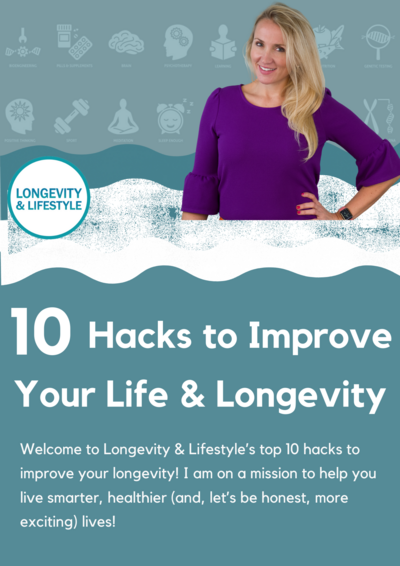
Steal Claudia's 10 Hacks to Improve Your Life & Longevity Playbook
FREE DOWNLOAD

Learn the secrets of health, lifestyle, business and finance optimization
Podcast
Top Resources

Steal My
10 Hacks to Improve Your Life & Longevity Playbook
Free guide
10 Hacks to Improve Your Life & Longevity
Want to learn how to live a smarter, healthier (and, let’s be honest, more exciting) life? Check out my free playbook with top tips just for you!
By signing up, you agree to join the Longevity & Lifestyle newsletter and to receive emails. We respect your privacy and abide by strict privacy policies.


LONGEVITY & LIFESTYLE
© Longevity & Lifestyle llc 2021 | Design by Tonic | Photos by social squares, Unsplash & Rebecca Reid
SEND ME A NOTE >
GET ON THE LIST >
@longevity&lifestyle
follow along: