#263 Jerzy Gregorek — Hard Choices, Easy Life: The Philosophy That Can Transform Your Health, Mindset & Life
The Longevity & Lifestyle podcast
The Longevity & Lifestyle podcast
The Longevity & Lifestyle podcast

Episode 263
Sign up for
The Longevity & Lifestyle Insider
Join Claudia's Longevity & Lifestyle Insider newsletter to get top tips, insights and strategies on optimizing your life, health and business!
By signing up, you agree to join the Longevity & Lifestyle newsletter and to receive emails. We respect your privacy and abide by strict privacy policies.

“Hard choices, easy life. Easy choices, hard life.”
- Jerzy Gregorek
In this deeply inspiring conversation, Jerzy Gregorek, four-time World Weightlifting Champion, poet, mentor, and co-creator of The Happy Body, joins Claudia to explore the philosophy behind his famous principle: “Hard choices, easy life. Easy choices, hard life.”
Jerzy shares his extraordinary journey from alcoholism and suicidal thoughts as a teenager, to political resistance in communist Poland, becoming a refugee, rebuilding his life, and ultimately dedicating himself to helping others become stronger physically and mentally.
At the heart of the conversation is a powerful idea: transformation does not require perfection. It begins when the positive voice within us becomes just strong enough to win the debate.
We Explore:
- The Hardest Years of Jerzy’s Life and How He Rebuilt Himself
- Escaping Communist Poland After Being Warned His Life Was in Danger
- Where “Hard Choices, Easy Life” Really Came From
- The Fatalist vs the Master: Understanding Your Internal Dialogue
- Why Reaching 51% Positive Can Change the Direction of Your Life
- How Micro Progression Makes Difficult Change Sustainable
- The Happy Body Approach to Strength, Flexibility, Leanness & Longevity
- Why Exercise Should Make You Capable, Not Simply Help You Lose Weight
- Preventing Sarcopenia and Maintaining Muscle as We Age
- Why Meditation, Poetry, Appreciation & Joy Matter for Mental Health
- How Small Daily Practices Compound Over Decades
- Why Dreams Mean Little Until We Learn to “Deliver”
ABOUT THE EPISODE & OUR GUEST
SPONSORS
Not all supplements are created equally. BioLongevity Labs focuses on evidence-backed formulations, third-party testing, purity, and USA manufacturing to support energy, recovery, gut health, performance, and healthy aging.
Their bestselling formulas include:
- BioRetina - a peptide bioregulator complex designed to support eye health
- ShredMAX - SLU-PP-332 capsules designed to support mitochondrial biogenesis, fatty acid oxidation, and exercise capacity,
- BioGutPro - for gut-lining and digestive resilience, and
- BioRestore - for tissue recovery and a healthy inflammatory response.
Their approach is simple: fewer vague promises, more transparency, and formulations grounded in longevity science.
Get 20% off with code CLAUDIA20 at BioLongevitySupplements.com
Unlock peak energy, mental clarity, and long-term health.
If you’re an entrepreneur, leader, or high achiever who refuses to settle for burnout, fatigue, or suboptimal health - this is for you.
I help top performers optimize their energy, longevity, and success using science-backed strategies, biohacking, and personalized health protocols.
Book a Complimentary Peak Performance & Longevity Coaching Call
This free exploratory session will help you:
• Identify what’s holding you back from your highest potential
• Gain clarity on your energy, focus, and longevity goals
• Discover a proven framework for sustainable high performance
Spots are limited - apply now to reserve your session.
🔗 APPLY HERE
Peak Performance & Longevity Coaching Call
Show Notes
00:00 Introduction
01:10 Jerzy’s extraordinary life journey
02:07 Alcoholism, darkness, and rebuilding
04:29 The warning that saved his life
08:24 Self-talk, poetry, and transformation
11:00 The fatalist, the master, and the 51% rule
15:09 Hard Choices, Easy Life
20:09 Embracing discomfort
22:25 The Happy Body philosophy
24:51 Strength, sarcopenia, and longevity
27:27 The compound effect of health
29:32 Meditation, music, and the mind
33:11 Human potential and neurodiversity
37:00 Aging, movement, and brain health
40:20 Exercise beyond weight loss
44:32 Living in the present
45:45 The power of “Deliver”
51:55 Turning dreams into action
53:50 Darkness, light, and mental health
PEOPLE Mentioned
Products & Organizations
MORE GREAT QUOTES
"There is this gap between the goals, desires and the emotional intelligence and ability to actually stop themselves from wrongdoing” - Jerzy Gregorek
Legal Disclaimer: Please note, to avoid any unnecessary headaches, Longevity & Lifestyle LLC owns the copyright in and to all content in and transcripts of The Longevity & Lifestyle Podcast, with all rights reserved, as well as the right of publicity. You are welcome to share parts of the transcript (up to 500 words) in other media (such as press articles, blogs, social media accounts, etc.) for non-commercial use which must also include attribution to “The Longevity & Lifestyle Podcast” with a link back to the longevity-and-lifestyle.com/podcast URL. It is prohibited to use any portion of the podcast content, names or images for any commercial purposes in digital or non-digital outlets to promote you or another’s products or services.
PODCAST EPISODE TRANSCRIPT
Claudia von Boeselager: Welcome to another episode of the Longevity and Lifestyle Podcast. I'm your host, Claudia von Boeselager. I'm here to uncover the groundbreaking strategies, tools, and practices from the world's pioneering experts to help you live your best and reach your fullest potential. Don't forget to subscribe to the podcast to always catch the latest episodes.
Legal Disclaimer: Please note, to avoid any unnecessary headaches, Longevity & Lifestyle LLC owns the copyright in and to all content in and transcripts of The Longevity & Lifestyle Podcast, with all rights reserved, as well as the right of publicity. You are welcome to share parts of the transcript (up to 500 words) in other media (such as press articles, blogs, social media accounts, etc.) for non-commercial use which must also include attribution to “The Longevity & Lifestyle Podcast” with a link back to the longevity-and-lifestyle.com/podcast URL. It is prohibited to use any portion of the podcast content, names or images for any commercial purposes in digital or non-digital outlets to promote you or another’s products or services.
PODCAST EPISODE TRANSCRIPT
Claudia von Boeselager (00:00)
welcome to the Longevity and Lifestyle Podcast, Jerzy. It's a real pleasure to have you with us today.
Jerzy (00:04)
Thank you so much for inviting me. I really look forward to talk about longevity.
Claudia von Boeselager (00:10)
Right.
Jerzy (00:11)
I live in Woodside in Silicon Valley and longevity here is just on everybody's lips.
Claudia von Boeselager (00:18)
Everyone's talking about it.
And when I started this podcast, can you imagine, Jersey, that native English speakers were like, how do you spell longevity? And now everyone's like, I've got a longevity routine and I've got it So are you seeing a lot of people in the Bay Area all hyped about longevity? I'm curious, what are you seeing and hearing in the Bay Area?
Jerzy (00:34)
I work with a lot of Stanford professors, also CEOs of different companies. Definitely everybody wants to live long. So boom.
Claudia von Boeselager (00:44)
They wanna look
and feel like you, Jersey. That's why you inspire them.
Jerzy (00:47)
They come to me to learn a little bit, but they also have the other things, you know, there is a collaboration between the lifestyle and science and whatever science is talking today. Although we know the science is talking, but I have real examples always is helpful.
to actually to maybe get there where actually science can make a difference.
Claudia von Boeselager (01:10)
And I think that's the exciting time that we're in now is that the science is catching up to a lot of things and with technology, new breakthroughs, better understanding, better tracking, and we're all individuals, right? So we're an N of one. And so we can really personalize it with the tracking the data, the interpretation of the results So without going too crazy and remembering that we need to sleep and have fun with friends and exercise and the basics that we were doing hundreds of years ago. So yeah.
It's a combination. So, Jersey, you've lived many lives in this lifetime, people could say. You were a political rebel in communist Poland. You struggled with alcoholism as a teenager, became a refugee, you rebuilt yourself from nothing, which is so admirable, became a four-time weightlifting champion, a poet, and one of the most respected teachers of resilience and transformation on the planet. So when you look back at all of these today, what was the hardest
s season of your life and the hardest lesson maybe, and what did it teach you that success never could?
Jerzy (02:07)
Well, definitely alcoholism was the hardest for me. was suicidal thoughts and being completely, 100 % hostile to yourself for who you are and disliking that so much that you actually wouldn't want to live. That was the hardest, feelings that I had in my life.
about myself and about the place that I was. When it comes to the strike in Warsaw that I was leading and eventually the strike was crushed by the Soviets and Polish government, but it was hard too. But alcoholism was the hardest. When I came out of it,
I get this incredible feeling of missing time. I was 15 when I fell into darkness and came out of it when I was 18 and a half. So the coming out of it took about a year or two and
When eventually I was 20, I was able to look back where I was. It took about a year and a half. And at that point, I had this feeling that my friends that went to high school when I was 15, they're already in medical schools and I don't have a high school.
That was overwhelming, but it was not overwhelming enough at that point to actually go to high school and finish the high school. So I went to high school
Claudia von Boeselager (03:29)
Okay.
Jerzy (03:30)
and it was hard. It was really hard. And I was a fireman at that time. So I went to the fire department. I worked there. And then also I went to evening school.
and doing my high school. Took four years and after four years I went to Warsaw to study fire protection engineering. Really loved to be a fireman. And after almost four years, the government decided to use the fire department against demonstrations and they wanted to color water and spray on demonstrants and then recognize them after an arrest and we said no.
And the strike was 10 days after 10 days, they dissolved the school, the academy and took us out by helicopters and tanks. And then I was on the ground for three years. And after three years, my dear mentor and friend was captured, tortured and murdered. And after
Claudia von Boeselager (04:22)
Terrible.
Jerzy (04:23)
that, I left Poland.
Claudia von Boeselager (04:24)
Was it just a direct moment, I have to get out of here, I can't survive in this world?
Jerzy (04:29)
Another example, I still
keep there probably, but I was called to the police station in Shetland. When I was there, I was extremely lucky because I met there somebody that I was weightlifting before. And we were weightlifters, but after
these five years, he became this...
policeman and I was the fireman. But we didn't know about that. So I met him and I sat and I was waiting for my turn and then he came and we recognized each other, talked a little bit and so I said, what are you doing? And then we found out who we were and he said, well, where is your invitation? So I gave him that.
Let me see what's going on. came back and he said, you know, you would never come out of this place. You have to go.
Claudia von Boeselager (05:17)
he was the one at the police station, that was your decision. I need to go. I'm gonna listen to him. Wow.
Jerzy (05:21)
He said that you would never come out of this place. I say, are you sure? say, yeah, I'm sure.
Claudia von Boeselager (05:27)
Wow. So that was almost like your angel or whatever you believe, divine intervention.
Jerzy (05:33)
it's really interesting life when you fall a million times and you stand up that we have darkness and we have angels.
Claudia von Boeselager (05:41)
Yeah.
Jerzy (05:42)
Life is not really good all the time and
life is not bad all the time.
it can be mixed. And so...
No matter what we do, the darkness will come and it will come in some ways, right? Because our life has so many different perspectives and
Claudia von Boeselager (05:58)
Mm-hmm.
Jerzy (05:58)
we have work, have children, we go through life, have aging, flagellity comes in, right?
Claudia von Boeselager (06:05)
Or reversing
aging. Exactly.
Jerzy (06:08)
Yes, eventually can come with, you know, even self-facility, aging and moving into unknown and not being wanted. And, you know, a lot of perspectives are after us and how we are in these perspectives or how others help us, those angels. Sometimes
they come and
they save us and turn around. I don't know if you saw the movie, The Invite?
Claudia von Boeselager (06:34)
The invite. Ooh, remind me what it's about. I can't remember if I've seen it.
Jerzy (06:37)
you're talking
to each other, but the one is very dark character. And then that character is actually has the angel as his wife and the whole interaction. And actually he gets it. He gets it how he was great and he gave up on himself for many, many years that even during these years cannot appreciate.
his daughter who was 12 year old and see her laugh and devotion to him. But eventually he flips during this. I think this is what the most beautiful thing that happened in that movie.
Claudia von Boeselager (07:14)
Beautiful. I need to check it out. and on a bit more of a philosophical note, I mean, I really like the work of Carl Jung, for example. And I believe that we have these experiences because we signed up for them in this lifetime and it's what we do with them. And if you see them only as pain, suffering, but if you look for the goal, like what is the gift in this experience? What did it give me? How challenging it was, but it allowed me to do something else or learn something else or have experienced such suffering that I can be more compassionate with other people. I think that
It's changing the perspective, asking different questions around some of these challenges that we experience and then having eyes in opens for when the angel or the whispers come to give you guidance, you know, leave, like you're not gonna come out alive, you need to change, and then we have to act on them, right? So yeah, I think it's a journey of learning and education, but you're so wise. And I love one of your phrases that obviously I think millions have heard now, but hard choices, easy life.
Easy choice is hard life and it's stopped millions of people around the world, but I suspect most people who not along to it haven't actually lived it yet, right? So where does this insight come from? And was there a specific moment or series of moments not the philosophy but the real moments where you really understood this in your body?
Jerzy (08:24)
i work on poetry, writing poems for my clients. And I couldn't succeed with that for a long time about 20 years ago, i started being a little bit different in my mentoring.
And then I started seeing in people's dialogues, that those dialogues had mixture of the phatois and the mastorite called negative and positive. And those mixture can be within a minute, within an hour, from different perspectives. But definitely when I saw
my client being hostile to themselves. Then I saw the suffering, I saw the pain. And when I was able to see the pain, then I started writing poems that could stand as poems alone and not to have the purpose that I would write a poem for somebody. Unless, know, I was extremely affected by sometimes a poem when somebody
passed away or poem for a wedding, it still can be a poem, right? Not just glorifying something, but really meaningful, deep reflection about something, about life and meaning. So I started seeing that and started writing poems. I wrote those poems for about four years and published the poems in a book.
It's available now.
Claudia von Boeselager (09:43)
What's the name of the book?
So we can link it in the show notes and and people can check it out.
Jerzy (09:47)
Yeah, the mirror for change. It's like a happy mirror for change. And the food for your soul. I shifted the book to the happy body way and I name it the food for your soul, like a food and feeding and transformation. So affirmation.
Claudia von Boeselager (10:04)
Beautiful. We'll link it in the show notes for people interested. Yeah. Beautiful.
Jerzy (10:07)
Yeah,
thank you. And then after that, I became more aware of people's voices, dialogues that they had inside. And those dialogues really puzzled me that I noticed that people would love for something to happen.
but we're not able to actually make it happen. So there is this gap between the goals, desires and the emotional intelligence and ability to actually stop themselves from wrongdoing. And that really puzzled me. And I started pondering on this for many, many years and wrote free books about mastering
and food choices, mastering rest choices and mastering exercise choices. And I came up with this idea of
letting people to imagine, to be aware of those choices by writing in percentage of the voice. So I started because I was alcoholic, so I was extreme and I was suicidal. So this I recognize as the voice of a fatalist, 100%. So there is nothing outside.
of that voice, there is no positive voice at all, 100%. So it means that that voice, if a person is there, it's probably will die soon. And if somebody is not, the angel is not coming and, and, you know, for me it came, right? He came. So,
I have a goosebump about that.
I started writing those dialogues of a mixture because I saw that people have some fatalistic power of the language and then some positives. So I call it 75 % negative and 25 % positive. And then I wrote 50-50 and I started becoming language.
the right language for that percentage and having dialogues. And I wrote three books and I realized after that, when the master is 75 % the master is really 100 % master, that's the Buddha, right?
Claudia von Boeselager (12:07)
Very few of us.
Jerzy (12:09)
There's
people like Socrates maybe, or people like my mentor, Jose Popewiczko. these are the extremely, Tegna Han was one of those, right? I love Tegna Han. Near him, I was so good. I felt I'm good. It was like...
an amazing energy force. It's really hard to talk about that. We talk about energy. It's a really weird thing, right?
Claudia von Boeselager (12:34)
I love it.
But is it because of his his energy just being in his presence was so calming and how would you describe it?
Jerzy (12:41)
It's really hard to describe it once you're in front of this caliber of a person. Everything, your thoughts stops. you stop thinking who you are, what you want, and just everything stops. Like amazing. It's like when you start receiving, it's like that person breaks everything through. nothing really is in the way.
Through whatever
you are, you are so weak that human being, breaks through. that's how I felt right away. i wish I knew Buddha. That would be incredible.
Claudia von Boeselager (13:14)
You feel like you know Buddha when you know. Yeah.
Jerzy (13:16)
I realized that when it comes to the negative voice and positive and when positive is weak and so then the negative always decides about our life and that's how our life is. So then I started mapping the micro progression from 75 % to 70 % and started writing language. How that would be to come to the debate when the
both are 50-50. And then I started working on how the master that is 50 % would outwit the fatalist and become this 51 % and the flip happens, right? And that's what we all try to have in life. We want that 51%, right? And I
Claudia von Boeselager (14:05)
Or more.
Jerzy (14:07)
started looking at this like a hard choices when
We make these hard choices from this negative to positive and start really working on them. Eventually we flip into this life of a positive, good life. And the easy choices are those that are negative that the fatalist makes. And then our life is that way. And it's like even today, I am in the process of...
finish my PhD in psychology. And
Claudia von Boeselager (14:42)
Congratulations.
Jerzy (14:44)
I thank you. And I will be working on those two voices and self-talk and internal communication. I hope that we'll come out with the ways that we'll be able to...
bring and help people become these angels to drag the fatalists to the debate and outwit the one and then start living a positive, constructive life.
Claudia von Boeselager (15:09)
I think that's beautiful, yeah. Because the more people who are on that journey and that path to getting to be that fifty-one percent in their day, they can in turn help other people become more like that and support them, I think, And maybe for people, Jersey, trying to grasp the concept, hard choices. If someone's like, Well, how is a hard choice going to help me? Can you walk us through a little bit about what are hard choices?
How can someone who's trying to grasp the concept really understand it so they can implement it in their lives?
Jerzy (15:40)
And the story
of hard choices can be always different, if a hard choice is presented, the goodness is presented in some way. So something better, something good is asking, and then hard choices is presented. To show very simple way of hard choices is me and green tea.
Claudia von Boeselager (16:02)
Sounds like a love story. A love hate story, Jersey.
Jerzy (16:06)
Years ago,
I read that it would be good to drink green tea.
Claudia von Boeselager (16:12)
I hear two, I hear two.
Jerzy (16:13)
I went to Pete's Coffee, I asked for green tea and couldn't drink it. It was disgusting. I couldn't drink
Claudia von Boeselager (16:20)
Yeah.
Jerzy (16:21)
it. Okay, but it's a hard choice. This is the whole thing. i had to somehow drink it, right? So I was just thinking, how am going to do it? I really Earl Grey, tea. So I asked to mix these two.
So they mix and I was able to drink it. one tea bag Earl Grey and one green tea.
Claudia von Boeselager (16:44)
Yeah.
Jerzy (16:45)
And I drank it now for about a year. And after a year, I really liked it, I ordered once, you know, green tea and tried nowhere. I was not ready for that.
So I'm just thinking, how I can develop another micro progressive thing here to help me. So I said mixing peppermint tea with green tea. Another year passed. And then after that, I ordered the green tea and I was able to drink it. Yeah, it was not great, but now
10 years pass or 15 and I love green.
Claudia von Boeselager (17:25)
You're now the biggest fan.
Jerzy (17:25)
I mean,
I love green tea. I don't drink anything else. I love green tea. I love taste of it, everything.
Claudia von Boeselager (17:32)
Fifteen years is
a big commitment Jersey, I must say. Like that's a long time long dream.
Jerzy (17:37)
I don't think it's commitment. It's just life moves. And
Claudia von Boeselager (17:40)
Yeah.
Jerzy (17:41)
from the perspective of time is a commitment, but it's not really commitment. It's just dealing with life. You deal with life and then 10 years pass, right? commitment is really strong to me. this was not commitment. It was like the first two years was hard choices.
I tried to figure out how I can drink this green tea because it's something cancer is really good for the body system. I learned why we call it green tea and I liked everything about that, but I didn't like the taste. And it's through the micro progressive system, through hard choices. I came to the point I actually like it. So the taste is not something that is in stone. The taste is something that you can.
really love to do something and hate in five years or vice versa.
Claudia von Boeselager (18:30)
It
changes over time. I'd like my green tea with fresh lemon. I don't know if you've ever tried that. Like you would put lemon into Earl Grey. Have you tried lemon in your green tea?
Jerzy (18:41)
Yeah, now I am like green tea, not even lemon, you
Claudia von Boeselager (18:45)
Nothing in it. You like the hardcore version of it too.
Jerzy (18:48)
know? father was a baker. And then he, one day he baked something for me. especially for me, I came from Warsaw and he baked this cake and wanted me to try it. And I said, don't want to eat it.
And then he said, why? I said, I don't want to waste my taste after the dinner with his wife. So it's like really funny about the taste, right?
Claudia von Boeselager (19:12)
You
were climatized to it too. I'm sure he had no idea what you were talking about and was probably very upset
Jerzy (19:17)
Oh yeah, he was a dad.
But you know, after a while he understood. He was very hostile to me at the beginning. He had nine
sons. And you know, so you can imagine my difficulties in the family. Nine brothers, I still have nine brothers. And
Claudia von Boeselager (19:29)
Wow.
Jerzy (19:33)
the father really disliked me. He really didn't like me. But my mother really loved me. So I was the angel.
Claudia von Boeselager (19:39)
That helps.
Jerzy (19:41)
And after about 10 years, she said, you are my son that I always wanted.
Claudia von Boeselager (19:47)
that's a beautiful thing to hear. Yeah. No wonder you loved her so much.
Jerzy (19:48)
And yeah, you never know
what is going to happen. And when people are negative to me, I don't take it as personal or hostile. It's just that they are. And
Claudia von Boeselager (20:01)
Mm-hmm.
Jerzy (20:03)
they can change. And once they change, they will be very good to me. And usually it is.
Claudia von Boeselager (20:09)
Everything's fine. Amazing.
And I want to touch on one more point with the hard choices as well, in terms of, you know, the concept of getting out of your comfort zone. And I'm curious, you know, what your typical day you do. You shared the analogy with the green tea, but would you say getting out of your comfort zone, that resilience, that drive, pushing yourself every day is like a muscle that you need to train? And by essence, then your life expands because you are doing things out of your zone of comfort.
And that also will allow to have a better life.
Jerzy (20:41)
Well, you to recognize the hard choices, as I said, you have to be something presented that is difficult. And for me, it was to drink green tea. And it was
Claudia von Boeselager (20:54)
Yeah.
Jerzy (20:54)
very hard, you know, it was not easy. and if it's like somebody wants to be medical doctor, but it take 10 years, that's not comfort, right? So, but...
the hard choices, then they will be present. So in order to understand hard choices, you have to see that something what you want, you don't have, and it will be not easy to get. And that's the hard choices will be presented in a plan, in a way, how to deal with it, how to achieve it and so on. So the easy choice is always something that
Nothing improves. Nothing gets better. But the hard choices are presented when things will eventually get better. Like Kennedy was talking to his brother about civil rights bill and he said, is it possible? Yeah, the brother said, yeah, but it will be hard. And Kennedy said, we don't do those things because they are easy. We do those things because they are hard.
Claudia von Boeselager (21:56)
Jersey, can you share about the happy body? And where you also say, you know, you ask people to lift less weight, move more slowly, eat less than they think they need. And obviously, especially in the United States, we know it's all about more and bigger and intensity. And what you're essentially saying is that this is we need to think about it the opposite way. Can you explain that concept and why so many of us are getting it all wrong?
Jerzy (22:25)
I love more, know, America is about
Claudia von Boeselager (22:27)
Yeah.
Jerzy (22:28)
more, more, more, and I am about more, more, more. It's just
Claudia von Boeselager (22:31)
Yeah.
Jerzy (22:31)
hard to define it. So I want more flexibility. I want more leanness. I want more strength, right? I want
Claudia von Boeselager (22:40)
Uh-huh.
Jerzy (22:41)
more better posture, right? So it is more. I see it is always more. Abhi Bhattacharya actually created more.
better life, right? So I call the happy body today, athletic lifestyle medicine. So this is the exercise program. This is the diet program and that is also a meditation program. So it helps us to have an exercise routine that would prevent sarcopenia, that would prevent
all the problems, aging the body waste, right? How the body ages, prevent all of it, or even expand it to 110 or 120.
Claudia von Boeselager (23:29)
Muscles. Muscles expansion. Less fat, right?
Jerzy (23:32)
The food is always important. But the most important is not really at the beginning.
At the beginning is what is ideal body weight? What is the body weight that we are? And what is the body weight that is the most robust? If you imagine a cheetah, a cheetah should be 80 pounds, 120 pounds, 110 pounds. And there is a certain package of cheetah that is the best cheetah, right? That is just the fastest and so on.
So that's the same for soccer players, for football players, for sprinters and so on. It's like, there is a certain height and body weight ratio that is making us awesome. That the body becomes this awesome thing that is ready for anything. It can go skiing, it can go surfing, it can go anything, know, whatever the body wants, right? So even...
Working 16 hours a day for two years and make a billion. So this
Claudia von Boeselager (24:44)
Silicon Valley that happens a lot, right?
Jerzy (24:51)
idea of body weight is important. Then the leanness is important. So more leanness, means less fat and more muscle. these exercises then is really crucial when it comes to flexibility strength.
when it comes to not losing the muscle and combat the sarcopenia and diabetes. And we know that when we lose the muscle, we absorb less sugar. And that could be the link to diabetes too from that perspective. So the happy body helps us to heal the body, to make the body...
more healthy, right? More. I really like that. So,
Claudia von Boeselager (25:34)
More. There you go. Exactly. More and more.
Jerzy (25:36)
yeah, how do you define something better as more instead of less? then we need to heal. And I see my clients, sometimes they have pains, they have sluggishness, they have a meaningless life and they have to somehow heal from it. And the happy body helps.
Then there is also a situation with lifestyle. The lifestyle is something that we will live and usually we deteriorate because of the lifestyle, not because we become ill or sick. the lifestyle happens to us and after many, many years we experience degenerations of cells and...
our body gets worse and so on. So, okay, how to deal with it? How to combat that? So then there is an answer to it, in my opinion, is lifestyle. You have to create the lifestyle that you want to live. There's a lot of choices present here. So we want to heal ourselves, we want to live a different way, but we have to...
make a different lifestyle for that. So that's when the happy body comes in with the lifestyle to solve problems like being obese, overweight, or have diabetes or hypertension, all those things that the lifestyle actually created. And then there is athletic aspect to living life.
you think about compound interest. Compound interest is something that when you want more, you can have more by putting $50 into the drawer for 30 years. Every let's say.
Claudia von Boeselager (27:27)
Well, I would argue
that would almost be less, Jersey, because of inflation, the value goes down. So
Jerzy (27:33)
Exactly.
So, you know that you have this compound interest, you have to somehow put this money into somewhere, right? Somewhere that can grow interest. then compound interest, like if you say $50, let's say a week for 30 years, maybe you have 70,000, but if you put it into a stock,
You can have a million after 30 years. So it's a big difference. And so I see happy body as a compound interest. That's why like athletes live athletes live to, have more, uh, speed, to have more strength, to have more skills. Athletes always work toward more, more, more and evolve. And there is a compound interest here.
as they pass one year, two years, three years, and all everything adapts to actually create this amazing specimen on our planet, right? The top athletes and as a mother with a sport, they are just amazing, right?
Claudia von Boeselager (28:44)
Yeah.
Jerzy (28:44)
So that compound interest has to be somehow created in that, that's why it's athletic. And I see...
Claudia von Boeselager (28:52)
Mm-hmm.
Jerzy (28:53)
why it was created and added to the happy body because I see people going to a gym, let's say for 10 years and become the same or worse. So they exercise every day, they go to the gym or do something, they exercise and then they get better. They have more sluggishness, they have more fat.
The most important factor here is that there is no athletic compound. is not this accumulation adaptation phases that lead to more, better and better and more, right? Better.
Claudia von Boeselager (29:32)
And make it stronger. And I love that you also include the meditation component, right? And can you explain for people who are like, Well, the happy body, what does meditation have to do with it? How does that loop in together as a core component?
Jerzy (29:46)
So about 35 years, 40 years ago, we met Thich Nhat Hanh and he ordained us Buddhists and we love TM meditation and meditated and still meditate today. And when we coach people in North Hollywood gym in golf, we
thought about that we need to shift here. So I started creating the idea in my head about music and meditation. So we, Anil and I went to this meditation with music and music-music as meditation part. at that time it was hard to
teach people meditation, tell people about they need to meditate, they wouldn't do it. Even today, right? So,
Claudia von Boeselager (30:36)
Yeah.
Jerzy (30:37)
I thought, okay, we picked up about 11 pieces of music, about between five minutes and 10. And I would lay down somebody after the training. This is like we are talking that top martial artists, taekwondo guys, ultimate fighters.
Claudia von Boeselager (30:56)
They're all where need to go. They're like, What's this?
Jerzy (30:56)
And you can do it
at the gym, right? There is a training and then they lay down in the middle of the gym on their back. I put the headphones on them, five minutes, five minutes meditation. And people love them. People really love to end up the training system with this meditation. So eventually we came to one.
piece of music that people love the most and today it is. It's a Thais meditation and this piece of music is we use to end up daily training and during this, if that piece of music is you use for a year or two or three, then it becomes like a mantra, like something that is ingrained in you.
to relax, to calm down, to be happy in a way, like equanimity, but not really happy in a different way. Yeah,
Claudia von Boeselager (31:54)
Yeah. Balanced.
Jerzy (31:57)
exactly. So it has a profound effect on people after some years. So it's like everything takes time. You're you're talking
Claudia von Boeselager (32:08)
Like your green tea.
Jerzy (32:09)
about a devoted or something.
Claudia von Boeselager (32:11)
Yeah.
Jerzy (32:13)
It's just...
You know, the day will pass anyway. what is our routine? Is it day we can use this five minutes or not? We can do the happy body for 30 minutes or something else. So there are many choices that are presented, but definitely if a person wants to get better more, the hard choices are there already. Boom. Presented. Because you have
or out of this comfort zone of repeating the same. If you know that 2 plus 2 is 4, okay, you can repeat it, right? Forever. But if somebody asks what is 2 plus 3 and you don't know, that's a hard choice.
Claudia von Boeselager (32:56)
To start thinking as well.
Jerzy (32:57)
Yeah, yeah,
somehow you need to figure out that there's five, right? And teachers
Claudia von Boeselager (33:01)
Yeah.
Jerzy (33:01)
have to be there. And then it goes on until, you know, calculus and so on. It's like there is no end of hard choices.
Claudia von Boeselager (33:11)
Which is the gift. There's no it's the journey. It's not the destination. And it's just the continuously the you know, the micro progression, as you were saying as well, bit by bit and just continuously doing that. And it has the compounding interest effect, which I love. It's such a beautiful analogy for it. I wanna touch on human potential and neurodiversity. And I think this is something that you've done such incredible, incredible work on and
also in reframing the thinking around certain neurodiversity traits. Can you share about your work in this space?
Jerzy (33:45)
Yeah, it's the mind and the brain is very complex. And the mind, the brain is something that can shrink. it was, there's researchers in 1850, 1858, German researcher who, we said that the brain actually shrinks with age and
becomes less active. And he said, it's not only that, our lungs shrink, our heart shrinks, we shrink. And he called it synioatrophy at that time. But when I see my clients, when I watch my clients from
3 year old to 93 year old, right, and spectrum, all of them. And some of them, they had some problems and not problems and so on. So you see that the mind here is an extremely important factor, how people are. And when that mind is positive, when that mind is open, that
You can do almost anything. You can change routines, you can evolve, you can pick up the hard choices and that it moves. But when the mind is negative and that is really hard, really hard to do anything because everything is, we put down everything and put ourselves, becomes self-hostile and that leads to...
to the situation of not being able to evolve. So that is a mental aspect and helping people actually to move. We talk about this a little bit, to move from this negative to positive. It's an amazing journey, but coming back to cerebral palsy, this boy really had at the beginning...
a lot of hostility to the outside. And I had to turn this around somehow. Like he hated the sun. And I was just thinking, why do you hate the sun?
Claudia von Boeselager (35:58)
Mm-hmm.
Jerzy (35:59)
And he said, it's hot, it's hot, right? So it was really hot. It's okay, I said, so I have the homework for you. You have to go to home and...
answer the question whether the sun was not there. If we would be alive if sun was not there. So he came up to four days and of course figured out that sun is needed. And I
Claudia von Boeselager (36:24)
Give me the sun.
Jerzy (36:25)
said, okay, so how are you now with the sun?
I'm not the way that I was. Okay, so that is the element here of appreciation. Like if you help the person to appreciate, the person can flip into the appreciations and liking something and exposing something and...
living the life of appreciating trees and people and rivers and everything around. And will not do the harm for those banks, right, ecosystem. But there is a pathology too. So I see people like a cerebral palsy person or aged person. And then when I ask this
people to do the same things, to step on three inch block, they will trip, they will have a problem with coordination or even stepping. They will have the fear to jump like I have this 84 year old. He was great, you know, 20 years ago, but now he cannot jump on three inches block because he feels like there is a cliff that he will fall. So, our...
our mind is affected by something like cerebral palsy or autistic kids, but also the mind is affected by aging and Alzheimer's happens and all these things happen. So I see that the more we create the ways to expose these people from more perspectives.
like a perspective of exercise and the exercise has to be hard choices, has to be improvement. Not the same, not adapting the person and comforting the person, but really bring the discomfort that people can find in discomfort, comfort. And that's the micro progression. That's the beginning. How we find the beginning. And if...
a coach, mentor can find the right beginning, that the hard choices can happen and can be made. And the progress can happen and can have that effect of evolvement and leading to the more, like
Claudia von Boeselager (39:00)
Mm-hmm.
Jerzy (39:00)
interest. But it's a
It's how everything works from those different perspectives. I see that philosophy is important and the physical is important, the food is important and the meditation is crucial, always very important in calming ourselves down. And in the happy body there is the four seconds of Yin-Hang, eight seconds of
lifting and four seconds of breathing out. This is Pranayama breathing. It's constructed by yogis to calm ourselves down. I use that in the happy body for calming ourselves down during the exercise routine that I teach at the beginning that the routine has to be joy and the purpose of the routine has to be joy.
first. And then the second is the flexibility, mindfulness and, and, and, know, strength and so on. But once people get the idea that exercise is joy, not losing weight, then once they get it, they can always go to the gym for joy, but not for weight loss. It's
Claudia von Boeselager (40:16)
Mm-hmm. Yeah.
Jerzy (40:20)
it's a connotation that was created by people.
and connecting exercise to losing weight was always wrong because we don't lose weight because we exercise. We can exercise for eight hours and gain weight. Right?
Claudia von Boeselager (40:37)
Depends what you eat.
Jerzy (40:39)
And then we can exercise zero exercise and lose weight. So exercise is not for losing weight. Exercise is for making us awesome.
why moving around, you're living our life, capable
Claudia von Boeselager (40:54)
Mm-hmm.
Jerzy (40:54)
of playing with our grandchildren or children, then going on a mountain and ski and surf and so on. That was the exercise he was for. So there is
Claudia von Boeselager (41:06)
I love that.
Jerzy (41:08)
also this appreciation element that is extremely important in mental health.
Claudia von Boeselager (41:15)
Mm-hmm.
Jerzy (41:15)
that
without the journey of a person toward the appreciation, there is no way that we can live the self-hostility.
Claudia von Boeselager (41:29)
Yeah, the appreciation and gratitude is is such an important piece. And I guess also with the meditation, it makes you present, right? Cause we say, you know, the anxiety is from thinking of the future, depression of the past. So the more we can be in the now, as Eckertola says, the power of now and life is a series of now. And
Jerzy (41:45)
Yes.
Claudia von Boeselager (41:45)
see the appreciation and be grateful. I think the happier we can we can all be. and I also loved your concept of joy.
in doing the exercise because then it'll always bring you back to the gym. It's not always outcome oriented. And interestingly I spoke with a scientist earlier today who was coming up with the term of joy score. We talk about longevity and, you know, the human genome and all these important factors, but how are we measuring joy in our lives and how important it is to have joy and laugh and love our lives as well? So I love that you you brought that analogy together. And Jersey, I can't believe the time is already up. I have
I don't know, probably about fifty questions.
Jerzy (42:26)
Well, know, the same to
me. I'm just thinking, oh, I didn't talk about that.
Claudia von Boeselager (42:32)
is there anything in particular you'd love to still cover today? And please can we do a round two go in in the future? But
Jerzy (42:37)
Yeah,
when you said about meditation and this calmness and ability to actually make hard choices, meditation works very similar to poetry. When poetry brings you to the surface and you become aware of the feeling, and it's easier in this environment to accept the hard choice, to accept what
we need to do. And the meditation works that way. That also helps us to see what we need to do, not as the hard way that before. Somehow what we need to do becomes possible, becomes okay.
becomes something that maybe we can do it. So we are more open toward that journey toward the positive. so that's why I think that poetry is crucial, meditation is crucial, and mentorship is crucial. Like you are crucial and everybody that talks is crucial because that really our talk can help the person to come to that.
to that place where the flip happens. And I really appreciate, you know, all these people that do the podcast and artists and, and it's this humanity that happens around. It's just awesome. Open to it. It's everywhere. So what you do is extremely meaningful.
Claudia von Boeselager (44:06)
Thank you. Well, I have the honor and pleasure of speaking with such amazing people like you. So for me it's I'm an eternal student and I this is the gift. So you're the gift of this situation. I'm just sharing your beautiful knowledge with with my audience and and with the world as well. So for me it's it's the gift. Yeah, really. I learned so much too.
Jerzy (44:24)
And so,
to have a conversation with you is such a pleasure. so,
Claudia von Boeselager (44:29)
same, same gene.
Jerzy (44:32)
we both have a present moment, right? And that present moment is a beautiful moment because it's like the concept, know, the present moment, to actually show that
we can live in a present moment like we just did for an hour. It's the most beautiful thing that we can actually create in our life. It's living in the now, living in that present moment. And once we capture that, well, that's this end game, right?
Claudia von Boeselager (45:08)
It's a journey. I
mean, are you are you eighty percent there, Jizzy? You have such a very calming presence as well. I can feel it through the the grapevine here. Are you living at eighty percent? Do you feel like you've you've got there, that you are able to be so super present? I'm sure you have amazing practices and I'm curious what they are every day to cultivate it. Maybe you can share a little bit about how you how you manage to do that.
Jerzy (45:32)
You must be psychic because I would probably say 80%.
Claudia von Boeselager (45:36)
I am psychic. There you go. See we're we're connecting on different levels here, Jersey. See? I was gonna say, I mean,
Jerzy (45:40)
Yay.
Claudia von Boeselager (45:42)
ninety five I would believe too, right?
Jerzy (45:45)
So we'll end up with one thing that the most important word that I see in life and the word that really divides us from those who make things and those who don't. And the word is deliver. So I don't know if you watch the movie Stunt and Deliver.
Claudia von Boeselager (46:09)
And okay, I've got a movie list here now, Jersey. Thank you. Stand the deliver.
Jerzy (46:12)
This is the movie
that I think was the most important movie for me to see in my life.
Claudia von Boeselager (46:20)
Okay, from nineteen eighty
eight. Okay.
Jerzy (46:23)
Stand and Deliver. And this is about the teacher. Well, the most important thing is the true story, right? Because if it was not a true story, it was a movie. Who cares, right? If it's
Claudia von Boeselager (46:34)
Yeah, I love true stories. Yeah.
Jerzy (46:36)
a fantasy. This is the teacher who went to Eastern LA to the high school and who went up there and for two and a half years
he was devoted to the students and he had this idea that he can teach, deliver to the students ability to pass calculus. In a high school that students didn't believe that better is possible for them, the parents were hostile to them, the teachers were hostile, the teachers didn't believe, nobody.
And this one teacher goes to this high school and is able every day, day by day for two and a half years to inspire, to motivate these people, to talk to other teachers, to the principal. That is possible. To overcome so many problems with the parents who were hostile and wanted these children to work in a restaurant and not really go to college. He
Claudia von Boeselager (47:41)
Mm-hmm.
Jerzy (47:41)
overcomes all of
Claudia von Boeselager (47:44)
Means it
Jerzy (47:44)
and
16 kids after two and a half years. And these students, these kids, he passes on them something incredible. The students can come on Saturday, on Sunday to study in a hot classroom without air conditioning. And you know LA, this is hundreds degrees there.
Claudia von Boeselager (48:08)
Yeah.
Jerzy (48:09)
And they do it after...
Two and a half years, they pass the calculus test, all of them. And of course, the education agency does not believe, they know they cheated. So they sent two agents to discover how they cheated. And of course they didn't, so everything ends up in the repeating.
And they repeat again the exam. And of course there is a bias and there is prejudice because, you know, like the teacher said, if it happened, you know, in the other high school, you would not even ask these questions. You ask these questions because you are prejudiced and that's how it is here. So they all pass. And after that, year after year, more and more students from this Eastern LA, horrifying place where a high school
was the students passing calculus tests and go to college. And that gives me goosebumps. that if I, I, if I, I do everything to meet this teacher in my life, right? I
Claudia von Boeselager (49:24)
It's good, yeah.
Jerzy (49:26)
missed him. And that's where the word is deliver. And, you know, think about your life that you can deliver.
a lot of goodness to yourself, like this teacher delivered the goodness to those kids, right? There will be a lot of negativity coming your way, but if you focus on delivered what you want to deliver, you will deliver. And that delivery is possible. That's why I think that when we...
really live the life and we are aware a little bit that we need to deliver something. It can help us to find mentors, teachers, know, and have a good plan and whatever it is. But that the work is needed and that's when others are needed like me or you to help people on that road from today to the day that is delivered.
Claudia von Boeselager (50:30)
Beautiful. And I think so too. It's knowing that we're here to be of service to one another and we've all had our journeys and our paths. And I think it's asking for help more often from from other people, asking for advice, for mentorship, for an advisor, whatever it might be. We forget to ask, I think also and be vulnerable, right? And be okay to not be okay. So I loved your story. and I remind me
Part of what you were saying as well, the quote from Henry Ford, I tell my kids all the time, whether you think you can or you think you can't, you're right. Have you heard this before?
Jerzy (51:06)
Exactly, yes, yeah, got it. And both are right.
Claudia von Boeselager (51:09)
Exactly. And Jersey, I have a few I have a few movie tips for you have you heard of McFarland with Kevin Costner?
Jerzy (51:16)
Yes?
Claudia von Boeselager (51:17)
You have you seen the movie?
Jerzy (51:19)
I've seen the movie, but I don't remember. It's funny. I don't
Claudia von Boeselager (51:21)
okay.
Jerzy (51:22)
remember the movies by name,
Claudia von Boeselager (51:24)
it's about kids that were such amazing long distance runners because they would pick fruits in California before school, run to school,
Jerzy (51:30)
I'm not wearing it.
Claudia von Boeselager (51:32)
be at school and after school have to run back to help the families with the the fruit plantation. Queen of Catwe, have you seen that? About the Ugandan very poor girl who learned and be went on to become a chess grandmaster.
Jerzy (51:45)
yes, yes, I remember that movie. What an amazing, right? Wow. that's why we need those, those targets, right? To
Claudia von Boeselager (51:47)
Another one. And the third recommendation. It's amazing. I Yeah.
Jerzy (51:55)
deliver something, we need a dream. We need a dream, right? Once
Claudia von Boeselager (51:58)
Yes. Trim. Yeah.
Jerzy (52:00)
we have a dream, then it's only to deliver it, you know?
Claudia von Boeselager (52:04)
Yes.
Jerzy (52:04)
So don't live the life that the dream is only in the mind. But deliver it, you know?
Claudia von Boeselager (52:10)
Yeah. Take action. Take action.
Jerzy (52:13)
So many things can happen. Think about that girl or the teacher who delivered to other kids, you know, magic, right? Miracle. It's a miracle what he did.
Claudia von Boeselager (52:25)
Yeah.
Jerzy (52:26)
And I have so much appreciation for, you know, people when they actually help other people to deliver. But, you know, the target, knowing the dream here is crucial.
If you know your dream, then you focus on deliver. Okay, what
Claudia von Boeselager (52:45)
Mm-hmm.
Jerzy (52:46)
do need? Where the hard choices are? Where is the plan? How I can help? Where are the people that can help me, right? What do I need really to get there?
Claudia von Boeselager (52:55)
So meditate so you can get clear on what the dream is and then you take action. So
Jerzy (53:00)
Exactly.
Claudia von Boeselager (53:01)
Jersey, amazing. Thank you so so much for your time. Where can people follow you, see what you're up to, find your books? And we'll link everything in the show notes. Where would you like to send them to?
Jerzy (53:11)
Well, the happy body, the web page is the best.
Yeah, it was fun to talk to you. I really appreciate our time and it's a really good time. That's what it's about, And I hope that people get a good time too.
Claudia von Boeselager (53:20)
Me too. This is great. I feel like we can talk for hours, Jersey.
Jerzy (53:25)
meaningful happens there that can link and flip from this.
negative way of doing to that positive.
Claudia von Boeselager (53:34)
More positivity. Yeah. And I I think important point with the positivity, it's not bypassing, but it's appreciating the negative for the negative and that there's gifts in the negative so that we can appreciate more of the positive too. It's not just everything's fine, I'm okay, right?
Jerzy (53:50)
So the darkness is there, the light is there, and how we deal with all of that is how healthy mentally we are.
Claudia von Boeselager (54:00)
Beautiful. Jersey, thank you so so much for your time. Again, this has been an absolute honor and pleasure. Thank
Jerzy (54:04)
Good day.
Claudia von Boeselager (54:05)
you everyone for tuning in. An absolute gift. Thank you.
I’m Claudia von Boeselager
Longevity Coach, detail-loving educator, big-thinking entrepreneur, podcaster, mama, passionate adventurer, and health optimization activist here to help people transform their lives, and reach their highest potential! All rolled into one.
Hey there!

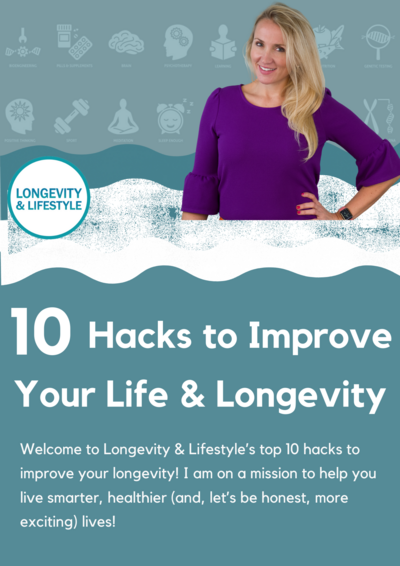
Steal Claudia's 10 Hacks to Improve Your Life & Longevity Playbook
FREE DOWNLOAD

Learn the secrets of health, lifestyle, business and finance optimization
Podcast
Top Resources

Steal My
10 Hacks to Improve Your Life & Longevity Playbook
Free guide
10 Hacks to Improve Your Life & Longevity
Want to learn how to live a smarter, healthier (and, let’s be honest, more exciting) life? Check out my free playbook with top tips just for you!
By signing up, you agree to join the Longevity & Lifestyle newsletter and to receive emails. We respect your privacy and abide by strict privacy policies.



LONGEVITY & LIFESTYLE
© Longevity & Lifestyle llc 2021 | Design by Tonic | Photos by social squares, Unsplash & Rebecca Reid
SEND ME A NOTE >
GET ON THE LIST >
@longevity&lifestyle
follow along: