#264 Martin Valovsky — Your Brain Needs More Than Neurons: Glial Cells, Brain Nutrition & Everyday Brain Health
The Longevity & Lifestyle podcast
The Longevity & Lifestyle podcast
The Longevity & Lifestyle podcast

Episode 264
Sign up for
The Longevity & Lifestyle Insider
Join Claudia's Longevity & Lifestyle Insider newsletter to get top tips, insights and strategies on optimizing your life, health and business!
By signing up, you agree to join the Longevity & Lifestyle newsletter and to receive emails. We respect your privacy and abide by strict privacy policies.

“If you take care of the body, body will take care of the brain.”
- Martin Valovsky
In this episode, Martin Valovsky, co-founder of Axolt Brain, joins Claudia to explore a systems-based approach to brain longevity. Martin explains why brain health depends not only on neurons, but also on the glial cells, blood-brain barrier, glymphatic system, mitochondria, blood flow, inflammation, gut health, and nutrition that support them. Pasted markdown.
For Martin, this mission is also deeply personal. After discovering that he carries two copies of APOE4, alongside a family history of cognitive decline, he became determined to understand what could be done proactively to protect the brain. Pasted markdown.
We Explore:
- Why Brain Health Is an Infrastructure Problem, Not Just a Neurotransmitter Problem
- What Glial Cells Do and Why Martin Believes They Deserve More Attention
- The Critical Role of Astrocytes in Supporting Neurons
- How the Blood-Brain Barrier Helps Protect the Brain
- Why the Glymphatic System Matters for Brain Cleaning
- Mitochondria, ATP & the Brain's Extraordinary Energy Demands
- APOE4 and How Martin Approaches His Own Genetic Risk
- Why Martin Ranks Daily Movement as His Number One Brain Health Habit
- Sugar, Blood Glucose & Long-Term Brain Health
- Why Polyphenol Diversity Matters More Than Focusing on a Single Compound
- Sleep, Blood Flow, Inflammation & Brain Longevity
- Why Brain Damage Can Accumulate Before You Notice Symptoms
- The Thinking Behind Axolt Brain's Multi-ingredient Approach
- Spearmint Extract & Research on Working Memory
- Why Brain Health Is a Long-Term Game
ABOUT THE EPISODE & OUR GUEST
SPONSORS
Brain health deserves a place in your daily routine. Axolt is a daily brain drink with 46 carefully selected ingredients, formulated with input from a scientific advisory board that includes leading neurologists and brain health researchers.
What makes Axolt stand out:
- 46 carefully selected ingredients in one daily drink
- No caffeine or stimulants
- Input from brain health experts to inform its formulation
- A simple daily ritual that fits into busy schedules
Their approach brings a focus on brain health into an easy, everyday habit.
Get 20% off at axoltbrain.com/claudia
Not all supplements are created equally. BioLongevity Labs focuses on evidence-backed formulations, third-party testing, purity, and USA manufacturing to support energy, recovery, gut health, performance, and healthy aging.
Their bestselling formulas include:
- BioRetina - a peptide bioregulator complex designed to support eye health
- ShredMAX - SLU-PP-332 capsules designed to support mitochondrial biogenesis, fatty acid oxidation, and exercise capacity,
- BioGutPro - for gut-lining and digestive resilience, and
- BioRestore - for tissue recovery and a healthy inflammatory response.
Their approach is simple: fewer vague promises, more transparency, and formulations grounded in longevity science.
Get 20% off with code CLAUDIA20 at BioLongevitySupplements.com
Unlock peak energy, mental clarity, and long-term health.
If you’re an entrepreneur, leader, or high achiever who refuses to settle for burnout, fatigue, or suboptimal health - this is for you.
I help top performers optimize their energy, longevity, and success using science-backed strategies, biohacking, and personalized health protocols.
Book a Complimentary Peak Performance & Longevity Coaching Call
This free exploratory session will help you:
• Identify what’s holding you back from your highest potential
• Gain clarity on your energy, focus, and longevity goals
• Discover a proven framework for sustainable high performance
Spots are limited - apply now to reserve your session.
🔗 APPLY HERE
Peak Performance & Longevity Coaching Call
Show Notes
00:00 Introduction
03:54 Why brain health matters
04:29 The brain’s infrastructure
05:30 The blood-brain barrier
06:30 The brain’s cleaning system
07:49 Glial cells and astrocytes
10:00 Brain signaling and energy
12:13 Brain aging, APOE4 and Martin’s story
14:26 Axolt Brain partner message
16:08 Brain longevity essentials
17:30 Why movement comes first
18:30 Polyphenols and brain health
19:47 Creating Axolt: formula and safety
22:00 Bioavailability and brain nutrition
24:18 User feedback and medical guidance
25:50 Peptides and brain health
27:11 Final thoughts
MORE GREAT QUOTES
"Brain is definitely a long-term game and it's never too late to start taking care of your brain.” - Martin Valovsky
Legal Disclaimer: Please note, to avoid any unnecessary headaches, Longevity & Lifestyle LLC owns the copyright in and to all content in and transcripts of The Longevity & Lifestyle Podcast, with all rights reserved, as well as the right of publicity. You are welcome to share parts of the transcript (up to 500 words) in other media (such as press articles, blogs, social media accounts, etc.) for non-commercial use which must also include attribution to “The Longevity & Lifestyle Podcast” with a link back to the longevity-and-lifestyle.com/podcast URL. It is prohibited to use any portion of the podcast content, names or images for any commercial purposes in digital or non-digital outlets to promote you or another’s products or services.
PODCAST EPISODE TRANSCRIPT
Claudia von Boeselager: Welcome to another episode of the Longevity and Lifestyle Podcast. I'm your host, Claudia von Boeselager. I'm here to uncover the groundbreaking strategies, tools, and practices from the world's pioneering experts to help you live your best and reach your fullest potential. Don't forget to subscribe to the podcast to always catch the latest episodes.
Legal Disclaimer: Please note, to avoid any unnecessary headaches, Longevity & Lifestyle LLC owns the copyright in and to all content in and transcripts of The Longevity & Lifestyle Podcast, with all rights reserved, as well as the right of publicity. You are welcome to share parts of the transcript (up to 500 words) in other media (such as press articles, blogs, social media accounts, etc.) for non-commercial use which must also include attribution to “The Longevity & Lifestyle Podcast” with a link back to the longevity-and-lifestyle.com/podcast URL. It is prohibited to use any portion of the podcast content, names or images for any commercial purposes in digital or non-digital outlets to promote you or another’s products or services.
PODCAST EPISODE TRANSCRIPT
Claudia von Boeselager (00:00)
My guest today is Martin Valovsky co-founder of Axolt or Axolt Brain, a daily brain nutrition company. And Axolt is also a partner of this show. Martin spent more than a decade in the high-pressure defense industry. Like many high performers, he and his co-founder hit a wall. Burnout, brain fog, poor sleep. And I'm familiar with this. and they found most focus products.
were built for a quick spike, not the long game. So they worked with neurologists and researchers on a formula for the systems the brain depends on. The gut, blood flow, sleep time cleaning, and cellular energy.
and for our listeners, Martin and the team have very kindly set up something special. The discount is applied automatically, so there's no code needed. Just head to axoltbrain.com. That's a X O L T Brain B R A I N dot com forward slash Claudia to get your 20% off. Please enjoy our conversation on all things brain today.
Claudia von Boeselager (03:43)
welcome to the Longevity and Life Some podcast, Martin. I am so delighted to have you here and I'm so delighted you're so patient because we've had a few technical issues. So welcome on all fronts.
Martin Valovsky (03:52)
Well, thank you for having me. Excited to be here.
Claudia von Boeselager (03:54)
So I'm so excited for our conversation today. As my audience will know, brain health is so important to me, part because my mother, but also it's such an important area that is so overlooked in all the different areas of longevity. We don't talk about it enough, we don't understand it enough. And I was so excited to find the Axel brain supplement I take daily. Absolutely love it. Love the work that you guys have done. So I'm so excited to share this with the audience today.
Most people don't know that the brain is only around 2% of body weight, but accounts for roughly 20% of resting energy use. And you, Martin, describe brain health as an infrastructure problem, not just a neurotransmitter problem. What do you mean by that?
Martin Valovsky (04:29)
Well, first I'm really excited that you are one of the users or clients of Axalt because we believe we really built the best brain supplement on the market and still improving it. And what do we mean by that? So first this is longevity supplement or longevity problem because brain is very central to longevity. without brain there is no you. Without brain there is nothing. That's the first thing.
And the brain mostly coordinates the whole body aging. So unless you take care of the brain, the whole longevity issue will not resolve by itself. And what do we mean by infrastructure problem is that
people usually know that brain are some neurons and maybe some of them know they're neurochemicals, neurotransmitters, not just neurotransmitters, other neurochemicals as well. But this is just the pinnacle of something what we called axot pyramid, because the body is taking care of the brain automatically. and if you take care of the body, body will take care of the brain. So we look at the whole body, not just at the brain, but with the filter or with the lenses.
Of protecting the brain because brain takes up to 20% of the energy, and in small kids it can go up to 60-70 percent of their energy expenditure during the day, means brain is doing a lot of work on the very small space, and in the same time, it's very special from various aspects. the one important aspect is the brain, it's
Divided from the body. There is something which is called blood brain barrier. So not everything that gets into the body gets into the brain. And the reason is that the brain is very much protected from things that might not be harmful to the body, can be very harmful to the brain. But that causes the issue that it's much more difficult to take care of the brain because not everything would be bioavailable and get through the blood-brain barrier. That's the first part of the problem.
The second part of the problem is that cleaning of the brain is much more difficult than cleaning of the body. so there is a compounding effect, negative compounding effect that there is very small space, doing a lot of computing, and the cleaning much more difficult than anywhere else. So if anything is
Of balance, the problems are much bigger than anywhere else. And that's why we believe the brain is central to basically everything, not just longevity. so the way we we've built Axalt is as a systemic approach. So basically looking at different levels of healthy gut, optimal blood flow to get everything to the brain, to take care of the inflammation, so how the body and the brain responds to the inflammation.
Is very necessary. It's not a negative thing, or doesn't have to be, but it might be a very negative thing. There is something called the glymphatic system, basically, a system that is cleaning the brain. A very complex system. you can feel not working glymphatic system if you don't sleep for a couple of nights. That's basically the brain full of things that should not be there because it wasn't cleaned properly.
Then the blood-burning barrier, you need to take care of the blood-brain barrier because that's the gate that manages all the good things getting in and all the bad things staying out. Glial cells, very important. So, for example, everybody imagines the brain or most of the population as the neurons, but 50% of the brain are something called the glial cells.
in my opinion, there is one glial cell that is more important to the brain health than anything else. It's called astrocyte, but there are other oligodendrocyte and and other glial cells, and they are the most important thing you need to take care of. and if everything is taken care of, then the neurons and neurochemicals is basically just the pinnacle that.
you make sure that they function well. But everything around it, the infrastructure around the neurons is basically pivotal to the brain health and the longevity
Claudia von Boeselager (07:49)
I
love that. And so the glial cells, walk us through what is a glial cell and why is it even more important in your view than taking care of the neurons, et cetera? Because this is not something I've heard before. I think it's super fascinating.
Martin Valovsky (08:01)
So glial cells were believed to be only gluing neurons together. That's why they call glia from the glue in Latin. But
then we realized they have some function. And the more we we were discovering as from the scientific point of view what glial cells are, the more
We understand that they are the most important part of the brain. So the astrocyte, for example, is keeping all the energy for the neurons. If astrocyte cannot provide neurons energy to fire, they will not fire. So neurons spend most of the energy, but they cannot keep the energy. They are coming from the astrocytes. Astrocyte is in the same time keeping the minerals that are important for the neurons, so it's saving all the important stuff for the neuron.
When the new neuron is being born, so something called neurogenesis, it is, and again, this is very Lames language, so I apologize to all the doctors. Astrocyte
Claudia von Boeselager (08:48)
No, it's great. It's great.
Martin Valovsky (08:49)
is the one who will decide whether the neuron lives or dies, whether it will stay there or not stay there.
Claudia von Boeselager (08:54)
Wow.
Martin Valovsky (08:55)
So neuron can be the most important computer, but the IT guy is the astrocyte. Astrocytes are basically creating the blood brain barrier or the most important part of the blood brain barrier that is keeping the brain healthy and is keeping all the toxins out.
so astrocytes will decide what will get into the brain and what will not. So that's very very important cell in the brain. then there are cells, glial cells that are important for the inflammation and cleaning of the brain. And like in the economy, like in the country, these cells are like in the economy doing their job, cleaning the brain, making sure everything functions. But the moment there is
Some kind of defide in the brain, these cells will become soldiers. They are not doing anything for the economy, for the brain, but they are fighting the inflammation. Well, they are fighting the cause and creating the inflammation. So basically, each of the glial cells have a couple of jobs, and the jobs that they are doing is the job that is necessary. So if the cells are working on the problem, they cannot maintain the brain, and your brain is degrading faster.
example. Oligodendrocytes, another very important glial cell is basically neuron has a synapses that so neurons are connected together but for them to fire fast enough that their oligodendrocytes or is basically
fat that is around the connections of the neurons that is helping the signal to jump faster from neuron to neuron. And if the oligodendrocytes are not there, then
your brain cannot function. And it's not zero or one because oligodendrocytes can be eaten away, again sorry for not scientific language during lifetime and your brain starts slowing down. And so all this infrastructure so so all this infrastructure
around the neurons is what what is keeping the brain together.
So maybe the way you can imagine is like the neurons are the people that you know in your country, the politicians, but it's not the politicians that will make the country run. It's all the little folks that will that will do their jobs, that will maintain the roads, that will keep the keep the country safe from from bad people coming in. And if there are bad people, they will fight them. This is exactly what is happening in the brain. But once there is a war, like now war in Ukraine.
And just I have to say, I'm not sure it is in my bio, but I work in the defense industry, so I spend a lot of time in Ukraine. And you can see it in Ukraine. If everybody, all the IT guys, all the construction workers are on the front line fighting the war, they cannot maintain the economy. Economy is going down, the country is suffering. This is exactly the same thing with the brain.
Claudia von Boeselager (11:17)
Super fascinating. And I wasn't aware of this. So thank you so much, Martin. Of all the neuroscientists and things I've spoken to, we haven't really touched on this in depth And also for the explanation. And I wonder because it's storing the minerals you said, it's sort of feeding the neurons, it's controlling pathways. There must have a lot of mitochondria, right? So the energy packs of the cells, would you say in the glial cells? Is that the case?
Martin Valovsky (11:37)
So every cell in the body has mitochondria because mitochondria's as everybody knows, because in longevity, for whatever reason, now this is one of the most important topics.
so the mitochondria is the energy part of the cell. It's it's creating the energy ATP, adenosine triphosphite. and the neurons have much more mitochondria than the regular cell. even astrocytes have more mitochondria than other cells in the body, but if I'm not mistaken, the highest number per cell is in the neuron. So mitochondrial
health is very important for the brain health, of course.
Claudia von Boeselager (12:07)
Sure, exactly. Yeah. so how much control would you say do we have over brain aging? What would you say?
Martin Valovsky (12:13)
well, we have a lot of control. Of course, there are triggers that are given to the body by DNA. For example, ApoE4 gene. I have a double copy. That's one of the reasons
Claudia von Boeselager (12:21)
I have a single copy.
Martin Valovsky (12:24)
the Axolt exists, because I'm homozygo. That means I have, if I'm not mistaken, eighty five percent chance of getting dementia or Alzheimer,
Claudia von Boeselager (12:31)
Dr. Del
Bredison says fifty percent, but it depends Yeah, if you do nothing about
it. So but it's high. So yeah.
Martin Valovsky (12:36)
Yeah, so
I have the highest possible but hopefully I'm doing everything in my power to fight it. and there is some things that are the least you can do. because
Let me put it this way. So, brain, as I said, is probab it is the most complex organ in the body. But in the same time, the body has all the power to clean the brain, to restore it, to work with it, to change it, neuroplasticity, change the synapses, change grow the new neurons. So it's really powerful.
and every brain has something which may call the buffer. So even if your brain has some damage, it can still function without you feeling it. but the damage has the compounding effect. So as the damage pile up, sooner or later, once you start feeling it, it might be too late for you.
so it's very difficult because growing your muscles you can see in the mirror that you that you have in your muscles. If you're losing the muscles, you can see it. But with the brain, you don't feel any pain in the brain, you don't see the changes soon enough. so you have to be very cognizant about taking care of your brain. and usually all the books that I've read about people that do it.
It's you that is usually triggered in the family. Somebody had Alzheimer's, somebody had dementia. There was something in the family. And it wasn't different in my family. with family members. And and of course, then when I done DNA tests for myself. So that's why I've decided I'm gonna take care of my brain and give it everything that needs to be given to the brain. And not just me, but Peter Huta, of course, co-founder and the CEO of the company who's running it.
had very similar experience in his life and had the very rational decision that he will take care of his brain because he will need his brain when he when he gets older.
Claudia von Boeselager (14:26)
This episode is brought to you by Axalts. If you've listened to this podcast for a while, you'll know that brain health is one of my biggest passions. I'm always looking for simple daily habits that help me stay mentally sharp today while also supporting long-term brain health. That's why I've been enjoying Axalts. It's a daily brain drink with 46 carefully selected ingredients, no caffeine nor stimulants.
And it was formulated with input from a scientific advisory board that includes leading neurologists and brain health researchers. Personally, I found it's particularly helpful on busy travel days or after less than perfect sleep. I notice a real sense of mental clarity without reaching for another coffee. You can learn more about axaltbrain.com.
Go to axoltbrain dot com forward slash Claudia, that's A X O L T B R A I N dot com forward slash Claudia and receive twenty percent off. That's Axoltbrain dot com forward slash Claudia.
Claudia von Boeselager (16:08)
So
if you had to rank the fundamentals for brain longevity, what comes first? And maybe you can also share a little bit about your journey and what you're doing, especially with two APOE four gene copies So what would you say? What comes first? What's the ranking?
Martin Valovsky (16:23)
So if I go through the journey, the very first thing even I started reading the books about the brain, the very first decision was to stop drinking alcohol. and I thought that the alcohol is the biggest culprit or where you have the highest ROI because you doesn't have to drink alcohol. Today I don't think so. I still don't drink alcohol and I never want to start. But I think the biggest villain
That is causing the majority of the brain issues, is sugar. And there is so much sugar in our diet today that it's unbelievable in everything. And one can just buy the glucose sensor and look for himself how much sugar can really harm. So today I believe sugar is the worst thing and number one thing that you should avoid.
so of course my journey when it started is still progressing and I'm still learning a lot, learning and trying to learn as much as possible about the latest science.
But if there is one thing I would advise everybody to do, the number one thing, most of the people say it's sleep, and I disagree with that. Number one thing should be movement. And the reason being is that even if you decide not to sleep, you will sleep eventually. Your body will put you to sleep, but your body will never force you to move every single day. there has to be
your decision, your discipline to move every single day. And when you move, your blood flow optimizes your glymphatic system, cleaning of the brain, bringing all the good things to the brain, bringing all the bad things out. And of course, when you exercise you have lower stress, which is a problem.
your sugar is being digested in a much better way, and in the same time you have much better sleep. So, if there is number one thing to do for your brain health definitely move. Movement. And necessarily have to be a sport, just taking the stairs, walking every single day, just movement. So that's
number one thing. The second thing when it comes to the diet.
I would say one overlooked aspect is polyphenols and not just amount of polyphenols but the variety of polyphenols. So, for example, the way axalt is built, you would have to eat approximately, depending on the sources, but somewhere around one kilogram of vegetables and fruits every single day to replace one sachet of axalt.
but in the same time, if you do it, and you just eat very sweet
Fruits, as one would choose much rather than salads, then besides polyphenols, you will bring a lot of sugars as well that are harming the brain. So, is there anything better on the market than axalt? Definitely. Just eat salads, a lot of greens, a lot of colors, because colors it's what polyphenols are, how you can see them. So polyphenols is the overlooked part. and maybe one more important part about polyphenols as well is that
They are all powerful, but you will not feel the immediate effect. You have to eat them every single day, like your broccoli, for years, and you will see the effect when you compare yourself to the people that haven't done that. so that's very important. but there are a couple of polyphenols or active substances that are on the market and they're very well known, like physetine, quersetin. but the
Single sourced polyphenols will not do the trick because for your body it's native to take them in the complex complex setting with other polyphenols that might be in the minuscule small numbers. so that's why every single polyphenol in Axot is there as a botanical, bringing other polyphenols. When we counted everything that can be measured, we have over a hundred variety.
variety of polyphenols in axalt. so
some of the big ones that everybody knows and some of them are not even mentioned there because based on the legislation you don't have to to show them or cannot even show them because they are in the very small amounts. But this is how nature intended to have them in vegetable and they are very important for the brain in the long term.
Claudia von Boeselager (19:47)
Share Martin, please, around the journey to creating the formulation for Axalt. And I mean, there's just so many like phenomenal ingredients in it, but just walk through that journey of a understanding like what you need and then the formulation, etc. Can you share a little bit about it and why you selected the different ones and why it really stands out from other products in the market?
Martin Valovsky (20:08)
Well, I have to say that I was so very naive in the beginning and both me and Peter and we thought that we'll read a couple of books and we'll create a good
formula because we've listened to Andrew Huberman and read a couple of books. That's but then we decided to bring some scientists, neurologists, and we spent
Gosh, almost three years just working on the formulation. the reason was that we set up a couple of factors that will be very important. First, every single ingredient.
has to be safe. So safety was very, very important. And literally the question we were asking both me and Peter is would we give it to our kids? So the Axel is not for kids, but the science is not black and white, it's not decisive, it will tell you it's safe. you read all the studies and then you're like, okay, it's kind of fine. and if you are indecisive, would I give it, just because it's approved in European Union or by FDA in states doesn't mean it's safe.
And there are a lot of things that are on the market that are unsafe. So we were asking ourselves a question, would I give it to my kids? If the answer was no, it's not in Axel. So safety was very important. second thing was that it has to be native. And I'll explain what native means. Native means that it's native to the body, that means the body would
has encountered this compound over over millennia. So it's not something new to the body because you can come up with a new molecule, it seems scientifically okay, and then in ten years later you find out, okay, but it's causing this and this problem.
Ashwagandha is a great example. if you go to the studies of Ashwagandha, it's approved in the European Union, approved by FDA in United States, but the all science that so far was done, it's pointing that it's very harmful and it's definitely not native. it's nobody in Europe was ever eating ashwagandha. So we would not have ashwagandha for our clients. Because if the science one day will show that it's helpful for the brain and it's definitely safe, we will add it. But for now, for Ashwaganda, for us.
Is definitely no. we went through every single ingredient like that. And very important part then was bioavailability. For the compound to be able to cross gut barrier if it's important in the body, and to cross gut barrier and blood barrier it has to go to the brain. And last but not least was the price, because of course Axod is a commercial brand.
So we were trying to pick the branded ingredients, but again, not under every condition because some ingredients branded are very, very expensive, and it's just increasing the price for the customer, and then you have to save the money somewhere else, which we didn't want to do. But in the same time, the cheap and expensive compound that you can get on the market has the same quality. So, choline is a good example. so there are branded ingredients in choline.
but if one understand how the choline is crossing blood brain barrier into the brain it will split into the choline and cdp and just the choline itself will cross blood brain barrier so regardless what you buy is just the choline molecule by itself entering the entering the brain and in
And there is no reason to spend money for the more expensive branded ingredient. But for some of them, it's very, very important because the company that owns all the clinical studies has done the science, keep it safe, and so on and so forth. so all these aspects were done, and last but not least, we have agreed in the very beginning that every six months we will reevaluate the
all the ingredients and all the compounds because the science is evolving. There is always new things to be known about every single compound. some of them will be added, some of them will go out. and I don't think it's ever-ending process. So for as long as axol will be on the market, we think we will be just improving the axol brain formula.
Claudia von Boeselager (23:30)
I love it. And
one of the ingredients that also caught my attention was spearmint. And I was reading that at a randomized double-blinded trial of 90 adults with age-associated memory impairment found that 900 milligrams a day of proprietary spearmint extract for 90 days improved working memory by approximately 15 and 9%. This is just so fascinating. I think that people forget to look at, and doctors are not taught nutrition at school. So
having these formulations and that you've gone to the trouble of really understanding each of the different ingredients and the benefit to the brain in an easy drink each day. It tastes great. first time I put the powder in Nazik, the color's interesting, but then it changes to a more nicer kind of a ready raspberry color, what do you hear from other people? And I think for me, I mean the sharpness, acuity, the energy for the brain that continues is phenomenal. But what are some things that you find
in the different customers. Maybe you can share some stories before we finish up today.
Martin Valovsky (24:18)
So there are two things that were kind of surprising. One was less surprising and that was that people that are on Axolt for at least a week suddenly don't have the reactions that they would have. I have a very good friend of mine.
And she's a manager in a very well big company, and she's exactly that person that everything doesn't go her way, she would just start shouting at people and making sure everybody does a job. And suddenly she realized for a week she stopped shouting. she's very calm and much more focused in the stressed environment than she was before. And this is probably in a various form the most
reported benefit which we were expecting but probably not to that amount. The second one which was surprising and is very beneficial is hormonal balance for women. we have a huge
subscribership of women that are reporting that they were using various compounds especially for example during perimenopause well right after it and and nothing was working and suddenly axol was helping them besides with their brain with their perimenopause with their hormonal imbalance which was surprising but of course very welcome because it's extra benefits
it's all this healthy stuff that is in there should have other effects in the body of course, positive ones.
Claudia von Boeselager (25:27)
Very, very exciting. And in terms of safety, who should speak to their doctor before starting Axolt? Who would you recommend to double check?
Martin Valovsky (25:34)
everybody who's taking some medicaments for the brain should definitely cross-check with the doctor. I would definitely advise on that. So everybody who's taking any other medicines should cross-check,
Claudia von Boeselager (25:44)
And what about if people are taking peptides for the brain, psalanc, CMAX, thrubolysin? Should they also double check?
Martin Valovsky (25:50)
Now so first I'll react to the peptides. It's a very fresh big topic in the longevity industry, and we still don't have our professional opinion on peptides. our scientific board is going through it and we are listening to everything that is there, but I don't have any opinion yet. how good or bad or what are the good effects of peptides.
But I don't see a reason why would peptides anyway interact with whatever is in axol. So if you look at axalt, it's just one extra kilogram of fresh fruits and fresh vegetables, then unless you have to check that fresh vegetables and fresh fruits with your doctor against what you're taking, then you shouldn't shouldn't do it with axalt as well.
Claudia von Boeselager (26:25)
I agree. Yeah. And I had phenomenal guest on Dr. Alexander Grinberg. He's Russian originally, was working in the nineteen eighties already in Russia on peptides for the brain. He might be really interesting to connect with in terms of looking at this specifically with him, as I think the peptide industry is really exploding, as we know.
Martin Valovsky (26:42)
Would be very happy
to do that. If you can put us in touch, I'll be very happy to talk to them.
Claudia von Boeselager (26:45)
Sure, send me an email and I'll happy
to connect you. Yes, my pleasure. Martin, as we finish up today, what do you want all people to know about the importance of taking care of their brain and checking out Axelts? And dear audience, Axolt Brain have kindly offered a twenty percent off so you can try it If you go to Axoltbrain.com, A X O L T brain.com forward slash Claudia. So Martin, over to you. what do people have to know?
why should they be focusing on this?
Martin Valovsky (27:11)
That brain is definitely a long term game and it's never too late to start to taking care of your brain. But without brain there is nothing. it sounds fantastic, but unfortunately it's very difficult to realize. so take care of your brain every single day. Even if you don't take axalt, move and eat healthy and avoid sugars. If you do those three things, you're gonna do good.
Claudia von Boeselager (27:32)
You really will beautiful. Thank you so much, Martin for coming on today and sharing this. And dear audience, thank you so much for tuning in.
I’m Claudia von Boeselager
Longevity Coach, detail-loving educator, big-thinking entrepreneur, podcaster, mama, passionate adventurer, and health optimization activist here to help people transform their lives, and reach their highest potential! All rolled into one.
Hey there!
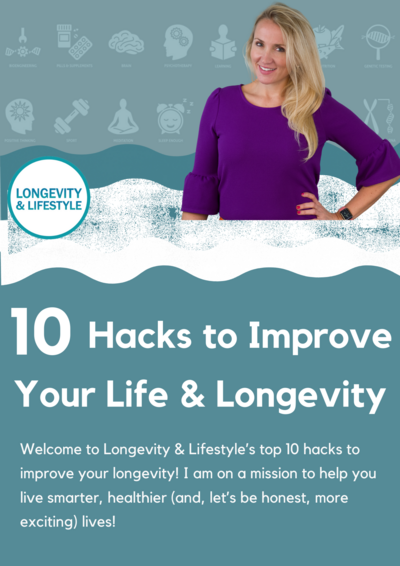
Steal Claudia's 10 Hacks to Improve Your Life & Longevity Playbook
FREE DOWNLOAD

Learn the secrets of health, lifestyle, business and finance optimization
Podcast
Top Resources

Steal My
10 Hacks to Improve Your Life & Longevity Playbook
Free guide
10 Hacks to Improve Your Life & Longevity
Want to learn how to live a smarter, healthier (and, let’s be honest, more exciting) life? Check out my free playbook with top tips just for you!
By signing up, you agree to join the Longevity & Lifestyle newsletter and to receive emails. We respect your privacy and abide by strict privacy policies.



LONGEVITY & LIFESTYLE
© Longevity & Lifestyle llc 2021 | Design by Tonic | Photos by social squares, Unsplash & Rebecca Reid
SEND ME A NOTE >
GET ON THE LIST >
@longevity&lifestyle
follow along: