#225 NASA Technology for Longevity: The Science Behind Juvent Micro-Impact Therapy With Peter Simonson
The Longevity & Lifestyle podcast
The Longevity & Lifestyle podcast
The Longevity & Lifestyle podcast

Episode 225
Sign up for
The Longevity & Lifestyle Insider
Join Claudia's Longevity & Lifestyle Insider newsletter to get top tips, insights and strategies on optimizing your life, health and business!
By signing up, you agree to join the Longevity & Lifestyle newsletter and to receive emails. We respect your privacy and abide by strict privacy policies.

“Juvent is essentially a vitamin of exercise. And that term actually will expand on that later on, but essentially it's part of your mechanical diet. And it should really be in the mechanical nutrition, you might say. What it's doing is giving the bones and our skeletal system a metabolic workout.” - Peter Simonson (President, Co-Founder, and Board Member of Juvent)
In this episode, Peter Simonson, President, Co-Founder, and Board Member of Juvent, reveals how NASA-backed micro-impact technology is transforming bone density, balance, and vitality from the ground up.
We unpack the science of mechanotherapy, how gentle vibrations can stimulate bones and circulation, and why this “passive exercise” could be a game-changer for aging well, especially for those recovering from injury or struggling with mobility.
We explore:
- The link between bone health and longevity
- How NASA research inspired Juvent’s micro-impact platform
- The surprising benefits for balance, circulation, and energy
- Why strong bones equal longer, healthier lives
This is your inside look at how space science meets longevity.
Ready to rebuild from the ground up?
Tune in and discover how to future-proof your bones and your health.
Tune in!
ABOUT THE EPISODE & OUR GUEST
Get $300 off the Juvent Micro-Impact Platform at juvent.com/CLAUDIA
and check out with code CLAUDIA.
SPONSORS
Unlock peak energy, mental clarity, and long-term health.
If you’re an entrepreneur, leader, or high achiever who refuses to settle for burnout, fatigue, or suboptimal health - this is for you.
I help top performers optimize their energy, longevity, and success using science-backed strategies, biohacking, and personalized health protocols.
Book a Complimentary Peak Performance & Longevity Coaching Call
This free exploratory session will help you:
• Identify what’s holding you back from your highest potential
• Gain clarity on your energy, focus, and longevity goals
• Discover a proven framework for sustainable high performance
Spots are limited - apply now to reserve your session.
🔗 APPLY HERE
Peak Performance & Longevity Coaching Call
Show Notes
00:00 Introduction to Juvent and Its Origins
04:11 The Science Behind Micro Impact Technology
06:36 Personal Stories and Impact on Health
09:23 Understanding Bone Metabolism and Hormonal Effects
11:41 Juvent vs. Traditional Vibration Plates
14:11 Research Findings and Clinical Applications
17:01 Maintaining Health and Vitality with Juvent
20:58 Addressing Contraindications and User Experience
23:21 Investment in Long-Term Health
25:49 Final Thoughts on Movement and Longevity
MORE GREAT QUOTES
“When you're on the phone, walk. I walk when I'm on the phone — I talk to the smartest people in the world and the most skeptical. I've noticed walking, I guess I have better clarity. I realized, guess what? I'm getting an extra dose of oxygen in my brain because my calves are pumping. It’s like having my second heart.” - Peter Simonson (President, Co-Founder, and Board Member of Juvent)
Legal Disclaimer: Please note, to avoid any unnecessary headaches, Longevity & Lifestyle LLC owns the copyright in and to all content in and transcripts of The Longevity & Lifestyle Podcast, with all rights reserved, as well as the right of publicity. You are welcome to share parts of the transcript (up to 500 words) in other media (such as press articles, blogs, social media accounts, etc.) for non-commercial use which must also include attribution to “The Longevity & Lifestyle Podcast” with a link back to the longevity-and-lifestyle.com/podcast URL. It is prohibited to use any portion of the podcast content, names or images for any commercial purposes in digital or non-digital outlets to promote you or another’s products or services.
PODCAST EPISODE TRANSCRIPT
Claudia von Boeselager: Welcome to another episode of the Longevity and Lifestyle Podcast. I'm your host, Claudia von Boeselager. I'm here to uncover the groundbreaking strategies, tools, and practices from the world's pioneering experts to help you live your best and reach your fullest potential. Don't forget to subscribe to the podcast to always catch the latest episodes.
Legal Disclaimer: Please note, to avoid any unnecessary headaches, Longevity & Lifestyle LLC owns the copyright in and to all content in and transcripts of The Longevity & Lifestyle Podcast, with all rights reserved, as well as the right of publicity. You are welcome to share parts of the transcript (up to 500 words) in other media (such as press articles, blogs, social media accounts, etc.) for non-commercial use which must also include attribution to “The Longevity & Lifestyle Podcast” with a link back to the longevity-and-lifestyle.com/podcast URL. It is prohibited to use any portion of the podcast content, names or images for any commercial purposes in digital or non-digital outlets to promote you or another’s products or services.
PODCAST EPISODE TRANSCRIPT
Claudia von Boeselager (05:02)
So welcome to the Longivity and Lifestyle podcast, Peter. It's such a pleasure to have you with us today.
Peter (05:07)
Hey, thank you so much.
Claudia von Boeselager (05:08)
So Peter, for those hearing about Juvent for the first time, how would you describe it and what inspired its creation? I appreciate you weren't the original creator, but you came in because you were so excited about it. So could you share a little bit about that?
Peter (05:21)
Juvent is essentially is a vitamin of exercise. And that term actually will expand on that later on, but essentially it's part of your mechanical diet. And it's a, it should really be in the mechanical nutrition, you might say. And what it's doing the bones, the bones in our skeletal system, a metabolic workout. Now your other question was what inspired
Well, there was a guy by the name of Jack Ryby and Jack Ryby was a very medical device developer and he had done two other technologies for healing site specific post-operative and he had done it two different ways. These products became standard of the industry and he, Jack was going for the Holy grail on reversing osteoporosis. And so he put together an amazing team and there was a,
really a group of four or five researchers over 20 year period, researchers, engineers, and programmers. So it was very much a team effort. And Jack knew how to build a team and did everything right. Unfortunately, Jack died. And this all happened before we came into the picture. And my brother and I, I had helped start a biotech company after doing spinal implants.
A friend of mine was a surgeon and had an idea for a paper. And I said, that's not, if that's true, that's not a paper, that's a company. And so rather than write a paper and publish it, we formed a company and my brother ran it for the first few years, but it showed us how far ahead science was ahead of medicine. And so we were putting together what would now be called functional medicine or, you know, biohacking and that sort of thing. We were so far ahead of our time. No one knew what the heck we were talking
The part
of that was evaluating these technologies that appear came up to us, a colleague and said, you need to look at this juvint because it's not doing anything, but it's amazing. So we did about a month of pretty, you know, intense due diligence. And in that period of time, we had my mom on it that's its own success story. And so the science was strong. This company had gone dormant and we were like, you know, I kind of said to my brother, Rush, I said, Rush, you know, with the clinic, we can help a couple thousand people. This looks like we can help 40 million
with What we didn't know at the time was that was the tip of the iceberg. And now we've had years of watching these people and their results and that's become where the plot gets really, really interesting. And so that's a long answer to your short insightful question.
Claudia von Boeselager (07:45)
No, it's perfect. And
I'm really excited to dig into all this as well, But, you know, it's those falls that really project and hinder health in longer years as well. So really excited to dig into it. And I understand that the roots actually go back to NASA research. So how does space science
lead to the development of micro impact technology. Maybe you can unpack that a little bit for us.
Peter (08:06)
Well, one of the things they noticed with astronauts in long periods of weightlessness is they had horrific bone loss. you know, nobody goes in space sick. They're the people in the top of their health. And an astronaut will lose more space, I mean, more bone in a month than a human on Earth with osteoporosis will in a year. So it's a, you know, it's a 12 to one, I mean, it's horrific.
Claudia von Boeselager (08:27)
Wow.
Peter (08:30)
And so they realize on these longer missions, especially in Mars, the joke was if they tried to push the land button, their finger wouldn't have enough substance to do
And so they were one of the sponsors of the original Juvent research in terms of understanding mechanotherapy and mechanotransduction. And there's a lot of parameters that you have to have to be on a spacecraft. Partially is obviously physiological, but the other is every other factor.
you can imagine. So this was one of the contenders. may end up there one day, but right now what they've done is used a combined the same similar effort with walking. So a treadmill can take one, you know, can kind of do multifaceted things, but the science is still strong and it's still incredibly useful for people down
Claudia von Boeselager (09:15)
Wonderful. You have this beautiful connection. You alluded to it before with your mother's you share what moved you to acquire the company and carry this vision forward based on your mother?
Peter (09:26)
So the company was off and running when, when, you know, when he died, it just went dormant. That's kind of a long story, but they weren't being made anymore. And so we were, we borrowed a platform from an osteoporosis patient. And my mom, by coincidence was suffering from an unfused pelvic fracture that she had had two years earlier. And let me get my ages right. She was probably about,
about 78 and 76 that occurred at 76 and 78. She pretty much was becoming a horizontal person because that's a pain that painkillers can't get to. And she was becoming a painkiller addict up only about two hours a day. So we said, you know, Hey, mom, try this out. And within about two weeks, she's up walking, no cane, no pain. And we were kind of like going, wow, you know, what is this? Everything from placebo, you know, whatever.
Claudia von Boeselager (09:56)
Mm.
Wow.
Peter (10:18)
And so the platform was on loan. And after about a month, the patient goes, look, I really need my platform back. So we sent it back and about two weeks, my mom went right back down. And so I got a call from her. I don't know a few weeks or so later and I can hear fear in her voice. She I don't know what you're going to do that company, but I need one of those platforms and I could hear it in her voice. And so I said, all right, mom, they don't make them anymore. I'll see if I can find one. So I went on eBay and Craig's. I mean, it took me like
A long time to find one. thought, no, sells these things. And so I found one on Craig's list in Canada. The guy's mom died. He had no idea what it does. And I said, I'll take it. And so I got it on my mom and kind of the rest is history. My mom just, three days ago, October 9th, celebrated her 92nd birthday. She's still living in a three bedroom, two bath house with a swimming pool and guest house by herself.
Claudia von Boeselager (11:06)
Wow.
Wow.
Peter (11:12)
And
there is no way that would, in my opinion, this would be happening without you. That's what she credits it to and that sort of thing. And so, you know, if it keeps somebody out of a nursing home for a month, it's paid for itself. You know, I mean, that's kind of a crude way of looking at it. But I mean, it's I mean, so in the years following that, we've seen so many people's activity level go back. Now, my personal summation of this.
Claudia von Boeselager (11:24)
Yeah.
Peter (11:39)
is in my opinion, this is not a study, I'm clear on that, but you can add five years to anyone's vertical lifespan. Again, that's my
Claudia von Boeselager (11:48)
Peter, let's unpack the science a little. What exactly happens in the body when someone stands on Juvent Micro Impact platform, just so people can understand? And I'm also curious that why would get reversed so quickly, like in the case of your mother, for example.
Peter (12:05)
that topic is literally pro and I'm not kidding when I say this would be a hundred people's careers for a hundred years. Okay. I mean, it's that big a deal. And so, but let me kind of pull back and put it in perspective and then we'll give a little insight to it. What people don't realize, including most doctors and I'm, this is unbelievable. but either way, we'll talk about that later, but this every bone is an organ.
and that forms the skeletal organ system. Now there's about 12 organ systems, depending how you want to classify that. But the skeletal organ system is the second most important in our body. And what people don't realize, including the doctors, I can ask a room full of doctors, what's the primary function of the skeletal organ system? And 99.9 % will raise their hands, say structural. And that's absolutely wrong.
That's probably third or fourth on the list. The primary functions of our skeletal organ system are metabolic, not structural. Owen's primary job is to produce stem cells. That's number one. Number two, it regulates our calcium level in our bloodstream real time. And third, it's a full member of the endocrine system. And
Those are really where the headlines are. And the way I just explain it to doctors, said, look, if I replaced some patients, entire skeletal system with stainless steel or titanium, they would structurally be unbreakable and they would be dead within minutes. So what's more important structure or metabolism? Does that make sense? And that's why you start to see so many things affected. So real quickly, let's get, let's highlight a couple of those things. So producing stem cells.
Claudia von Boeselager (13:40)
Yeah.
Peter (13:48)
Well, there's two major types, liquids and solids. So the liquids are called hemopoetics, that's blood. And so they become red blood cells for oxygen transport, white blood cells for our immune system. That's our bone. So when we're fighting infections and viruses and that sort of thing, guess what? Bone's got a say in it. When it comes to the other stem cells, they're structural. Those are called mesochymal. So let's call them the solids. And those cells become
about nine things we've identified. So bone, muscle, fat, cartilage, connective tissue, endothelial tissue, sensory nerve tissue, as well as really obscure specialty tissues of different organs. And guess what? They'll probably find more. Now, the type of loading that Juven is providing, the scientists discovered is required for normal metabolism. And so,
That is one of the reasons why, when you get on a juvite, that vitamin of exercise that's super specific and super efficient at enhancing bone metabolism. Well, you're going to affect a lot of things. isn't an organ in the body that doesn't talk to the skeletal system in a first or second hand conversation. Then you get down to hormonal.
Claudia von Boeselager (15:08)
you
Peter (15:11)
effects. Now the endocrine system is as complicated as it gets. And it's funny, the deeper you dive, you realize, even the endocrinologist don't fully understand it. I'm sure they're ahead of us. But at the end of the day, it what's the church? It's unbelievable. I mean, you think it's 3D chess, backwards 3D chess, you know, but the bone, not only chemically with
Claudia von Boeselager (15:22)
The deeper it goes. ⁓
Peter (15:32)
hormones talks, it produces four of its own unique hormones. So it's a full member of the endocrine system. And so we see people calling us with these things that we don't make claims and I can't explain everything, but you have to not discount people a thousand miles apart who don't know each other describing the same clinically relevant changes.
Claudia von Boeselager (15:58)
Mm-hmm.
Peter (15:59)
That's the, listen, there's something there to that. It's not just two people that we hear it all the time. And so the fun part is people get on a juvint for something that might generally bone loss or joint pain or something like that, lower the medima or balance, something like that. But they'll stay on it for reasons they had, wouldn't even dream were connected. And so we, that's the fun part. So that's the reason why, you know,
Juven is, it's really interesting. We're giving somebody a vitamin that they don't know they need. You're buying a lifetime supply before you ever use it. That's kind of a leap of
what we do is we say, listen, we know how it ends. You may not. So it's six weeks. If you don't think it's worth buying it, we'll buy it back.
And our, you know, our return rate is 1.5%. So it's 98.5 % of people are like, I'm never sending back. I'm buying another one from my other house or that sort of thing, whatever, you know, I mean, it's the, and so that's why we know there's so much here that every one of these indications would require, two or more $10 million You know, they haven't been done yet.
Claudia von Boeselager (16:52)
We're keeping this thing.
Mm-hmm.
Yeah.
Peter (17:09)
But that doesn't
mean we can't use it.
Claudia von Boeselager (17:11)
No, so
exciting. And I didn't realize that with the bone as well. So that's really interesting. I mean, I'm over 200 conversations in with world leading pioneers. So thank you for bringing that in. So a few things. First of all, curious, what are the four hormones produced in the bone? This is not something I was familiar with.
Peter (17:27)
I'd have to look them
osteocalcin. That's an interesting one. Osteocalcin is that one I remember. That's one of the hormones that, not the only one, but it's one of the hormones the pancreas uses for determining blood glucose And so that's a, in just in the past few years, they've established that's not a monologue, it's a dialogue between the two. So that may be why it's coincidental we have patients.
who are diabetic saying my insulin management with Juvent is there, they have a smile on their face. And so absolutely. And you see a lot of things that are hormonal that would, you would think that perhaps let's just say it's all coincidence, but you know, things like men's erections and RLS and things like that. These are all issues that when you dive into it, you go, yeah, there's a hormonal connection and that deserves more study.
Claudia von Boeselager (17:59)
That's fascinating.
Yeah.
Very exciting. And so for people listening, Peter, they might my gym, we have a vibrational plate. Can you explain what's the difference of a low the mechanical stimulation that's happening versus the typical vibration plates that you'd find at a gym or wellness
Peter (18:27)
Yeah.
key word is safety. I'm an engineer and I'm going to give you some useful tips. If you can see something moving, you're so far over the safe limits. It's ridiculous. Just don't even get on it. Okay. No, it's like a vibrating plate. And so part of the
Claudia von Boeselager (18:42)
Hmm. Like a treadmill?
vibrating plate. Okay.
Peter (18:50)
know, $40 million spent in the formation of Juvent and the research development of the papers, they found out that...
Bone is pretty resilient. Bone can take a lot. Okay. It's what's called very mechanorezillion, but it's also very, but the rest of the body isn't. Okay. And when you start giving the body impact loading at high frequency, that is a very, very different math and physiological effect than low frequency. So if I'm walking, I'm going to hit 1.2 G every step. Not a big deal because the body's designed to take it at that
frequency. The energy has plenty of time to dissipate the body. It's not a big deal. Juvent, its load is 0.3G. Okay, so why so much lower? Because Juvent is giving the loads at higher frequency. And when you do that, you have to go very, very, very low frequency to be safe. Now, what the researchers found out, bone is not only mechanoreziliant, it's extremely mechanosensitive.
So you don't need this on the bone. You can get by with this.
And there's a way, if you do the software correctly, to optimize it to where the bone gets game on and the rest of the body is just yawning. Not a big deal. And so what these other platforms have done is that we just, jokingly really, really accurately call them Chinese paint shakers. I mean, they're basically very high energy, shaking the shite out of people to the point of, you know, there's been cases, court cases of detached retina.
Claudia von Boeselager (20:11)
Mm-hmm.
Peter (20:29)
There's been clinical papers on vascular tears. There's a lot of doctors saying that's well within the TBI category. You know, it's interesting because we were going to help find a study. We talked to some doctors and literally beyond within five minutes, you ask yourself, we couldn't write an IRB. We couldn't approve a study to do something that would cause that potential damage. And so these platforms you get on them just don't. I mean, you could very, you can safely use them on extremities or maybe if you got down to the position, but
Claudia von Boeselager (20:29)
Wow.
Peter (20:59)
Generally, it's like juggling knives. In theory, it's great, but it's probably not a good idea.
Claudia von Boeselager (22:03)
I think this is such an important piece of information for people to know and understand instead of trying to like it on this plate right at the gym as well. So really, really thank you for unpacking that and talking about the research. I know that Juvent's been involved with several research collaborations. Could you highlight any of the studies or findings that particularly stand out for you?
Peter (22:22)
Well, generally speaking, they focus mostly on osteoporosis. There's papers on that that are positive, some they're middle and some that are quote negative. If you look at the negative ones, we found compounding factors and we it is what it is. And some of those factors are, in our opinion, political as much as they are technical. The other indications that have been studied are lower limb edema You've seen people with fat that are swollen.
That's an edema. Edema means of holding water or fluid. And so a lot of people have a very poor circulation and there's a secondary mechanism of action or the way the body responds, which is very beneficial. so that little movement of Juven's going up and down 5 % of one millimeter. Let that sink in. Okay. That's what's safe. And we're right within limits of ISO and clinical standards. So.
but that's enough to invoke a balance response from the balance muscles. that's sounds like, yeah, geez, so what? No, that's very relevant because that activity, first of all, it's like having a personal trainer work on the balance fibers. Those are different than the strength fibers. Okay. So that can lead to improved balance, but that other motion is long been known to induce lymphatic and blood flow.
because the calves act as a second heart. And so blood flow improves. So we see wound healing. We've had cases of that chronic wound healing, but also the lymphatic system. Now the lymphatic system, relies exclusively on this muscular action where the heart is a baseline for blood and it uses an auxiliary, but for lymph that's a big deal. So in a lot of detox protocols, this is part of that therapy.
Claudia von Boeselager (23:47)
Hmm.
Peter (24:14)
because they can get the lymph. The lymph is also, it's kind of a transport system, but also the garbage system. And so they can get these toxins and get them out of the body. And so it's kind of an indirect detox, but still quite effective. And so you start to see there, gets very, it's beautifully complicated and not everything is known. The other studies to your question were done on improved balance. As we get older, that's a very big deal.
And in fact, a lot of people, you know, there's a kind of a known algorithm. If you fall, break a hip, there's a X percent chance. don't remember, but a pretty high percent chance you'll, you'll be dead in a year. You know, you just don't recover. And, you know, it's interesting. There's also a theory that they don't know which comes first, the fracture or the fall, because sometimes people will fracture their hip and fall because of it and think that the, you know, it's chicken or an egg thing, but the balance is a big deal.
Claudia von Boeselager (24:51)
50 % is I think the statistic that I saw.
Mm.
Nigga.
Peter (25:09)
And so we see people who can't really stand on themselves. We have a stand, but we don't really encourage them. We say, you know what, use a desk or a walker because in six weeks you may not need that. And we, you know, that's more common than not.
Claudia von Boeselager (25:25)
Amazing. So for someone who perhaps is not injured or ill, but wants to maintain health span and vitality, how can Juvent support and what would be a protocol for say, you know, you're an average person who just wants to maintain good
Peter (25:41)
let's dive down in on that description vitamin of exercise.
The word vitamin originally was vital amino. And that was kind of a breakthrough because they found a chemical compound that wasn't on the periodic table that was required for normal metabolism. And that list has grown and it really wasn't an amino, but the name stuck. So Juvent is not a vital amino or vital in the chemical side, but it's a vital kinetic.
So the term viticin is what's used. And new science needs new words. And so if I, I don't have to be sick to know I need vitamin D or vitamin C or vitamin A, I would take a supplement and not wait to get sick. Or don't need to get scurvy to know I need vitamin C or get rickets for vitamin D or goiters for iodine. Okay. These are part of our normal. We know this now. We can use them preventatively. Some of our top users are professional athletes.
are they're not shy on impact. Okay. But the impact that Juven is doing is just so efficiently therapeutic that they can use it to augment their metabolism for repair for higher Okay. I'm, I'm on no meds. have no really outstanding issues. I'm on my Juven every day. Why can I know my body needs it? I know how many things are And if you look
around the world. One of the characteristics of all the blue zones where people live a long time is they walk. walking is a magical exercise. Okay. And Juvent is really providing you a concentrated form just like vitamin C from an orange we're giving you the viticin of walking. And if you don't walk five, you know, five to 7000 steps a day or you can't
It's a great way to augment your mechanical diet. And so, you know, I don't need to have the illness to know a way to avoid it. And this is, you know, why we exercise. And this is, so this is a sub component of your mechanical diet, if that makes sense. Now, back to the vitamin. It's the same dosing as a vitamin. It's the same response, same.
Claudia von Boeselager (27:41)
Yeah.
Peter (27:53)
residual or same, in the same, indication. let's say dosing. can't do one day of vitamins a year. need them regularly. Correct. And I don't expect miracle day one. So it's the same response. And if I miss a day, same retention, not the end of the world, but I don't want to go too far too long. And it's the same indication at what part of the human experience do we not need vitamins? That's from pediatric or geriatric.
Claudia von Boeselager (28:03)
Okay.
Peter (28:22)
And so similarly, when Juvent is really fits the same mold, but it's a VitaKin, it's a mechanical vitamin, not a chemical
Claudia von Boeselager (28:30)
And we know that
for longevity, one of the most important factors is exercise. So this is a key component as well on that, know, strength, strength training, but also the muscle maintaining muscle mass as well. So really in bone strength, yeah,
Peter (28:43)
for your users, if you got a minute, I would say, listen, if you don't get a juvent and you should, but that's fine. I understand that. For God's sakes, walk. Walking is a privilege. Enjoy it. It's a luxury. If you have the ability and the time to walk, use it. And, know, I'll tell you, I have a couple of little little life hack. know, these little these little iPod wired ear things, right? Whenever you're on the.
Claudia von Boeselager (29:07)
Yeah, no EMF
radiation. Good.
Peter (29:09)
When you're on
the phone, walk. I walk, when I'm on the phone, I walk. And I talk to the smartest people in the world and the most skeptical. I gotta be on my game. And I've noticed walking, I guess I have better clarity. And you know, couldn't figure that out. You'll see it. But I talked to a cardiologist friend of mine, I realized, guess what? I'm getting an extra dose of oxygen in my brain because my calves are pumping. It's like having my second heart. Okay.
Claudia von Boeselager (29:23)
Yeah.
Yep. It's perfect. The Queen of
England needs to do that with her ministers as well, by the way, walking for important meetings. She had a good run. Exactly. Yeah,
Peter (29:39)
She did alright too. made it. She had a pretty good run.
Claudia von Boeselager (29:45)
for some people wondering, is there any contraindications? Are there any cases where it's not suitable for someone?
Peter (29:51)
there's a list of items. they do what's called an IRB, which is Institutional Review Board, you'll put in a study, anything you can possibly think would possibly be imagined. It'd be a long list. we've worked with doctors to kind of get that list down. It's down to pregnancy. And we've got one of the world's top OBG's that I would put a pregnant woman on it. We don't suggest it, but until I get a white paper from him, I'm not gonna say that. And probably if you had a recent...
eye injury or an occlusion stroke, you might want to talk to your doctor first. But when you talk to your doctor, make darn sure he's not thinking about that shaking plate in the gym. And it's juvint, juvint, juvint. And we talk to doctors one on one all the time to explain the science and the difference. And then they usually go, absolutely. Yeah, I want absolutely I want them on that. But that that would be the areas where I'd still be a little cautious. The other thing is, if you get your juvint
If you're an older person, just generally people do about 20 minutes a day. Sometimes for many, that's too much. And as gentle as it is, that muscular activity for them is a workout. You know, for most people it's, it's negligible, but for some, so that would be more of a user note. But we go through that with users when they buy a platform, we talk to them and answer those questions.
Claudia von Boeselager (31:07)
And it can be ramped up, I guess, over time as well as you get used to it, right? So, yeah.
Peter (31:10)
Absolutely.
In fact, I've had a couple of people who've gone from being bedridden. And one of them was a doctor friend of mine, he was literally suicidal. He said, I'll never get out of bed. And I got him on the set his feet on the jubilant for 30 seconds one day. That's the starting dose. And he's now walking on a treadmill for miles. And he said, that was my gateway back. He said, that was what got me, you know, that bridge between horizontal dormancy to vertical activity.
Claudia von Boeselager (31:30)
Wow.
Was that because of the cascade of hormones that were triggered or what do think was that?
Peter (31:41)
your body,
your metabolism starts to shut down. I mean, it just use it starts to shut down. And so, you know, it doesn't matter the source of the in and immobility. So for example, one of the groups that we've been studies done on was children with congenital issues. So muscular dystrophy, spina bifida, cerebral palsy, they don't grow up like normal kids. And so they'll grow up with bones that are like egg shells.
So on top of all of those issues, the parent has to treat them like an egg shell because they have a osteoporosis patient. So it doesn't matter your age. If you become inactive or you're an astronaut or you lay bed long enough, your metabolism isn't working. that's kind of, and this is a key point because it's really, really rare for us to discover a new fundamental daily requirement. The last vitamin discovery was 1946, I believe, vitamin K.
Okay. This doesn't happen very often. And this is as significant in my opinion of any vitamin discovery to date, including vitamin C. Okay. And if you're trying to be healthy without this good luck. Now walking is the best way to get it. Nothing will beat nature. Just like a perfect diet is better than any supplement, but the reality of it is we need it. Okay. And so
fundamental daily requirement is not to be taken lightly. So people talk about biohacks. I'm like, wait a minute, let's address the bio lax. Okay, because the golden age, what we now know is the two number one rules address deficiencies, remove toxins, then worry about treatments, especially for a chronic condition. Now Western medicine is amazing at acute conditions, trauma, accident, appendicitis, that sort of thing.
Claudia von Boeselager (33:12)
Mm-hmm.
Yes.
Peter (33:33)
Couldn't be in a better place. When it comes to chronic, they overlook addressing deficiencies and removing toxins and get right on to treatments. And so we don't tell people to get off your treatment and do this instead. But I don't need to give up a therapy to add Juvent to my regimen. And as with any treatment, you should always calibrate, is this something, you what's my need for it? then, and this so incorporate the Juvent, work with your doctor and reassess where you are.
Claudia von Boeselager (34:02)
And you were saying also that you speak with individual doctors. So say potentially someone listening to this thinks, you know, I want to bring my doctor into the conversation. If they're not new to this, they can reach out. Is that a service you offer?
Peter (34:14)
Absolutely. If they'll, you we will schedule an appointment with a doctor. Well, I have a PowerPoint lecture that I give them to kind of go from conceptual to operational. And, you know, some I've been very flattered and I'm just going to say it, but, one of the top doctors in the world, he said that lecture changed the way I do medicine. And he invited me to Detroit to do is talk to his entire staff. And every one of them said, Peter, I would admit to you, the last thing I wanted to do was come in and watch your lecture tonight.
But he said they all bought Juvenants and they said, this is a game changer. And so if you get your doctor there, they won't be disappointed. And I've talked to literally thousands of them. And so we, know, it's a great tool. And my point is they can look on the website and do their own homework on it. But at the same time, feel free to connect us. We'll be happy to chat with
Claudia von Boeselager (35:04)
Beautiful. So it is a premium product. It's, you know, some people might wonder about the price tag, et cetera, but it's also a big investment in long-term health. How do you help people really see that value behind it? You know, it's built, maybe you can talk about where it's being built, the warranty that you have, some of those details.
Peter (35:20)
Yeah.
Well, there are financing options available and there are clinics that allow people to use them. But the truth is, you know, 98.5 % of the people say these things are a bargain. I mean, it's just a matter of taking a small leap of faith with very little to no risk. Your biggest risk is your time. And the units are built to last a lifetime. I mean, it's like you will pass it down to your grandkids. And I mean, they really are built that well.
And it's truly an investment. you know, you're going to stand on this for 20 minutes a day, which is 2.3 hours a week. That's a lot of time. There's a lot of places in life to save money. This ain't one of them. And if it keeps you off one med or keeps you from a nursing home or gets you over one ailment recovery, it's kind of, it's kind of cheap in the overall context. And so, you know, we don't, if somebody doesn't like their dream, we'll buy a bag. We don't want anybody out there unhappy. And it's funny because a lot of people have done
Claudia von Boeselager (36:09)
Mm-hmm.
Peter (36:16)
months and weeks and years of research and they go you know there's nobody says anything bad about jubit you know it's like there's a reason for that because the results speak for themselves and we can't make a lot of claims so we don't we just let you decide
Claudia von Boeselager (36:30)
Beautiful. And is there a time of day, Peter, I wanted to ask as well, that it's better to do? Is it better to do it in the morning or in the evening? Is there any difference?
Peter (36:38)
Well, the main thing that I would say on that is it was more important. Ironically is where you put it in your house. You want to put it in kitchen, your den, your TV room, because while you're on it, you can do things. Talk on the phone, watch TV, surf the web, talk with your family, practice your guitar. I mean, it's very mild. You don't have to take 20 minutes and stare at a wall. Okay. You can do this. Mine is in the kitchen.
Claudia von Boeselager (36:46)
Hmm.
Peter (37:03)
And if I'm in a cocktail party or I'm talking on the phone, I'm guess what? I'm on the juvint or my friends are. And my mom, she brings her friends over and that's their social circle. The point is now in terms of time of day, I wouldn't sweat over it. know, pro athletes do it 20 minutes more than 20 minutes a night. But a lot of it would depend on the condition that you're trying to look after. There's some subtleties and nuances. We'll talk with our users about that. But with regard to that perfect standing of good, the main thing is just get on it.
Claudia von Boeselager (37:30)
Yeah, beautiful. So for anyone ready to experience Juvent, where's the best place to learn
or to try it out?
Peter (37:39)
the obviously the best spot is juvent.com j u v e n t.com. And I do a lot of interviews like this. And there's one I did with Dr. Gundry. And about a year ago, and that's it seems to be a nice format. And Dr. Gundry, I was really impressed when we first I was inspired to work with him because I followed some of his own stuff. He seemed to really dig into it. He me with my allergies. I know I didn't know him, you know, it's a
When we engaged him the first time he really did about a month of due diligence and really dug deep and was using the platform with him and his wife and then he said, yeah, people need to know about this. And we went on the show and we did the show and we you know, he was helping us out and vice versa. But it's a great interview and it's a great we're proud to be working with him. And okay, then I'm preaching the choir then. Okay.
Claudia von Boeselager (38:24)
He's been on the show here as well. Yeah, we've had Stephen Gundry. Yeah, yeah, he's great. And also, dear
audience, Juvent are kindly offering you $300 off if you go to juvent.com forward slash Claudia as well for a discount.
And Peter, if you could leave listeners with one message about movements, longevity and independence, what would it be?
Peter (38:48)
Address deficiencies, remove toxins. You've got to start there. You keep that down and you know what? If your doctor is not thinking along those ways, you might want to go, well, maybe just remember your doctor is a powerful tool. Keep him in the car, but he's not in the driver's seat or her. Okay. And you've got to think for yourself because there's a lot out there that you can do. Think for yourself. So let's go with that. Think for yourself, remove toxins. mean, address deficiencies, remove toxins. How's that?
Claudia von Boeselager (39:17)
Beautiful. Peter, thank you so much for coming on the show and for bringing NASA level innovation into everyday wellness and sharing it with us today. Thank you.
Peter (39:26)
Fantastic. Thanks so much.
I’m Claudia von Boeselager
Longevity Coach, detail-loving educator, big-thinking entrepreneur, podcaster, mama, passionate adventurer, and health optimization activist here to help people transform their lives, and reach their highest potential! All rolled into one.
Hey there!
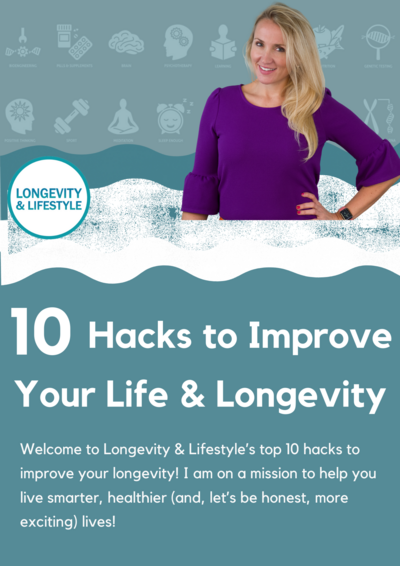
Steal Claudia's 10 Hacks to Improve Your Life & Longevity Playbook
FREE DOWNLOAD

Learn the secrets of health, lifestyle, business and finance optimization
Podcast
Top Resources

Steal My
10 Hacks to Improve Your Life & Longevity Playbook
Free guide
10 Hacks to Improve Your Life & Longevity
Want to learn how to live a smarter, healthier (and, let’s be honest, more exciting) life? Check out my free playbook with top tips just for you!
By signing up, you agree to join the Longevity & Lifestyle newsletter and to receive emails. We respect your privacy and abide by strict privacy policies.


LONGEVITY & LIFESTYLE
© Longevity & Lifestyle llc 2021 | Design by Tonic | Photos by social squares, Unsplash & Rebecca Reid
SEND ME A NOTE >
GET ON THE LIST >
@longevity&lifestyle
follow along: