#239 Dr. Ash Kapoor — Root Cause Longevity: Fasting, Trauma Healing, Detox & Reversing Chronic Disease
The Longevity & Lifestyle podcast
The Longevity & Lifestyle podcast
The Longevity & Lifestyle podcast

Episode 239
Sign up for
The Longevity & Lifestyle Insider
Join Claudia's Longevity & Lifestyle Insider newsletter to get top tips, insights and strategies on optimizing your life, health and business!
By signing up, you agree to join the Longevity & Lifestyle newsletter and to receive emails. We respect your privacy and abide by strict privacy policies.

“We’re treating numbers instead of understanding physiology”
- Dr Ash Kapoor
In this episode, Dr. Ash Kapoor, physician and expert in precision and longevity medicine, reveals why mitochondrial dysfunction sits at the center of metabolic breakdown, cardiovascular disease, inflammation, and accelerated aging. Rather than focusing on symptoms, Dr. Kapoor explains how cellular energy production determines how well we heal, perform, and age.
We explore why calorie counting misses the mark, how modern lifestyles damage mitochondrial function, and why restoring metabolic flexibility is one of the most powerful levers for longevity. This conversation reframes health from surface-level metrics to what’s happening deep inside the cell.
We explore:
- Why mitochondria drive energy, inflammation & aging
- The link between metabolic dysfunction and chronic disease
- How precision diagnostics reveal early dysfunction
- Why weight is a poor proxy for metabolic health
- What actually restores cellular energy & resilience
This episode offers a clear, science-based roadmap for rebuilding energy and extending healthspan—starting at the cellular level.
ABOUT THE EPISODE & OUR GUEST
Unlock peak energy, mental clarity, and long-term health.
If you’re an entrepreneur, leader, or high achiever who refuses to settle for burnout, fatigue, or suboptimal health - this is for you.
I help top performers optimize their energy, longevity, and success using science-backed strategies, biohacking, and personalized health protocols.
Book a Complimentary Peak Performance & Longevity Coaching Call
This free exploratory session will help you:
• Identify what’s holding you back from your highest potential
• Gain clarity on your energy, focus, and longevity goals
• Discover a proven framework for sustainable high performance
Spots are limited - apply now to reserve your session.
🔗 APPLY HERE
Peak Performance & Longevity Coaching Call
Show Notes
00:00 Introduction to Dr. Ash Kapoor
01:44 The Limitations of Traditional Medicine
07:15 The Patient Journey: From Symptoms to Root Causes
13:37 Detoxification and Fasting for Longevity
19:47 Personalized Approaches to Health and Wellness
20:43 The Importance of Hormonal Foundations
21:44 Renewal Through Peptides and Gut Health
23:54 Addressing Trauma for Holistic Healing
25:49 Breathwork and Grounding Techniques
27:48 The Role of Psychedelics in Healing
30:40 Daily Practices for Optimal Health
33:34 Finding Magic Minutes in Your Day
37:05 Success Stories: Transformations Through Health Protocols
41:15 The 40-Day Fast: A Personal Journey
PEOPLE Mentioned
Products Mentioned
MORE GREAT QUOTES
"Most chronic diseases are really diseases of energy failure.” - Dr Ash Kapoor
Legal Disclaimer: Please note, to avoid any unnecessary headaches, Longevity & Lifestyle LLC owns the copyright in and to all content in and transcripts of The Longevity & Lifestyle Podcast, with all rights reserved, as well as the right of publicity. You are welcome to share parts of the transcript (up to 500 words) in other media (such as press articles, blogs, social media accounts, etc.) for non-commercial use which must also include attribution to “The Longevity & Lifestyle Podcast” with a link back to the longevity-and-lifestyle.com/podcast URL. It is prohibited to use any portion of the podcast content, names or images for any commercial purposes in digital or non-digital outlets to promote you or another’s products or services.
PODCAST EPISODE TRANSCRIPT
Claudia von Boeselager: Welcome to another episode of the Longevity and Lifestyle Podcast. I'm your host, Claudia von Boeselager. I'm here to uncover the groundbreaking strategies, tools, and practices from the world's pioneering experts to help you live your best and reach your fullest potential. Don't forget to subscribe to the podcast to always catch the latest episodes.
Legal Disclaimer: Please note, to avoid any unnecessary headaches, Longevity & Lifestyle LLC owns the copyright in and to all content in and transcripts of The Longevity & Lifestyle Podcast, with all rights reserved, as well as the right of publicity. You are welcome to share parts of the transcript (up to 500 words) in other media (such as press articles, blogs, social media accounts, etc.) for non-commercial use which must also include attribution to “The Longevity & Lifestyle Podcast” with a link back to the longevity-and-lifestyle.com/podcast URL. It is prohibited to use any portion of the podcast content, names or images for any commercial purposes in digital or non-digital outlets to promote you or another’s products or services.
PODCAST EPISODE TRANSCRIPT
Claudia von Boeselager (00:50)
My guest today is Dr. Ash Kapoor, a globally recognized leader in regenerative medicine, bioesthetics and cellular longevity with over 30 years of clinical experience with the NHS. He's the founder of Levitas Clinic, Levitas Dental, Levitas Academy, Levitas Communities and Levitas Retreats and the creator of the NOMAD program and 10R methodology, frameworks designed to address the true causes of accelerated aging and chronic disease.
Dr. Kapoor is known for bridging precision diagnostics, detoxification, regenerative therapies and brain first longevity, combining cutting edge science with a deeply human whole system approach to care. His work focuses on helping individuals move from symptom management to meaningful measurable transformation
across health, span, cognition, and vitality. Please enjoy.
Ash, welcome to the Longevity and Lifestyle podcast. I'm so delighted to have you with us today.
Ash Kapoor (01:41)
Thank you Claudine, thank you for inviting me, it's a real honour.
Claudia von Boeselager (01:44)
an absolute pleasure. And really love your background history and what message is. So I'm excited to share it with my audience today. And you've spent over 30 years in the NHS, given that up to 80 % of chronic diseases are lifestyle driven. What was the moment that you realized the system was exceptional at acute care, but not designed for root cause healing?
Ash Kapoor (01:55)
Yes.
Yes, I mean, you've summarized that beautifully, Claudia. I'm actually still part of the NHS. It's coming into my 35th year. And I have to say, I was, passionate about medicine. I always have been and did my career. I've done primary care, I've done minor surgery, I've looked after college hospitals, I've done it out of hours and also brought hospital services to the community.
And I thought I was doing a good job by looking at what I thought then was healthcare transformation. But in fact, all I was doing was shuffling deck chairs on the Titanic. It wasn't actually changing the position of patient's well-being. And how did I discover that? Well, I look after a cottage hospital and in there we have frailty.
And a lot these patients come in between the ages of 70 and 90, but I knew them when they were in their 50s, working people, interacting with society. And then I see them on the wall where they can hardly recognize me. They sign respect forms saying, please do not resuscitate me because I don't want to continue. And I'm thinking, how many more years of this have we created? So we've extended existence, but truly we haven't extended life.
And then it took me to explore why this is the case and whether this is a global problem or not. And then basically by looking at other cultures, it's not a global problem.
when you go to the indigenous populations of the Aborigines, of the Maasai, you've got 78 year olds still able to squat, they still have their teeth. Most importantly, they're still bright, they're still interested and they're still respected. So it made me think there's got to be a change here because I put these people cumulatively on 20 or 30 drugs and yet there's no difference, if anything, there's a deterioration. And then if you look at the health and social care situation, healthcare is now overflowing into social care. In other words, after a certain
it doesn't become a medical problem and all we do is manage. And it's very dissatisfying for us as a profession, but more importantly, when you see people lose their joyfulness, it's not a great feeling. So hence it led me to kind of look at what I thought then was root cause analysis. Where does the problem start? And what is fascinating is having opened up the practice and literally open book.
Most of my learning has come from patient stories, from patient narratives, except the difference is by being given enough time, you actively listen, you actually put together the puzzles and soon you find that there's a consistent narrative that longevity medicine is about preserving purpose, fulfillment, independence. Conventional medicine is about suppressing symptoms we see them as diseases. We've labeled 126,000 of them, by the way, and created over
Claudia von Boeselager (04:09)
Okay.
Ash Kapoor (04:33)
quarter of a million FDA approved drugs and doctors are rewarded by remembering these labels and remembering the drugs. But it's all about suppression, suppression, suppression. And of course a few years later something else happens and then something else happens. And then we say, oh there's a link because we've got the papers, there's a link between all these diseases. Well there isn't, we have sorted the first one out, just suppressed it.
My intuition and common sense suggested that we should be looking at cause and that was really easy. So once you identify what is root cause, then the situation just opens up. So for me, root cause is very simple. Where are your cells made? Because these cells become tissues and organs. So if you get that bit right, then everything's fine. And lo and behold, it's called epigenetics. We've known about it since 1904 and yet no medical student will talk about epigenetics. So the environment where your cells
are made is so important. And then let me think well what exactly goes wrong there. Only two things, the air is not fed properly and it's not defended properly.
So the solution to longevity is feed the epigenetic place correctly and defend it. And then of course it opens up the chapter of how we do that, which we can discuss. So effectively we can then improve the state of your cell and your stem cells, of which you've got a couple of hundred years ago, ⁓ a hundred years off, can continue to make good organs, good tissues. The problem is how do we keep that area fed and how do we keep it protected? Unfortunately, we live in a toxic environment in urban areas.
so there's constant threats which you and I don't even see. As we speak we're breathing in aluminium. Heavy metal sticks in your tissues. Whatever you breathe in today will take 30 years for half of it to leave you. So you can see how you accumulate these toxins and that environment where the chef is making the cells is becoming toxic.
Food is no longer nutrition. Your predecessors a couple of hundred thousand years ago put something out of the soil which is mineralized, cleaned and crunched and eaten, full of nutrition, full of the right minerals, etc. They'd rip from legs, they'd kill an animal, they'd eat it straight away, no microwaves, no fridges. Food equals nutrition. Now we live in abundance.
There's toxins in the soil, there's hormones in the soil. We like to have everything all the time. Clearly that's not possible, so preservatives come in. And therefore, food has lost its nutritional value. So the air is toxic and we're not feeding it. That's why we decline.
So simple. So our role here is to deal with those two issues, explain that narrative to you as a patient and make you understand that the solution is not about more drugs. It's about adequately putting in interventions in a strategy that clears that area out. Then we feed it. Then we repair the damage that's been done. And the great thing about the body is it will regenerate. You regenerate every three months. So, you know, it's all possible. hence, that was the reason for my transition.
and over the last 10 years we've developed over 300 standard operating procedures that fit with you. There's no right or wrong answer is it in your budget and is it in your value system. So in that way we feel we could democratize this world of longevity. It's not just for the Brian Johnson's who spend two million dollars a year, it could be anybody and there's no wrong answer we can just work with. So that's really a short snapshot of my journey.
Claudia von Boeselager (07:40)
It's really phenomenal. And thank you again for the work that you're doing. and also in educating and I was at your conference you held recently, which was phenomenal and different speakers coming in. The world needs to know that this is the way forward and not the traditional acute care, as we mentioned before, is excellent, but we really addressing that root cause. Can you share a little bit more about the typical journey that one of the patients would go on and what does that look like for different sort of use cases?
Ash Kapoor (07:55)
Yeah.
shot.
one thing that I was very keen on is not create a matrix that is as complicated as the current conventional system.
It's impossible because at the moment as a GP you triage your symptoms, you make a provisional diagnosis, but if you don't know what to do you send it to a district hospital. If the district consultant doesn't know what's going on, sends it to a super specialist. These guys live in narrow cocoons. They do not look at you as a whole, they look at one thing and make a linear relationship.
And what I wanted to avoid was so many things entering the market and people just picking and choosing random things depending on what the media is saying. So we spent a lot of time developing a strategy, a strategy that is constant, consistent, and evidence-based, science-based, but also wisdom-based. And when we did that, it was beautiful because what we said is, look, you've got to go through this program.
The first part of the program, we call it release. And essentially, it is the release of your toxins.
And what I would do for you is take an hour's history and work out what your challenges are, but also what's happening in your subconscious mind. Because people don't realize that they suitcase trauma and injury and stuff that's happened early in childhood, even in the uterus in the subconscious mind. So you find out where those triggers are. So we don't take a history. I don't look upon it with the obsession of giving you a label. It's with an obsession to find out where things started to go wrong. Just this morning, I've seen a gentleman, mid-50s,
and he's come in, very quiet, gentle human, come into the practice and has told me essentially that he's got colitis, he's got fatigue, et cetera. And when you ask him on superficially, how's your life been? He goes, I'm generally happy, everything's okay, et cetera, et cetera. And when I explained to him that trauma can be suitcase and from an early he reflected and a minute later he said, you know, had to leave my country in India, the Gujarat to come to the UK, I was 10, I couldn't speak.
a word of English, I was put into this school and I said that's huge, know, for a 10 year old. because he couldn't speak to his parents because they couldn't understand the narrative of schools, it was all internalized and in his subconscious and there was this subconscious sense of stress where he felt inferior throughout his whole life.
Claudia von Boeselager (10:01)
It's traumatizing.
Ash Kapoor (10:15)
worked hard but couldn't get over it and the stress manifested in an inflammatory condition. So you can see we could decompress people by realizing they're not broken, they're not diseased, they're just in a state of distress. So the typical journey is to find out where those pressure points are and then we look for signs of inflammation because we know that every disease, decline and disorder is inflammation. At an organ level we can pick it up.
cholesterol, blood pressure, inflammatory, liver, etc. dermatitis. These are all expressive phenotypes, but actually this position of inflammation started at the cellular level maybe decades ago. So my view is that if you pick up any one sign of inflammation, assume the whole body is inflamed, it just happens to show in your skin or your joints. That makes my life so easy because I'm not finding all these labels, I'm just saying everything's happening simultaneously. Some we can see and some we cannot.
That's the first thing. The second thing is once I've established everything's in place, I said let's change the narrative now.
Let's ask you how inflamed are you and where is it showing today? And so you suddenly take away all the diseases you talk about that and once we've got that narrative going we then say how do we get rid of inflammation? Well, we have to take the burden of rubbish and toxicity out of you because if a third of you is toxic debris one third of your energy is going nowhere. It's like having a car in a garage literally creating fumes moving nowhere.
That's what inflammation does to you. And of course, it will steal from you. And if it steals from you, less is available for you and you go into dysfunction. They understand that narrative. So I said, let's get rid of it. So the first thing we say is, remember, we have to protect yourself and we have to feed yourself. Let's go back to protection. Protection for you is your small intestine, your gut.
We're not talking about your stomach or your colon, we're talking about the 30 feet in the middle, the 300 square feet surface area, trillions of bacteria sitting in there protecting you. 70 % of your immune system sits there. So until we fix that leak, there's no point doing anything else. whatever supplements you're taking will just be eaten by this inflammatory process. So let's fix the leak. So we give herbs from Australia where we clean out the debris, it's like wallpaper layers, layers after layers will come out every morning.
sometimes you see parasites, sometimes you see debris, but this is decades and then you can see the back wall of the gut and often in fact most of us we have an element of leaky gut syndrome.
that gut, the plaster is broken, the toxins are coming in. So, but you can't work with it if it's full of debris. So clean the debris then everything works. So we clean the gut over seven weeks and simultaneously we clean the liver because if the gut's not doing its job, the poor liver has to keep up, pick up the pieces. Now I have to say in the modern world, Claudia, the liver is the silver bullet. I cannot tell you what can happen to you when your liver's cleaned. But essentially we start using things like butypothion, ALA, PPC in various forms to start helping the filter
of the liver. Now because the liver won't let anything through and it's a seal, if there's 200 toxins coming a day, fine, but if it becomes 2 million what happens? You get a waiting list, you get this invisible debris picking up in front of the room because liver can't work any harder.
Claudia von Boeselager (13:18)
Yeah.
Ash Kapoor (13:18)
And it's a bit like your highway, it's full of traffic. The side roads can't get in. So your brain cannot detoxify the aniline plaque. Your joints can't detoxify the crystals. So what happens? Alzheimer's, arthritis, colitis, the inability to get rid of toxins. So we have to manage the liver, but you can't manage the liver without sealing the gut first. So once we clean out the liver.
There's a third release we do, and the third release is called autophagy. It's a form of fasting where we force the body to eat things that don't belong to it. And essentially, you've got to remember, you come from scarcity, not abundance. 100,000 years ago, there would be no food for three or four days. So you're designed for fasting, not starving, but fasting. We don't do that until the gut and liver are sorted because the body behaves much better with autophagy.
And what we do is stop you eating. We stop feeding the front of the fridge. And what do you do when the supermarket is shut? You open your fridge and eat from the back. So we force the body to do that. And you have three fridges, not one. Your first fridge is sugar, glycogen. You've probably got 100, 200 miles bar stored in this glycogen fridge.
and essentially it won't be activated until you stop feeding the front. So you'll empty the sugar out first and why? Because the brain's lazy, it's quick energy, it's microwave food. But after two or three days when you've emptied the sugar, the brain goes into hormetic stresses. What are you doing to me? There's no food coming. And then the brain says, well, I have to use my other larder, the dead protein debris. Now, if you're making four million cells per second, the old cells don't all leave you. They sit in garbage bags in all your trillion cells.
as loose garbage, dead protein. But when the sugar, the body's forced to go into that garbage. It sweeps it up.
recycles it and guess what it makes? Brand new DNA from that recycling and ATP energy, the only currency of energy that makes your cells breathe. It's phenomenal. But you can't get there until the sugar is empty. And remember, most of us live in abundance. We never go into that, and it's getting bigger and bigger and bigger. And Professor Ohsumi won the Nobel Prize in 2016, said, empty that out, chronic disease will go away. And yet no one listened. Well, they did listen, but actually it doesn't make money, so it doesn't really react to that. After that, we have a third blood, fat.
Claudia von Boeselager (14:58)
It's amazing, yeah.
Ash Kapoor (15:17)
Now, once the body's emptied the protein, it starts biohacking your own fat and fat around your organs, the fat around everywhere, it'll just break the carbon-hydrogen and make food on demand. And the beautiful thing about the fat metabolism is your brain's fat. So your brain will be fed before your body. Your dopamine regulates. Things like neural diversity, ADHD just settle because the brain's got the right food and then it feeds the rest of the body. And the body's satisfied because the pancreas is not producing insulin as much as it needs to.
So you go to a state of zen, you stop feeling hungry, addictions stop, all sorts of things stop because you're being fed correctly. And it's all about feeding that space. Do remember what we were talking about earlier? So having cleaned out and repaired, we then restore the highways in your body because there's potholes and all sorts of obstructed things.
Claudia von Boeselager (15:57)
Yeah.
Before
we go to restore, can I ask a couple of questions around the fasting? I think some people might be like, and as you said, very rightly, it's not starving yourself, it's fasting and the body does this naturally. And if you go back in history, is how cavemen and women used to survive. Otherwise, we wouldn't be here, right? But you mentioned two to three days to go into the protein, but I know from keto diets and
measuring the monomers in the blood, within a shorter space of time, you could flip into ketosis. So are you saying that the initial part of ketosis is around that protein debris clear out? And then the latter part is then the fat burning? is there a certain time window?
Ash Kapoor (16:40)
Exactly right.
Yes. Yes. So because the body's so clever, it preempts that protein has a shelf life, so starts ketosis simultaneously. So the first few days up to day five or six, not only are you burning fat, which is a great indicator that you're winning, but you're actually taking Debrin. How do we know that? We do body comp indexes. We see on your body comp index, your skeletal muscle mass drop. And people think, oh, I'm losing muscle mass. You're not because your testosterone triples in the first few days of fasting and your growth hormone goes up by 500%.
Claudia von Boeselager (16:46)
Mm-hmm. Mm-hmm.
male and female.
Ash Kapoor (17:08)
Remember,
females also had problems a thousand years ago, so there's no discrimination on that front. So yes, and why? puts a teflon coat on your muscles, it says go and hunt, go and gather, you need food. And then what we see is interestingly fat levels go up. So the protein goes down, the fat goes up because the sugar lard is emptied.
your predecessors were running huntings that were using it. We don't, so it goes into the fat gaurder. So after three days of fasting, fat's out, protein down, and the amount the protein goes down is the amount of debris you're carrying. And then it shoots right back up again.
And the fact, once it's full, the sugar lard is empty, it crashes. It's so incredible seeing what the body does. So yeah, so the only thing about women, if you're cyclical, you have to remember that the latter two weeks of your cycle, you're getting ready for pregnancy. So whatever happens, the body, the brain will protect the baby over the mother. So it says, I'm not letting go of the sugar. So you're gonna have a very tough time fasting the latter two weeks. So smart fasting involves the first 10 days of the cycle.
Claudia von Boeselager (18:03)
first 10 days of the cycle exactly too. thing that I've shared view is, because I used to do very extended fasts in like 14, 16 hours, but became hypoglycemic during the night. And so would you say that one of the things, especially for women, that it's important make sure that all your minerals, your vitamin levels, et cetera, are really in a good place before looking at doing these prolonged fasts?
Ash Kapoor (18:27)
Yes, and I think also, signature medicine requires you to look at the body composition index. because you're probably very fit, there's hardly any glycogen to use and you'll utilize it much quickly. So for you, we may have gone for a 48 hour rather than a 72 hour.
So bespoke fasting is just about understanding what's in your fridges. And everybody's fridge at home is different. So you can't apply the same logic. And so if you take into account cycles, but also your current position, you'd go into autophagy a lot quicker. There's also something called a dry fast, where most of the water fasts with electrolytes, but you can also do a dry fast where you don't drink or eat. And it sounds dangerous, but actually the body...
Claudia von Boeselager (19:04)
That sounds tough. Yeah. I'm like,
I don't know if I can do that.
Ash Kapoor (19:06)
Well, interestingly,
the body will make water from carbon and hydrogen. It breaks the fact that hydrogen mixes with oxygen you drink and you can make water. So the body is so capable. And I wouldn't advocate an immediate dry fast, but it's something that we have done in the past as well for the right people. And you stay more balanced with your electrolytes because the body holds back the electrolytes. It's fascinating. ⁓
Claudia von Boeselager (19:10)
I'm
Interesting. And I have to ask
also the question, how often do you fast? What does your fasting protocol look like?
Ash Kapoor (19:32)
So for me, I'm currently on a trial fast as we're speaking, and I'll talk to you about that. And it's a new plan we're looking at. But essentially on a routine basis, having done the big deep clean with the big fast, I would normally do a 36, 48 hour fast once a week.
Claudia von Boeselager (19:37)
trial first, okay.
Ash Kapoor (19:49)
So a new, so Sunday evening, last meal, open the fast, Tuesday afternoon, Tuesday evening. Very easy, why? Because it's a working week and when you're in ketosis, the brain works better. So if you do it beginning of week, the week just ends up being brilliant for you. And you're not taking away from socialization or family and it's a habit that becomes easy. Once you've told your brain you're doing it, the brain tells the body, that's what it's doing, get on with it.
Claudia von Boeselager (19:49)
once a week.
Yeah, no negotiation anymore. We're just doing this thing. And then you keep yourself busy. Exactly. I mean, it is really phenomenal. I think for people who might be concerned or wonder, being in ketosis for your mind, you wake up sharp. There's like zero brain fog. It's absolutely phenomenal.
Ash Kapoor (20:17)
Yes.
And
Claudia von Boeselager (20:29)
just break down a little bit that fasting thing, because I know it triggers some people and they're like, this is impossible. But there's just so many health benefits, if done correctly, and particularly for cycling women.
Ash Kapoor (20:38)
Absolutely, yes, So once we've done the clean out we then repair the highways and the highways consist of poorlands.
We include vitamin D in that hormone profile, the sex hormones, B12, ferritin. Without those big highways, nothing communicates. So we also ensure that those are all in place before a fast as well. Because if you empty a mansion house out into skips, the skips have to move on roads. Without the roads, it's still in the system. that's really important to get an effective fast. And then we repair. And in the modern world, there's only one thing to repair, the vagus nerve. So our sympathetic nervous system from the
the day we're born, because we go to nurseries and schools and big universities and big jobs, we are sympathetically driven, which is why most of the problem is. So we concentrate on the opposite, the vagus nerve, the rest and digest. So there we fix circadian rhythm for sleep, so melatonin, adaptogenics like ashwagandha, seraphos, magnesium, we effectively fix the gut with good quality pre-proposbiotics and peptides to put the plaster on and fix the leaky gut.
So that's what we do. And after that, we go into the fun phase of renewal. And what does renewal look like? Well, peptides are quite controversial in the UK. And we... Yeah.
Claudia von Boeselager (21:46)
It shouldn't be hopefully, but yeah, we're big fans. And it's my other company, Lumare Collective.
We've one of the world's leading experts doing a course now soon. So I hope that it will change in the UK, but yes.
Ash Kapoor (21:52)
Yeah. Yeah,
it's amazing the work with Vladimir Cavison in St. Petersburg. I've been fortunate enough to meet him before he passed and essentially we use bio-recording.
peptides which in the UK you can give as nutritional supplements so you can get them as nutritional supplements and what they basically are as you know are just amino acids short chains that find their way to the right part of the gene code give it a clean and give it some food so it's it's it's something that you know we have to do because we've now talked about defending that space now we must talk about feeding that space so peptides are a beautiful amino acid food hundred million people around the world be treated not on side effect
Why? Because it's food. So it's a bit challenging for drug companies because it can be a game changer if this works. So there's lots of politics behind this. Now for me, which stack do I prefer to use for my patients? Well, look at the world we're living in. We need to protect our immune system, so thymus peptides. We need to protect our pineal gland, which is our longevity gland. Interestingly, it makes melatonin, so it shows you the value of sleep. It affects the adrenals because we're slightly adrenally fatigued or wise.
one of the two.
There's nobody that's balanced. If they were balanced, they wouldn't be here. Yeah, yeah, you can see. And then of course we fix the gut, the primary immune system of gut peptides. And it's three months on, six months off, three months on. You can do subcut peptides, but under R &D only in the UK, so it's not a treatment. But I think that is gonna be the future. But going back to this point, whether it's stem cell or peptides, if you do not have your foundations corrected, if you do not have the high
Claudia von Boeselager (22:59)
I've had adrenal fatigue, so yes, I know this.
Ash Kapoor (23:23)
or your gut or your liver working, you could have the most expensive stem cell in the world. It doesn't have any way to go. So you cannot get away from foundation building. There's no silver bullet.
Claudia von Boeselager (23:33)
And I think that is so fundamental and some of the foundation aspects, yes, with the detoxification, et cetera, but it's like the sleep, right? Like things that you are doing, checking your breath, which will control your vagus nerve, being in nature, the social interactions, et cetera. And I particularly love that your program starts with looking at past trauma events, because as we know, body keeps the score, right? And we suppress it and some people
completely oblivious to the fact that there was trauma in their childhood, like you were saying with the gentleman, he's like, no, no, I'm happy, I'm fine. But it was really traumatic when I was 11 coming and moving in, et cetera. And so what are some of the modalities and recommendations that you give for someone who may have experienced trauma in their childhood or even in their adult life to help them address that, solve it for people listening, maybe interested in taking action?
Ash Kapoor (24:18)
Yeah.
So I don't think any human can fail. they're not, if a particular intervention is not working, it's because it's been time-drawn. An example I give is we know that mindfulness is really powerful. And, but imagine doing mindfulness with two tigers in your room. Your body is not going to go into mindfulness mode. It's going to say, excuse me, we've got a problem.
That is why succeed because we've timed it wrong. And I always say that the brain has to look down and be satisfied that the foundations are secure. Your gut's working, your hormones are working, et cetera. Okay, let's now take it to a higher level. So Maslow's hierarchy of foundation building then building is the same as Dr. Hawkins' model for conscious buildup. You've got to get out of survival mode.
Now what is survival mode? Food, shelter. But look, we know there are millionaires who are still in survival mode because once they've got their five bedrooms, they want their 10 bedroom. Once they have their 10 bedroom, they want their 15 bedroom. Then they want three 15 bedrooms. They're still under shelter. They haven't moved out of shelter mode. so survival will not allow.
to get to that high level of consciousness and deal with the trauma that's subconsciously packaged at the back because we're too busy being busy. So what I found in my experience is you can't force it. Let's take any steps. Let's do what we just said, repair, restore, renew. And then you'll find that the same person is no longer a reactor, they're a receptor. And you say, okay, now let's deal with what's in your brain. And they are now listening actively and being able to absorb these things. So the modalities I love using are still looking at the physical.
So breath work, fantastic if it's done properly. So whether you use a box breathing or move on to connected conscious breathing, it is phenomenal. The elixir of life is out there and it's free and you can do it anywhere. And you build that up as a portfolio for a couple of months and you'll find that these people's vagueness starts waking up. Then they're looking for something higher.
And then when you look at the higher modes, then you can look at further cognitive development. And that's when things like trauma healing can play a beautiful part because you're now receptive.
The other thing that can be really helpful is grounding, think, barefoot moving, walking in nature. Literally underestimate that we are from that same place. The universal energy is all around us. We're just a vessel for some of it. So we connect with nature and everything balances out. And only then people will find that the things that they had possibly been trying in the past, whether it's cognitive behavioural therapy or any form of psychotherapy, they can lift.
When this still gets stuck, then we use things like RTMS. I don't know if you've heard of RTMS, Transmagnetic Stimulation. Yeah. So we're just magnetic fields, and this is electromagnetic fields stimulating that part of the brain, releasing certain proteins like BDNF that allow the conscious mind to open and become rational about taking things from the unconscious and rationalizing them.
Claudia von Boeselager (26:55)
I've heard of this, maybe you can share. and I think it's quite powerful.
Ash Kapoor (27:11)
So we can do that and there's some called ExoMine that's now out, but our team has been around for 20 years with good history. use it in PTSD. And another part of the world that's existed for ages, but now opening up, is psychedelic assisted therapy.
Claudia von Boeselager (27:23)
I was going to ask you, yeah.
Ash Kapoor (27:24)
me, remember this is not new. It's been going on for a while. during the Nixon time, was a lot of drugs and the whole thing was just capped, but they didn't actually understand what was going on. And now it's having a little bit of a recurrence of, yeah, Renaissance, exactly. And so what does this do? Well, you've got to remember that we pack trauma in suitcases and wrap it up and keep it. It doesn't go away. It stays in the back of the brain and we forget about it in our conscious state. It's a bit like a childhood.
Claudia von Boeselager (27:36)
Renaissance.
Ash Kapoor (27:52)
under a bed thinking if the world can't see me then it doesn't exist. And that's how we deal with touring your uterus in early childhood and events that we forget about. So how do we get into that? Well we have to open that subconscious mind up and psychedelics whether it's ayahuasca, bufo, D &T or modern ketamine will go into that space and open up those chapters and by opening those chapters it brings it up to the conscious mind with conscious mind
can forgive, let go, etc. And it is very useful, very useful for those who have got stuck. But one thing I've learned from my experience is that if the energy is not correct, if these guys are still adrenally fatigued, etc., the brain won't be able to cope with that opening. So you've got to fix the physical and what we do is give you nootropics before the ketamine. So we give brain food, NAD, B12, etc. So the energy is needed, it's there.
Claudia von Boeselager (28:42)
Mm-hmm. Mm-hmm.
Ash Kapoor (28:46)
importantly, during the landing phase, we get a good psychologist who can rationalize what they've seen. And so I think we have to remember
that your brain is the CEO of your health. You can manifest wellness and you can manifest illness. So what we cannot neglect is anymore. And neuroscience has shown that if we can train the brain, the default mode network that identifies your identity, the memory in the hippocampus, the amygdala for fear, if we don't start training those areas in the brain, like you train your muscles in the gym, we'll get stuck, however good the body is. This is not new. The Taoists, the Hindus, the Buddhists,
the Native Americans have always understood energy medicine and they realize that even in death we're just a canvas, the energy is out in the environment which is why they respect nature so much.
Also, they don't see bereavement the same way as we do because no one's gone. They're just here in the animals and they sense them. sense them. know, Tyler Schwartz's book, Science, reflects on that ability to see science. But you can't see science if you're busy and in survival mode. So I think for us, if we are truly going to get people better, if we're truly going to improve joyfulness and probably lead to a much better outcome for the world, we've got to open those senses up.
Claudia von Boeselager (29:35)
Different form.
Ash Kapoor (29:57)
But more importantly, have to give agency back to the patient saying, you can fix yourself and then we'll fix the brain. And then empathy comes in. Communities become stronger. We don't rely on governments. don't, we're happy with less. And that I think is, this is just the beginning of a whole paradigm shift in how we would behave with each other.
Claudia von Boeselager (30:14)
will make the world such a beautiful place as well. I completely agree with you and the way you break it down as well for people to understand that, reaching that level of consciousness And then you have the joy and the purpose to fix the foundation because if you have no energy and you're feeling depressed and upset, you're not going to want to do anything And part of that also is around that mindset piece, Right. And it's rewiring the brain, that neuroplasticity to
look for the good in the situation, et cetera. And what are some practices that you do personally to make sure that you can show up as your best self, as your most optimistic and connected?
Ash Kapoor (30:44)
Yeah, yeah, yes.
Well, when I wake up, I'm an early riser, I wake up at about 4.30 and the first thing I do is think of three or four things that I'm really grateful for.
immediately the brain goes into a very nice place and the cobwebs of the issues that may arise just go away. And then what I do is having done that, I set my intentions for the day for me personally rather than anything else. So whatever happens the day I will do ABCD, I'll make those phone calls to my parents or etc. They will happen and I again feel quite joyful. And then having got up I go for a walk. The first thing we
do is go for a walk around a park which we have, feed the birds and what is lovely is that you particularly now you see the stars, you see the trees, there's no traffic so you breathe good air and I do box breathing during that walk. So after that I feel incredible, I feel like I can take on the whole world. My vagus nerve is active, my sympathetic nervous is in flow and what I do find is if I do that everything else works out. I find magic minutes everywhere so I you know I think you know what I can't spend an hour
but I can spend six minutes and I just do my six minutes and feel even better. So I become a lot more aware of what I can do in between roles. And even the most challenging emails sort themselves out. know, interesting things happen. The person I was not wanting to talk to sort of emails in a nice way and it just carries on from there. So you can manifest these things and it can't prove it in science, but I do believe that how you behave in the energy you'll
with dictates what happens all day. During the day, I do a lot of exercise snacking. So I'll do a 50 minute consultation, I'll do five squats. I dress generically everywhere, whether I'm going to a restaurant or a gym, it takes away all the shackles of all the other problems. Five squats, five press ups. And in the day, that could accumulate to 100 squats, 100 press ups without going anywhere near a gym.
I make a point of doing an infrared sauna. I have a sweat box at home, so I do 50 minutes three times a week. It's a super way of detoxing but also relaxing. And I try and get to sleep by 9.30 later, it's between 9 and 9.30.
So I protect my sleep aggressively. And I don't see time. That's the thing. You don't sort of look at things in a time way. You just just flow through the day and you feel less tired. Eating wise, I try and restrict myself to one meal a day when I'm fasting. I will have two coffees in the morning and I have water and salts in the day. But, you know, if I was invited to a lunch, I'd just go eat it. It's not prescriptive. I don't feel bad. But overall, it's a matter of just keeping balance because
so many things you could do that just distracts you. And the other thing is if I have a 15 minute break, I would just close my eyes and rest and just literally just step down a few gears and that can happen twice a day.
Claudia von Boeselager (33:26)
you have the perfect day protocol, but you said something there and I want to unpack this. You said magic minutes. Can you explain what you mean by magic minutes and what would you like people to know about how they can create magic minutes in a day?
Ash Kapoor (33:38)
Yeah, so magic minutes are those few minutes that we don't intentionally see, but if we look for them, they exist. So if a consultation is 50 minutes and the team have given me an hour, that's 10 minutes of protected time, which I would never see because I overrun or I casually go and get a cup of tea or a little gossip in there and it just gets absorbed.
But when I'm working with intention and I finish at 47 minutes or et cetera, I say, right, you know, I know that these squats are going to take two minutes, this press up is to take two minutes, and then I'm going do three minutes of breath work.
Those magic minutes become a very powerful intervention because I've seen them already, my brain is aware of them. It's called the sapiens pathway. Make it a priority in your brain and it will see it. If it's not there, it won't. And so the sapiens pathway is a way of going in with that arrow with intent and then saying to yourself, the next minute I've got this really challenging email to do. It's going to be done in 10 minutes. I'm not going to give more time than 10 minutes. And after that, I'm going to treat myself for a walk around the block.
The walk around the block becomes a priority. You do the work and you do it. So we have to seek these minutes. I'll give you an example. I was looking after an executive who literally was flying around the world all the time. Very busy man, very big job. And he said, I can't, I can't exercise. It's impossible. mean, in one hotel, another or an airport. so we did a little exercise. I just asked him to bear with me for a month. I said, when you wake up, just do five squats, straight squats and do some breathing. Then you go to the bathroom and before you brush your teeth,
another face squat. Brush your teeth but think about how many brushes or strokes you need in every part of your mouth.
Think with intent and don't do more than you need. And then after rinsing, do five squats. Then you go into the shower, think about how much actual water you need to clean yourself properly. Use the least amount possible. Then come out, dry yourself, do five squats. And then when you get changed in between each, the trousers, the shirt, do five squats. And he came back an hour, a month later, two and a half kilos extra muscle mass on his gluteals. But more importantly, he said he was getting ready 15 minutes early.
Why? Because when he was normally brushing his teeth he was thinking about the business he had to do. When he was normally in the shower he'd procrastinate for an extra four or five minutes. Now he's going with everything with focused intent.
and those magic minutes, he's doing something active. Now he does it in his office. So that's what I mean, that we have a lot of time that's just stagnant, that can be utilized. You don't have to join expensive gyms or do, you just have to exercise snack, breath work snack, and close your eyes and meditate for five minutes. It doesn't have to be long. And we all have at least an hour and a half of magic minutes in our day, promise you.
Claudia von Boeselager (36:08)
I love that and the fact that there was also such muscle growth as well just from doing those squats. mean that's really phenomenal.
Ash Kapoor (36:12)
Yeah, yeah. In
men, the gluteal muscles are the biggest muscles. And when you do a proper squat, you exercise literally the whole of your lower torso and your spine. And if look at most indigenous populations, there's no chairs. When they eat, they squat. And they can squat beautifully. So you stretch your achilles, you stretch your hamstrings, you sort your back out. It's there in nature. We've been doing it forever, but chairs and the way we function means that we've forgotten that.
Claudia von Boeselager (36:35)
Okay, Ash, I'm going to be doing more squats in the day as well, not just at the gym. I have my stand up desk as well so I can I'd love to talk about just to really bring it home for some people, compelling or remarkable success stories that you've seen with some of your patients over time. Maybe you can describe a little bit where they were and then what type of transformation is possible.
Ash Kapoor (36:39)
Yeah, you.
Claudia von Boeselager (36:57)
because some people hear and they're like, yeah, but you I can't do it because of this or that or whatever excuse we're in that neuro to ourselves. So could you share some of the compelling stories?
Ash Kapoor (37:04)
Yes. Yes.
Yes, so we could start with a gentleman who's in his early 20s with severe ADHD, had gone around the houses with all psychiatrists, drugs were not making, had slept for four years, literally had a reverse cycle, would not sleep all night and then basically go to sleep at 9am and wake up at 3am and was eating carb by going crazy, 152 kilos in weight and couldn't get anywhere. And he came to us because it was getting difficult, not succeeding in university, not being able
to get work, confidence down. So essentially having tried all the pharmaceuticals that weren't working, we put it to him that let's just check your profiles, found he was hormonally depleted, his testosterone had been stolen, his gut was not working. So effectively we did what we were discussing, clean the gut, clean the liver, sort the hormones out, and then we put him on a fast. He went on to do a sort of 15 day water fast, and then went on one meal a day. But what he found was the transition
was not just about his physicality. He ended up losing 55 kilos. It was the fact that he was sleeping without drugs. He was now connecting with humans, had a job, and realized what it was like to feel that good. And being the sort of mind he had, he never wanted to go back. So his father would take him to the best places in the world, and he would stick to his regime because he said, I'm never going to go back there again. And that was great because we demonstrated that neurodiversity is where his brain was just fed sugar.
and now it's hacking on his own fat, omega-369, all the hormones are working. He's not on any hormones now because he's not stealing anymore. That was really great because it changes human's life forever. We've also had a couple of patients with neurodegenerative diseases, wheelchair-bound, told that nothing would happen. Through the program, they're walking. And that was just fascinating. What was interesting, this was part of a charity scheme we did.
12 and 50 of them all succeeded with the pathways. And when I asked them what made them stick with this in the community, they said, we didn't want to let our colleagues down. That shows the power of community. So that was a great demonstration of community spirit and helping each other through WhatsApp groups. So we can democratize this and put it out there. We've had one patient who was diagnosed with a lung fibrotic condition post-COVID, but she had super stressed post-COVID as well. And she just crashed. Started getting wheezy, breathless. Seeing the specialist,
everyone high dose steroids so got bigger and bigger. Lungs weren't getting better, put her on other immunosuppressants, didn't get better, referred to the heart hospital, referred to lung hospital, put on the waiting list for lung transfer. Three years on, didn't want to go down that route. So we did the plan and focused on all those areas and we bespoke it accordingly. Three years on, doing 15,000 steps a day, playing tennis every day, swimming in the sea and no lung and all the drugs gone.
went back for CT scans, literally no change from three years ago, despite being on everything. And for her, that is monumental, but what she's found is, and she looks incredible, because when you get told that 47 with two, three children, you're gonna have a lung transplant, you can imagine what that would do to the brain pathways. Now her confidence is there, she's doing her own breath work, she's doing everything, but her children have seen what she's doing, and they're following. They're following different diets, et cetera,
Claudia von Boeselager (39:48)
Wow.
Ash Kapoor (40:11)
So this is infectious in a good way.
Claudia von Boeselager (40:14)
Beautiful.
And then they're telling hopefully their friends at school as well. So they know that there is another way. Yeah.
Ash Kapoor (40:18)
Yes,
and another lady who came for weight loss, I did believe her because she said, try everything, I've been to every place in the world with diets, et cetera, et cetera. And I just can't shift, I do all the right exercises. But what was happening was that the brain was just saying, I don't believe in not stress, I'm just gonna keep making cortisol. So whatever diet she was doing, the body was making more sugar than she was eating. She was a donut making factory. So effectively we put her on the Nomad plan.
again fasting, hormones, etc. She went through a very difficult transition when she was moving from sugar to protein debris. Literally, it was very painful for her. But then the body just clicked. Now she's doing exactly the same as she did before the plan. But the results have led to a 70 kilo weight loss. She lost 72 kilos in total.
Claudia von Boeselager (41:02)
incredible.
Ash Kapoor (41:02)
⁓
So, but her blood pressure, joint pains, everything gone. Remember, this is not a weight-losing exercise, it's an inflammation-losing exercise. It's a debris-losing exercise. We are all toxic. At the moment, this is not for public consumption, but I'm doing a 40-day I'm on day 21 today.
And essentially it's a modifier for us because I still work and still function where I'll have water and salts all day and two coffees and in the evening I'll just have bone broth. And I've been watching my biomarkers and it's interesting I've gone through three layers of autophagy all together and I'm feeling good, clarity of thought is fantastic, I can still run, can still walk.
Claudia von Boeselager (41:37)
I mean, you're functioning
very well on the podcast.
Ash Kapoor (41:41)
Yes,
and the idea is, what I'm trying to do is change my biomark, because I truly believe that if we have enough stem cells for two, three hundred years, right?
We stopped growing 18 or so, so 21 was a good age to aspire to. So I know my weight was at 21, at late 20s, know, these are some landmarks based on holidays and children, et cetera. Late 30s, early 30s, early 40s. So what I want to do is bring my weight and my biomarkers down to 21.
So very simple, not as expensive what Brian Johnson is doing because theoretically why not is the question and I can do the restorative drips in hormones so I have a drip once a week.
And then if I can take my physiology back to 21, the idea then is what's going to happen to the brain, you see. And 40 days was something that I didn't come up with. If you look at all the historical books, whether it's the Bible or the Quran or even the Gita, they always talk about a 40 day exit. I stay in the forest for 40 days, stop eating for 40 days, then come back. There must be something in that figure. And I couldn't find anything, but I spoke to a healer in South Africa and she just
said the 40 days the conquering karma is the point when the body's literally lifted out and goes to a higher level of consciousness and it's interesting that the first 10 kilos of loss was pure debris and next few kilos of loss there's still food in my larger I can see that but I think we're holding much more toxins than we can possibly imagine and once you clean all that out the prime of energy will feed the brain a higher level
And so this is not just an experiment for the physicalities, it's more for the spirituality. Because it's been written down thousands of years ago, there's got to be something in it. And I have to say, I'm not feeling hungry, and I'm not feeling tired. And functionalities fine. So there's a lot of myths around convention, which we need to address.
Claudia von Boeselager (43:17)
you
I'm so shocked and amazed that you're on day 21 of a 40 day fast.
Ash Kapoor (43:31)
Yeah,
so and then what I'm going to do is I'm going to Mexico on the fourth, the fortieth day and I'm going to do Kambo, Ayahuasca and Buffet to look at that higher level of psychedelic effect because the idea is if you're that pure. Well, I'm keeping a journal so at some point maybe we could talk about the experience and the data.
Claudia von Boeselager (43:41)
Mm-hmm.
I'm so excited for you. ⁓
love to as well. And I don't know if you've looked at Ibogaine and it's very interesting because there's research out of Stanford and we've had Talia Eisenberg on who's one of the founders. And it actually for the neuroplasticity effect is really, really phenomenal. And so they have a mixture of like the vets that come there with PTSD and trauma, but then you're having all these executives come as well because it's showing that one sitting of the Ibogaine is giving brain...
Ash Kapoor (43:52)
time.
Claudia von Boeselager (44:15)
plasticity, reversal of the brain aging by 1.5 years, which is really phenomenal. but your cocktail, what you have ahead of you sounds very interesting. Can you just walk us through that? What is it all in one sitting? I've done my ayahuasca experience as well in Costa Rica, which was really profound and beautiful but I haven't mixed in the other things. So we'll have to do a round two, Ash, because I definitely want to hear about your experiences
Ash Kapoor (44:19)
There you go. ⁓
Yes, yes, yes, yes, it'll
to see the physiology because again, I just feel that we are burdened with so much toxicity. And if we were to get rid of this.
what could be the possibilities for the human form. And I'm so excited about the human form because we talked to my conference about homoluminous and sentience and we're the weakest form of sentience. Imagine if we could lift into the homo...
luminous, where we're so much more aware, with so much more empathy, and redefine success through service. You the whole world will just change overnight. And I believe now is the time, really, when there's such uncertainty. But it can't happen without us getting to that place of consciousness where the body wants to do it.
Claudia von Boeselager (45:18)
I think it's getting to the place of consciousness, but making sure the foundation, as you were saying, is there too. So it's not just focusing on the spiritual and doing those things, but also taking care of yourself in the day to day. And then what I also liked with the protocol you gave with that was traveling around the world was the extreme presencing. How many times are you brushing your teeth? What are you doing? The extreme presencing with the water because...
Ash Kapoor (45:22)
Yes.
You've got to do the physicality.
Yeah.
Claudia von Boeselager (45:40)
as we know from Eckhart Tolle, right, the power of now, that life is just a series of nows. And so the more we can practice being in that state of gratitude, of presence, all the noise kind of filters away and we realize actually, I'm fine, I'm safe, I don't need to be triggered on my vagus nerve. And actually the world is a beautiful place to be. So yeah, I'm excited for have to share next time around, Ash. It sounds really phenomenal.
Ash Kapoor (45:49)
Yes. Yes.
Well, I think,
and thank you for what you're doing. I think the more people are aware, and I think, like I find, when you actually talk a narrative that resonates with people, you know that internally there's a human waiting to come out. And I think we need to humanize much more, because it is a very powerful gift we have.
Claudia von Boeselager (46:21)
Oh, 100%. And I think it's very important for people to be more vulnerable than recovering A-type perfectionists. this is part of my journey as well. And just to be more raw and real and, you know, here to help and support each other. Yeah, authentic as well. Yeah, 100%. Where can people find you, follow you? Where would you like to point them to? And we'll link everything to the show notes.
Ash Kapoor (46:34)
Authentic. Authenticity is what it's all about.
Well, I
do my clinics as part of Levitas Clinic Group. We have a clinic here in Mayfair. We've got a collaborative clinic in The Haven in Knightsbridge and in Surrey in Guildford, Indonesia. I also have an online academy where there's online courses which anyone's welcome to look through. They've been done in a very, what I call, simple narrative so that it's available to everybody. And there's conferences we do from time to time. So any of the above.
Claudia von Boeselager (47:08)
Yeah, wonderful. Ash, do you have any parting thoughts or message or ask piece of advice for my audience today?
Ash Kapoor (47:15)
I think trust yourself, trust yourself completely, listen to your body, enable yourself to have that awareness because the best biomarker in the world, and there's lots of biomarkers, is you. The best co-pilot is you. Just listen to yourself and listen to nature and be in the community. Family, friends, be part of a tribe and you'll find that the whole world will decompress around you.
Claudia von Boeselager (47:39)
Beautiful. Thank you so much, Ash, for coming on. Thank you to your audience for tuning in. It's been an absolute pleasure today.
Ash Kapoor (47:44)
Thank you.
Claudia von Boeselager (47:45)
Thank
I’m Claudia von Boeselager
Longevity Coach, detail-loving educator, big-thinking entrepreneur, podcaster, mama, passionate adventurer, and health optimization activist here to help people transform their lives, and reach their highest potential! All rolled into one.
Hey there!
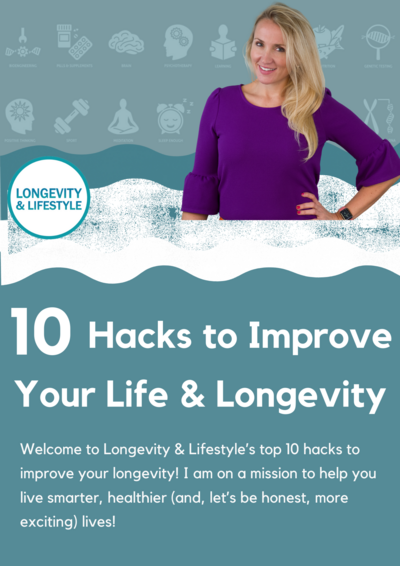
Steal Claudia's 10 Hacks to Improve Your Life & Longevity Playbook
FREE DOWNLOAD

Learn the secrets of health, lifestyle, business and finance optimization
Podcast
Top Resources

Steal My
10 Hacks to Improve Your Life & Longevity Playbook
Free guide
10 Hacks to Improve Your Life & Longevity
Want to learn how to live a smarter, healthier (and, let’s be honest, more exciting) life? Check out my free playbook with top tips just for you!
By signing up, you agree to join the Longevity & Lifestyle newsletter and to receive emails. We respect your privacy and abide by strict privacy policies.




LONGEVITY & LIFESTYLE
© Longevity & Lifestyle llc 2021 | Design by Tonic | Photos by social squares, Unsplash & Rebecca Reid
SEND ME A NOTE >
GET ON THE LIST >
@longevity&lifestyle
follow along: